|
A-pillar |
The roof support metal on either side of the front windshield. Also
see B-pillar, C-pillar,
and D-pillar |
|
|
Abarth |
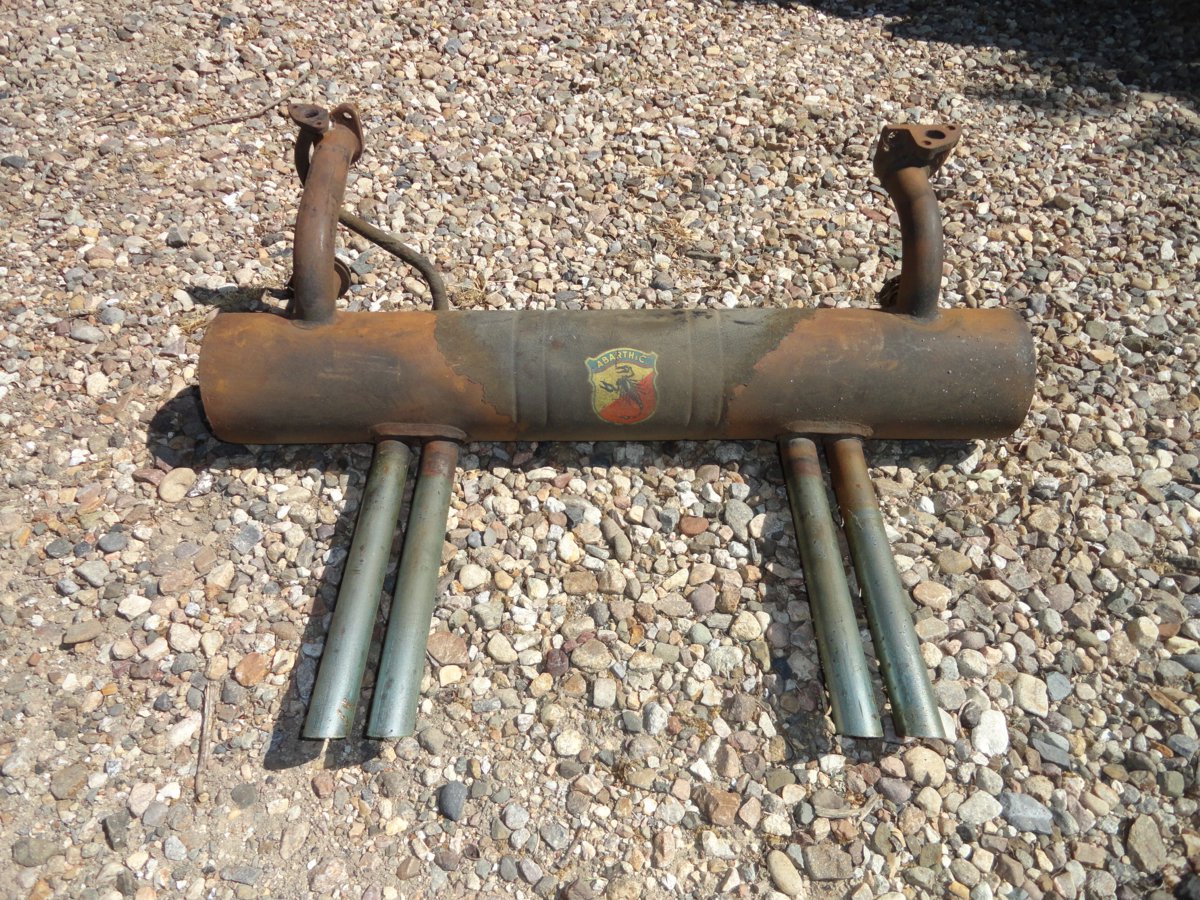
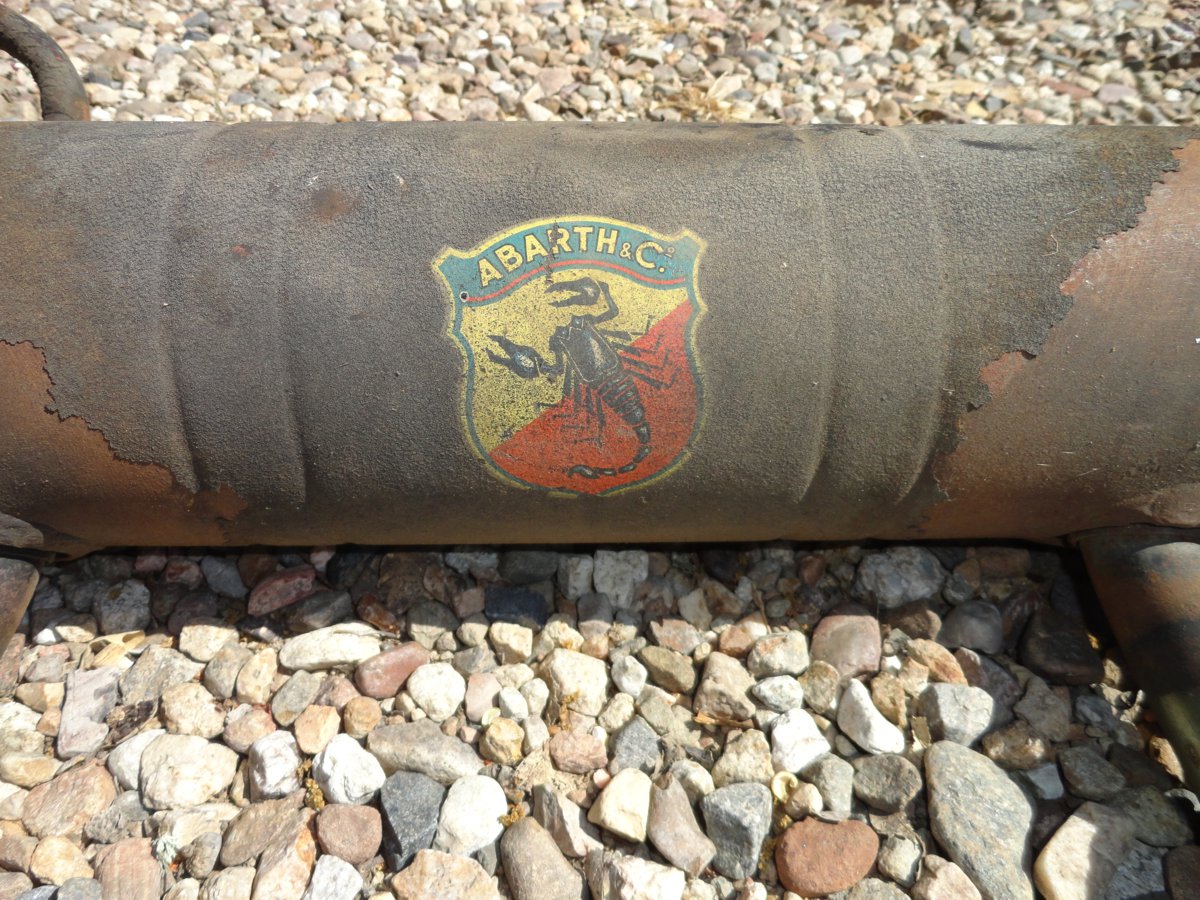
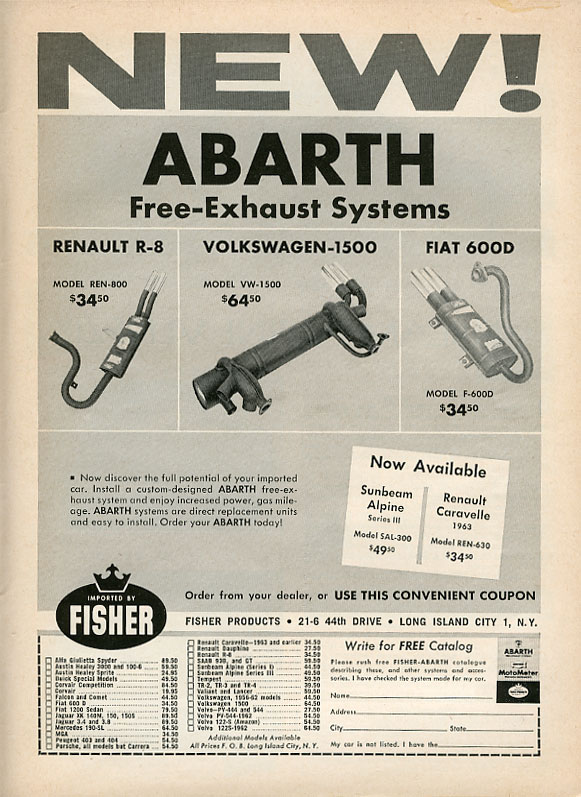
Abarth is a racing car maker founded by Carlo Abarth of Turin, Italy in
1949. Its logo is a shield with a stylized scorpion on a red and yellow
background. Abarth produced high performance exhaust systems and race tuning
kits. It provided design inputs to cars produced by Porsche and Fiat.


 |
|
|
Aardappelkist |
"Potato Box" in Dutch. In the Netherlands, a nickname for the post-1967
Transporter. |
|
|
Acapulco |
Version of the Type 181 Thing. The brightly-colored
Acapulco had a fringed top, running boards, and a large rack for luggage. It
was intended to be a tourist vehicle around Mexico's resort hotels, hence
the name.

 |
|
|
Accessories |
Optional items sold either with a VW, either factory or dealer installed, or as aftermarket
parts. Examples include: Blaupunkt or Sapphire
radio, mudflaps, roof
rack, gravel guards,
gas heater, or rims. |
|
|
ACVW |
Abbreviation for Air-Cooled Volkswagen |
|
|
Adjuster |
Small nut/bolt/plate arrangement that could be welded into a VW Beetle or
other model front end to allow for height adjustment. See dropped
beam |
|
|
Adventurewagen |
An aftermarket camping conversion package for the
Transporter. It
was manufactured in the U.S. until the 1980s. |
|
|
Aftermarket |
Denotes a product produced for the Volkswagen automobile not by
Volkswagen itself. |
|
|
AG |
German: The acronym for "Aktien Gesellschaft" - in Germany, a public stock
corporation, as in Volkswagen AG. |
|
|
Air Cooled
|
Typically refers to the cooling design used by the Volkswagen engine where
the heads and oil are cooled by air propelled by a fan which was, in turn,
rotated at a given speed by an attachment to the engine crankshaft. |
|
|
Albert
|
Aftermarket accessory maker, usually associated with mirrors from the
1950s-60s.
 |
|
|
Alf |
An English cartoon character who appeared in the 80s. Alf was a VW fanatic
and appeared regularly on the pages of VW Motoring magazine. Cartoons were
drawn by Pete Dixon and Rob Cole. The ideas were supplied by Dave Cantle.
Over 80 original cartoons exist. |
|
|
Allen bolt |
Bolt with a hexagonal socket head that uses an allen aka hex key to tighten
or loosen it.
 |
|
|
Ambulance
|
Conversion for the VW Bus to allow for
the transport of the sick or infirm from an external location to the
hospital. Known as the Krankenwagen in Germany.
A factory-built special model of the Transporter, introduced in 1951, the gas tank and spare wheel were relocated, the
decklid was made smaller, and the rear cargo hatch was hinged at the bottom so that a stretcher could be passed in from the rear.


 |
|
|
Ambulance Divider
|
Solid divider window installed as standard in Ambulance
conversions. Consisted of a sliding glass window with a small handle
surrounded by a metal frame. Optionally available to other vehicles
and has been observed installed in a number of Kombis and
Standards as well
as an original German Police Bus.

(Visible near top)
|
|
|
Ambulance Fan |
The ambulance fan was standard on Krankenwagen
conversions, and was an optional accessory (M-code 121) available for the
VW Transporter from 1952 thru 1967. For Barndoor
Buses, the installer cut a hole in the front peak of the roof, just above
the windshields. When VW updated the Type 2 design (March, 1955
through 1967) and overhead fresh-air
vent was made standard on all
models, the ambulance fan assembly replaced the removable cover between the
passenger and driver sun visors. The option consisted of two fans, a
three-position switch, a frame assembly to house the fans, and a replacement
cover plate with indentations to allow clearance for the fan bodies.

 |
|
|
Ambulance Step
|
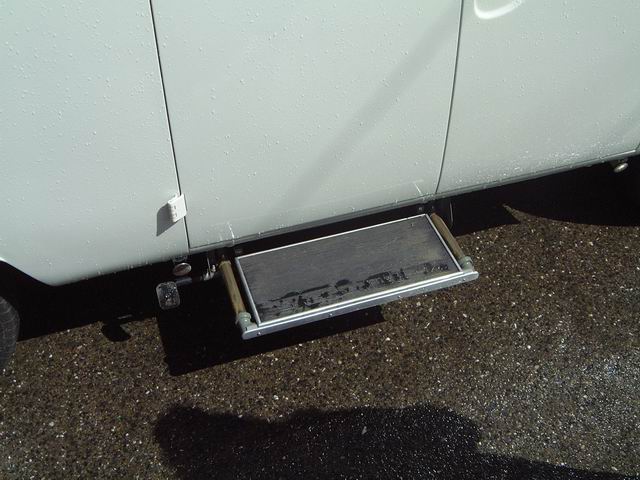
Cargo-area step. Standard on
Ambulance vehicles. This step had a small foot pedal that would pop
the step out when pressed to aid in loading the Ambulance stretcher.
It was also available as an optional accessory on other vehicles and came
in 2-styles: Belly-pan and non Belly-pan, to account for the
differences in the undercarriage of various Buses. Some ambulances
also had spring-loaded front door steps.
 |
|
|
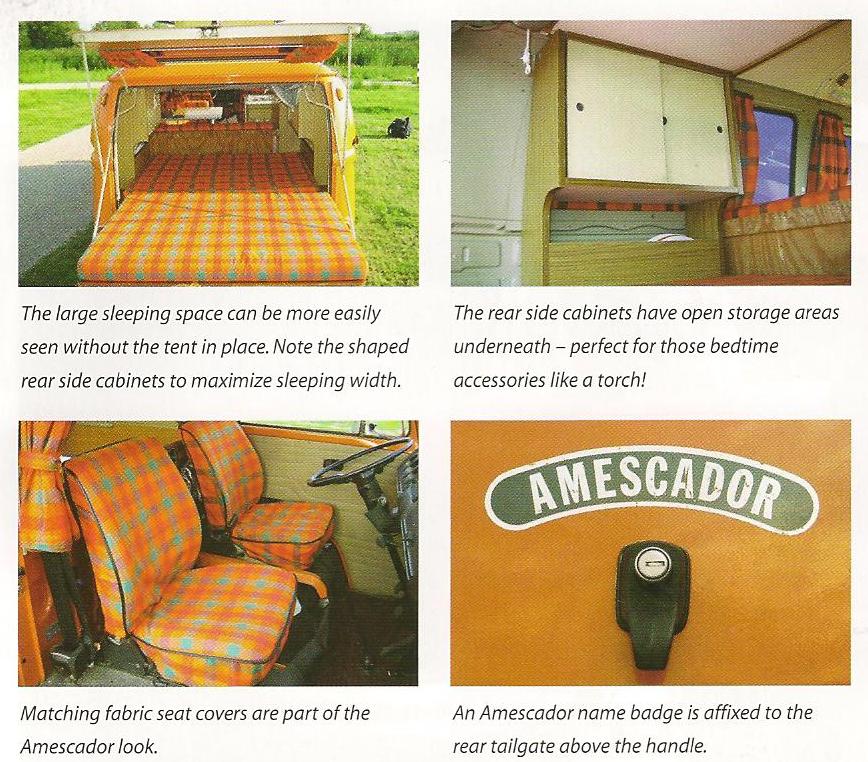
Amescador |
Contraction for AMES CAmper
DORdrecht. This
was a third-party aftermarket camper conversion made in Dordrecht, Zuid-Holland
Province, southwestern Netherlands, by the country's largest VW dealer,
Ames, starting in 1968 with a bunch of '67 Buses.

 |
|
|
Apron |
Bottom "U" shaped piece
of metal on the front and rear of the Beetle, between the bottoms of the
fenders. On a Bus, it usually refers to the bottom piece of metal in
the rear above the exhaust. See also crank
apron.


 |
|
|
Arcomobile |
VW Bus camper conversion with
square-shaped raised roof. Also see
Grawomobile


 |
|
|
Asfalt-Bubbla |
Swedish: "Asphalt Bubble". A common
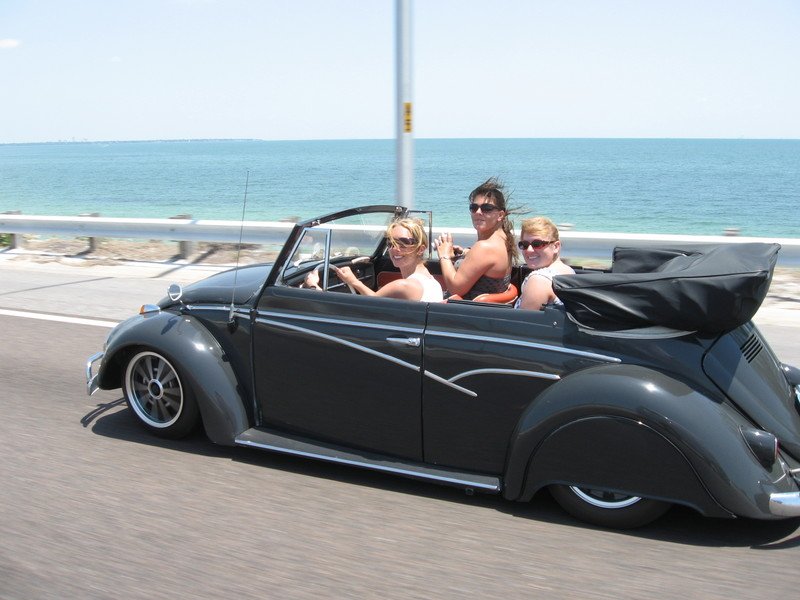
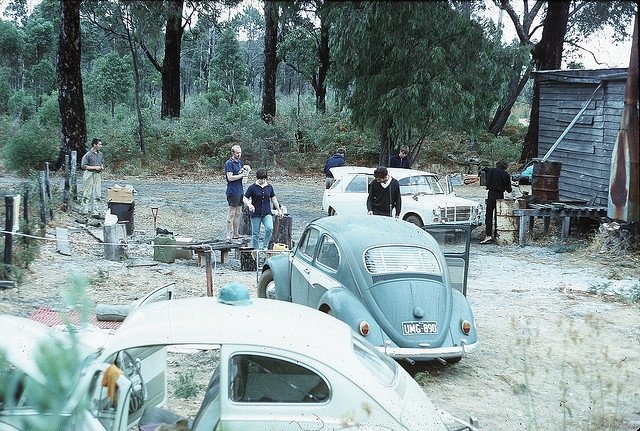
nickname in Sweden for the Beetle sedan and convertible. |
|
|
ASI
|
See Riviera |
|
|
ATF
|
Automatic Transmission
Fluid |
|
|
Atogas
|
An after-market VW engine tuning
kit from the 1950's. It adds an extra air-intake line next to the
intake manifold. The line has it's own valve that is connected to the
throttle valve. The extra air provided for the engine plus a bigger jet in
the carburetor increased power. It improved both miles per gallon as
well as the 0 to 100 km/h time by 3.5 seconds. In the 1950s, the cost was
98.50 DM.
More
information


 |
|
|
Auf-Zu |
German: "open-closed".
1. Before
Beetles had gas
gauges, the gas tank had a one-gallon sump, providing an emergency reserve.
When your car began to sputter, you simply switched a lever on the bulkhead
down by your feet from "zu" to "auf", then proceeded directly to a gas
station. See also Reserve Valve
2.Used on early Type 3 engine lid covers to indicate the position of
the engine lid latches
 |
|
|
Auriga |
A VW-based kitcar manufactured in
Gainsville, Florida by the Auriga Corp.

 |
|
|
Aussie Flash Trim |
Australian accessory side trim


 |
|
|
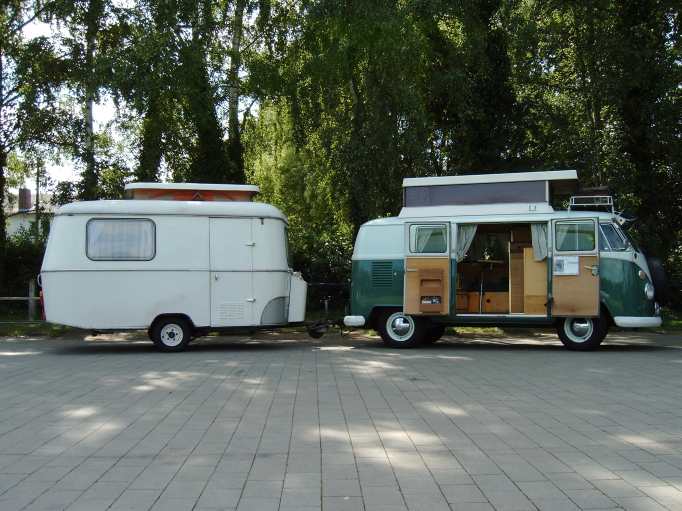
Auto sleeper |
A third-party, aftermarket camping
conversion
for the Transporter. |
|
|
Autogerma S. p.A. |
The first official Volkswagen
importer for Italy in 1954. Founded by a German citizen, Mr. Gerhard
Gumpert in Bologna. Then Autogerma moved to Verona (Romeo and Juliet's city)
closer to Germany port of entry: Brennero. In 1984 became directly
property of Volkswagen A.G (www.autogerma.it)
In 2007 the name changed to Volkswagen Group Italia S.p.A. |
|
|
Autostick |
Semi-automatic transmission used
in Beetles and Karmann Ghias.
Uses a torque converter, paired with a 3 speed standard transmission which
uses a vaccum-operated clutch to shift between gears. Put your hand on the
gearshift, the clutch disengages, move the shifter to the gear you want, let
go, and the clutch engages. The torque converter lets the engine run while
in gear so you can drive the Beetle like it has an fully automatic
transmission in it. 3 speeds were used: super low, low and high. |
|
|
die Autostadt |
German: "The Automobile
City". One of
the original names of the Volkswagenwerk company town. It was also called
"die Stadt des KdF-Wagens", which translates to "the City of the Strength-through-Joy Cars". See
Wolfsburg.
|