| Author |
Message |
Saturn
Samba Member

Joined: April 06, 2019
Posts: 266
Location: San Francisco

|
 Posted: Sun Mar 26, 2023 10:51 pm Post subject: Sorting Out The Coolant System Posted: Sun Mar 26, 2023 10:51 pm Post subject: Sorting Out The Coolant System |
 |
|
[quote="mikemtnbike"]
| Saturn wrote: |
First, F yeah to the punk rock stuff, too cool.
Sanchius, you can stay, it's cool, there won't be any trouble.
I couldn't find those top seals you've taped up and re-glued them myself, so far so good. If you find a source, let me know. Ebay, all US vendors, and brickworks came up with nothing, I did not dive in to the other Eurpoean vendors. |
Sanchius is always certainly welcome. In fact he was the punk rock gateway when gifting a cassette tape with London Calling on one side and Talking Heads '77 on the other while at College and I was starting high school.
This is the two us with another one of our other brothers (L) during the 2019 Snowball Rally
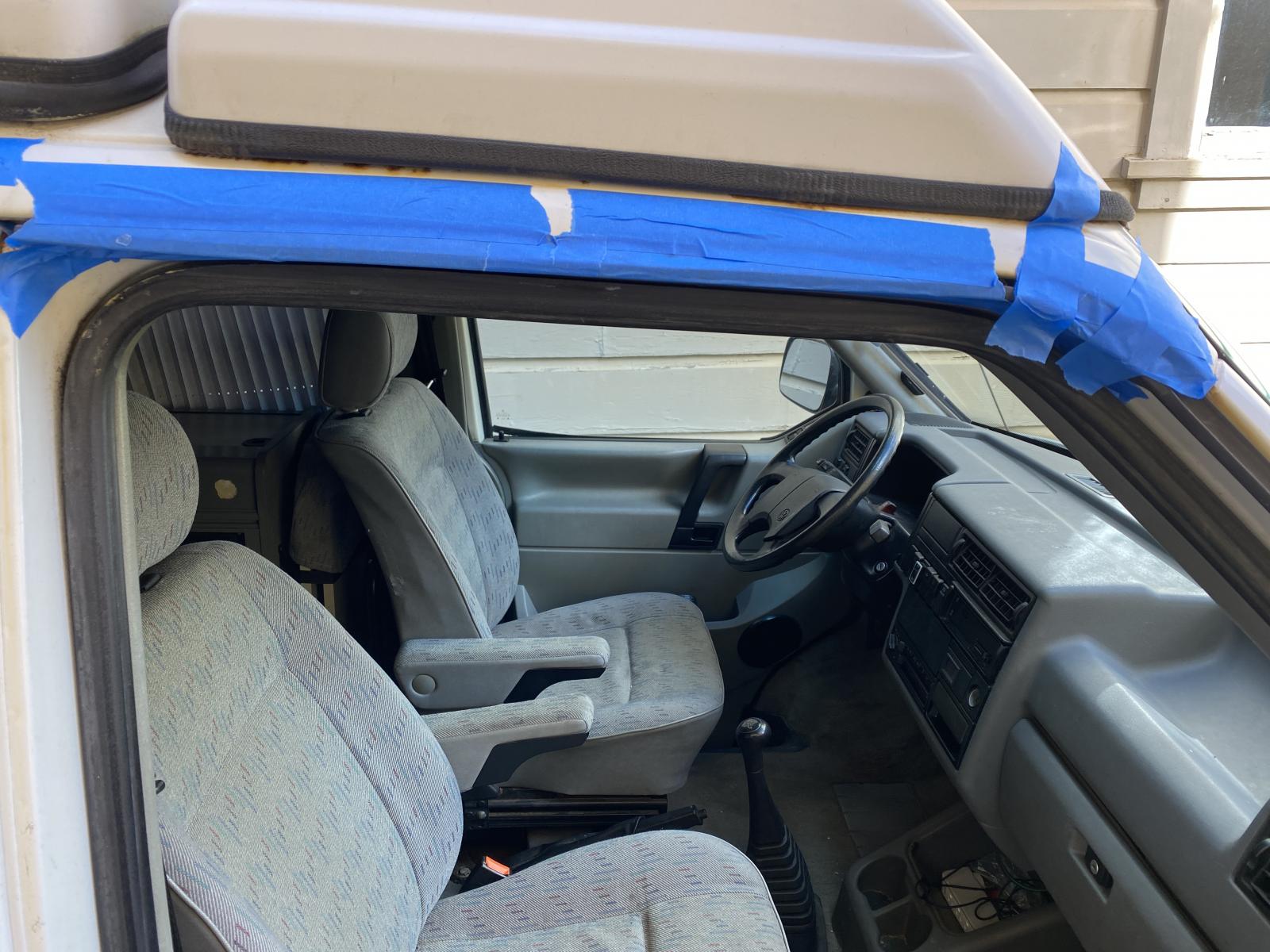
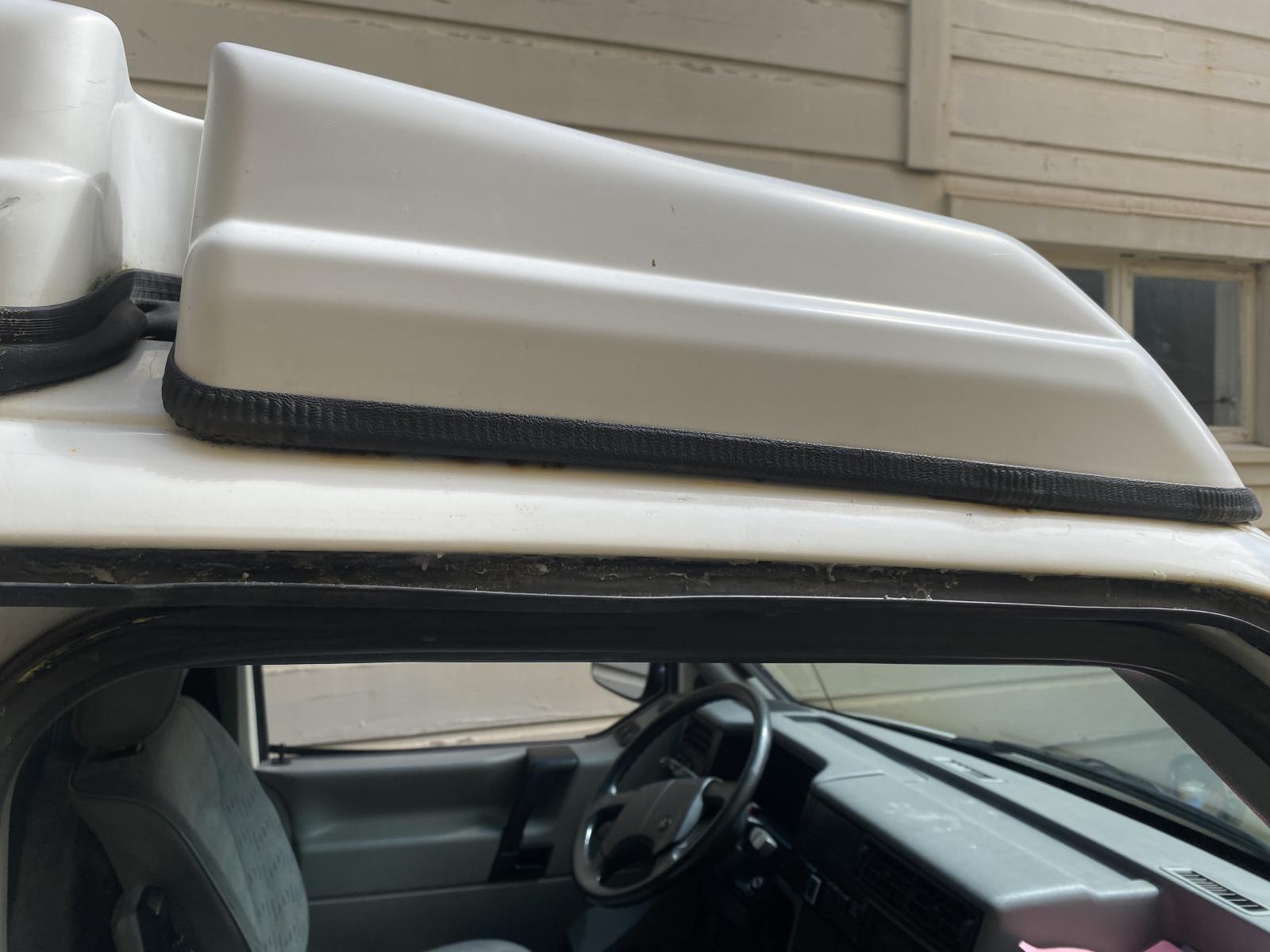
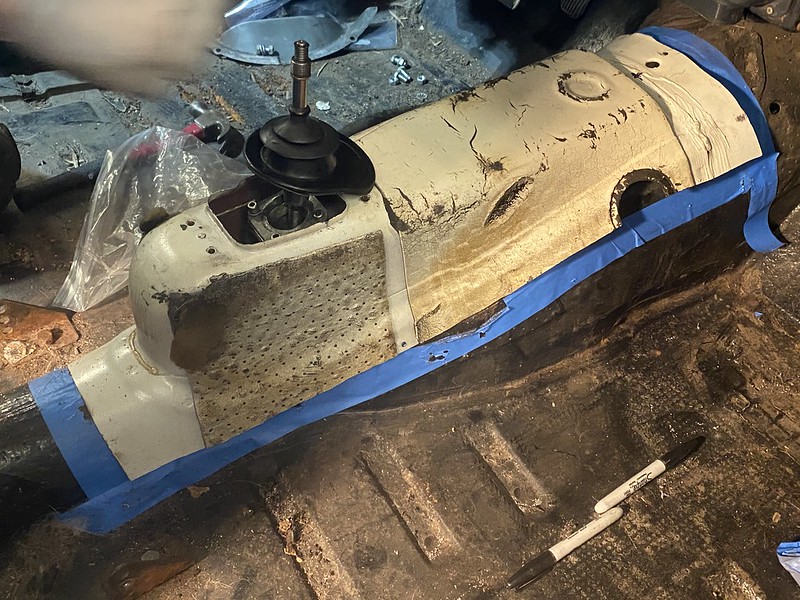
Waiting a week and half and after the arrival of additional rain showers, took a look at the EVC to see how it held up. Peeling away the blue tape, inspect the seal and it seems to be holding in place. There is still water ending up in the footwell though significantly less than before.
Getting Back to Work on the Weekender: Cooling System Part 1
Free time during the last several weeks have been dedicated to helping a friend get his newly acquired 1989 Volvo 240 wagon with a fair amount of deferred maintenance back to daily driver status. This involved dealing with a few PITA jobs (replacing out the tailgate wiring harnesses and other assorted wiring) maintenance items (timing belt, compression test and tune-up) and some upgrades (dash tachometer, voltmeter gauge, bluetooth stereo and new speakers.) Focus returns to the Weekender and buttoning up the cooling system. As WestyondaRock helpfully pointed out, my approach to inserting the retainer clips is off by 90 degrees. Getting back to my work space to grab one of the housings. The clip slides into place and immediately I feel the warm sensation of stupidity wash over me for not realizing this before. Yes, I am totally the recipient of Click and Clack’s proverbial “Dope Slap” for certain. Onward! is next word of the day and all of the assorted parts are collected for the reassembly.
With the radiator tilted out, this is also a prime time to install new plugs, wires, cap and rotor. The old plugs are removed to be replaced one by one. Still kind of surprising to see how much soot is on each one of them. Did note this when conducting a compression test soon after acquiring the van, will need to keep an eye on that. After removing the #2 cylinder plug then placing it next to the other ones, the terminal end slides out from the insulator. Have not encountered a spark plug fail like this before. Next a new distributor cap, rotor and wires are put in to complete the tune-up. Double check the ignition wire have been installed to the correct posts/spark plugs and mark the respective numbers on the end on the spark plug as well as the distributor cap.
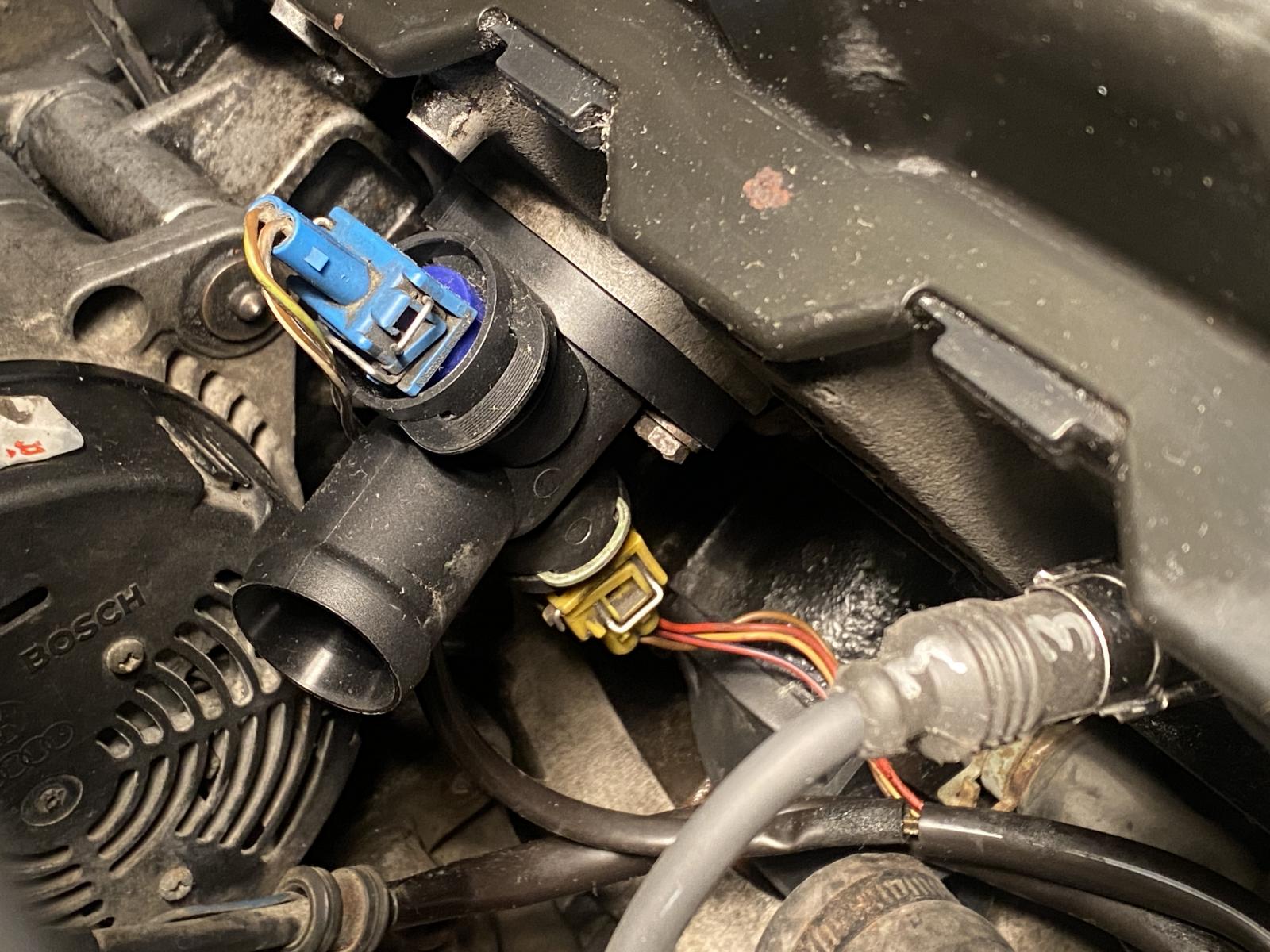
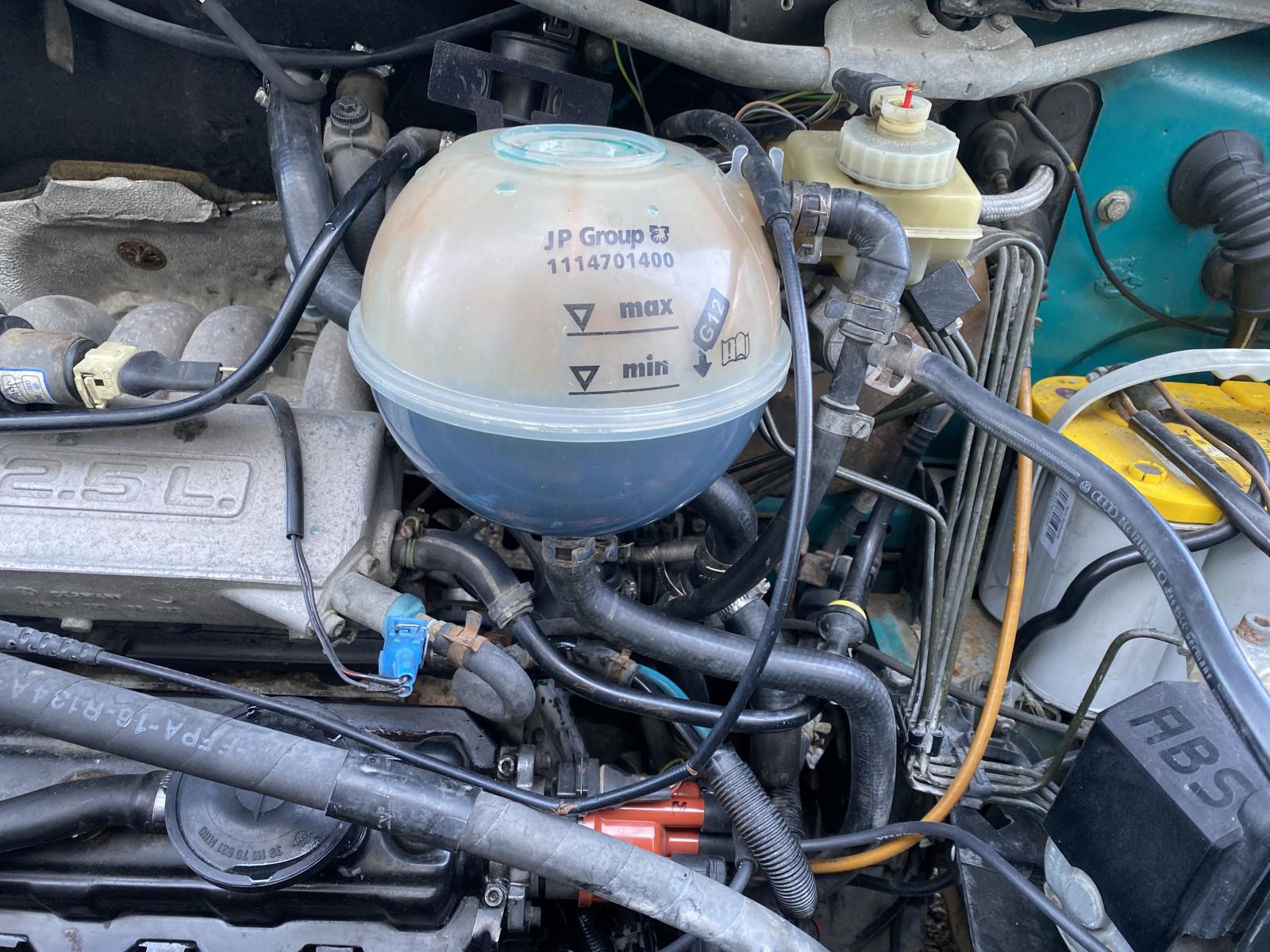
Line up the coolant sensor flange between cylinders #4 & 5 and finger start the fasteners with several rotations. These are tightened-up with a 10mm socket which can be done from the topside of the engine compartment. Mate the T-connector into the two hoses then insert the right side hose into the coolant sensor flange. Sometime in the past all of these connections had been replaced with hose clamps so these were tightened down with a screwdriver. Insert all of the sensor connectors back into their respective housings and give them a quick tug to ensure they are seated. Connect the main hose from the thermostat housing and tighten accordingly. Attach the two hoses into the coolant reservoir orb then secure it into position.
With wanting to flush out all of the old coolant, 6 gallons of distilled water are on hand to help facilitate this. The plan is to run distilled water through the system, flush this out and repeat. On the 3rd time, put G11 aka blue coolant into the system as it should be pretty cleaned out by that point. Pour in almost a gallon of distilled water and look under the engine for drops or drips. Immediately see a drip happening about every second emerging from the T-connector. At first it looks like it is leaking from the sensor itself. This was the sensor which a previous owner had gooped-on a large layer of sealant around. Changing my viewing point, see the stream emanating from the hose on the right side. Crank down on the hose clamp and this stems the leakage. Everything else seems dry and tight so resume pouring in the distilled water through the orb. After ingesting about a gallon and a half of water, it mostly fills the reservoir. Recheck the ignition wires once more, get inside and the engine almost immediately starts at the turn of the key. With the water pump now spinning, the water level in the orb starts to drop. After 2 or so minutes shut things down and look under the engine as it remains leak free. Top it off with more water and notice what is in the coolant reservoir has already started to turn a light shade of pink. Restart the engine and keep it running to see what happens as it warms up and reaches operating temperature.
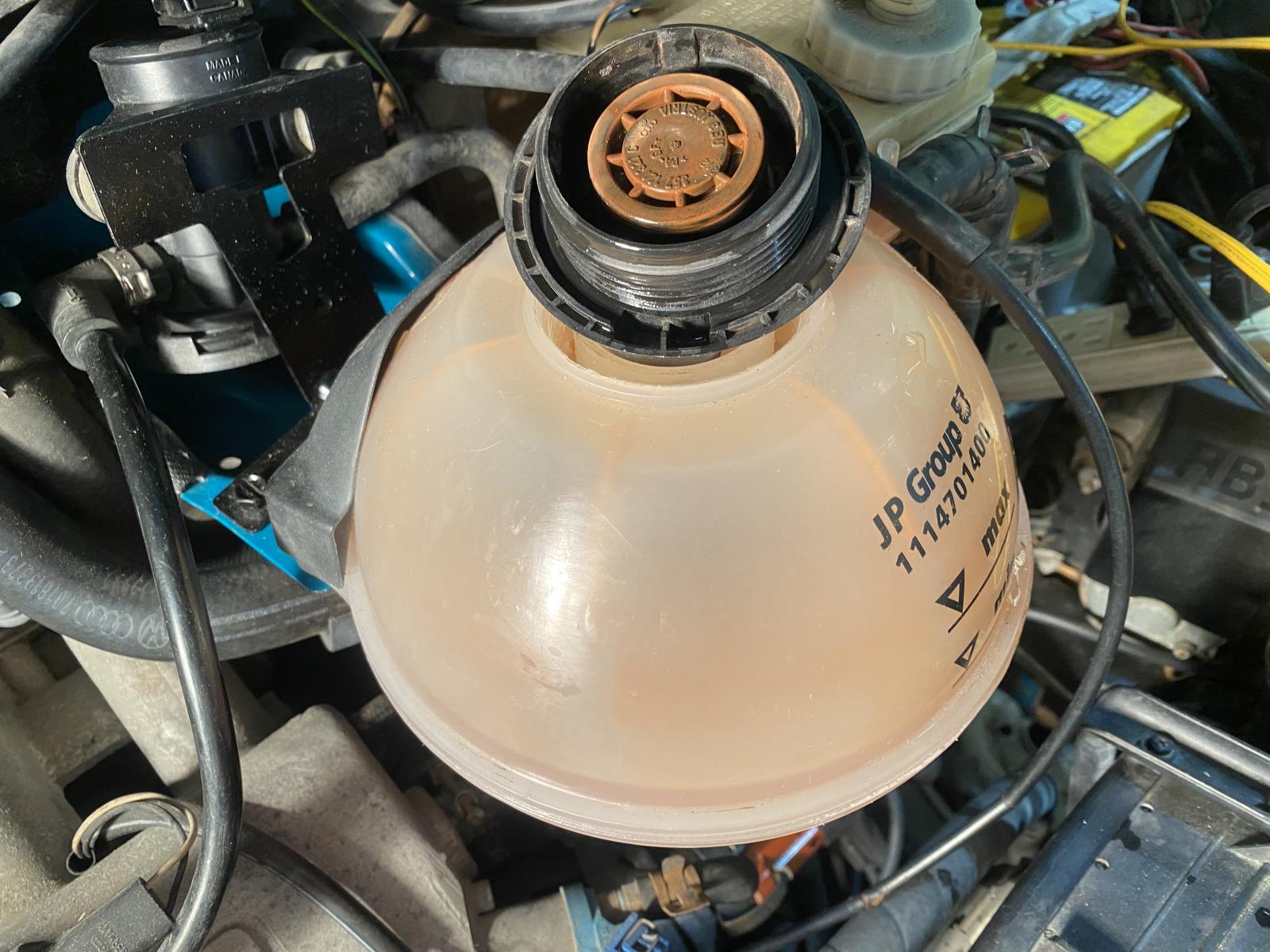
The engine continues to run for about 15 minutes as the temp needle eventually reaches pretty high on the dial face. The cooling fans finally rumble to life, this is one of the systems I want to definitely make sure is operating properly. The coolant in the reservoir is now quite rust colored and no longer clear. Not a positive sign. During this test, the coolant light came flashing on, several time the engine is turned off and restarted to see if the light re-activates. When the temp gauge is in middle area finally the blinking subsides. Looking at the color of the liquid in the orb, I speculate if using just distilled water and as the rust particulates are mixed in, does that impact the sensor readings? Let the engine cool down for about an hour then run it for 30-40 seconds to attempt to get any substantial gunk back into suspension before draining out the once distilled water. It is pretty nasty looking liquid and notice the the solid residue left behind at the bottom of the reservoir orb. It is getting obvious it the engine will need more than just another flush. Close the system back up and refill it with more distilled water. Run the engine for 10-11 minutes and this is a repeat of the last run with the clear water turning rust-colored. This time I set up a time-lapse to capture the transition. which happens pretty quickly. Drain the system out and call it a day and to figure the next plan of attack.
Time Lapse of the Coolant Reservoir Orb
Link
Next: Flushing the Cooling System Part 2
. |
|
| Back to top |
|
 |
Saturn
Samba Member
Joined: April 06, 2019
Posts: 266
Location: San Francisco
|
| Posted: Mon Apr 24, 2023 5:00 pm Post subject: Cooling System Continued and the Trip to Europe |
|
|
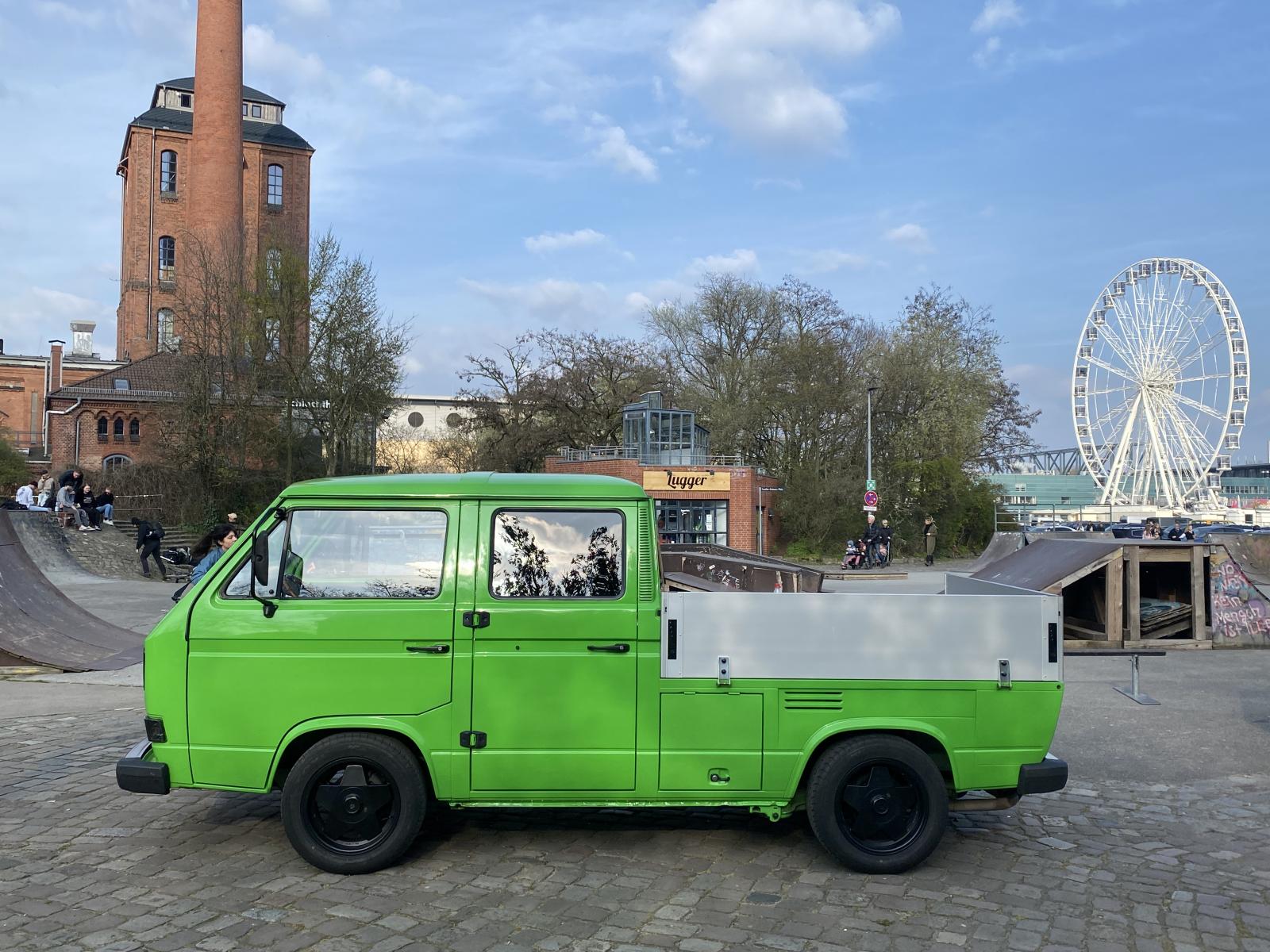
April has been quite the active month. My original target was to post the second part of working on the cooling system before heading to Europe for 10 days but it was not to be. As mentioned in a previous post, one of the bands I am in was invited to play a punk rock festival in Bremen, Germany over Easter weekend. After that finished up, the itinerary involved catching an overnight ferry from Kiel, Germany to Gothenburg, Sweden for two days. While there visited the Volvo Museum, or should that be considered a pilgrimage? From there grabbed a train to Oslo for a quick look-see and then it was off to London for a couple days before returning back to San Francisco. While in Germany did see a number of T4s and was pleasantly surprised to come across a two Vanagons at a skate park with one of them a Doka. Now onto the regular programming…
Cooling System Part II
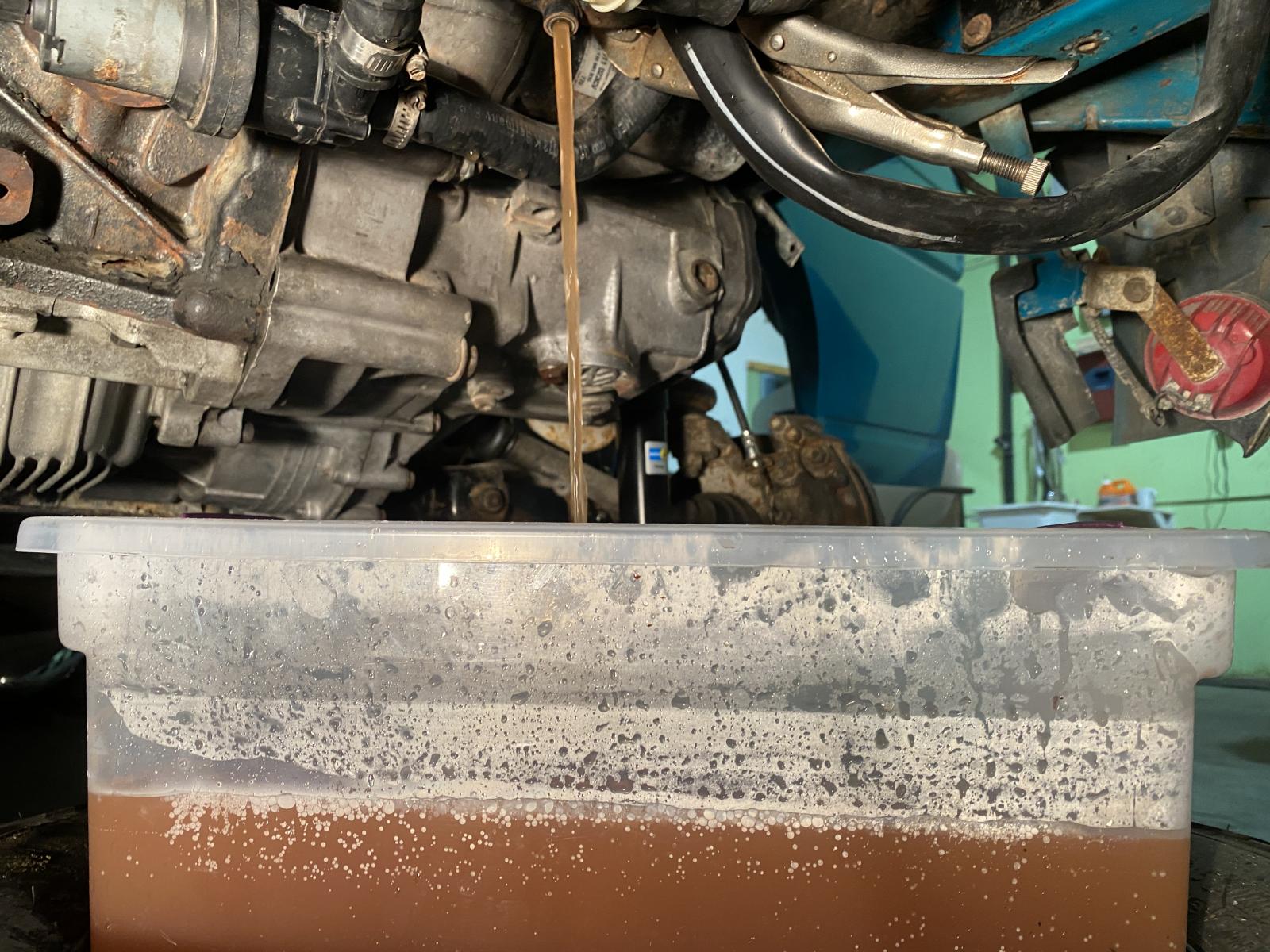
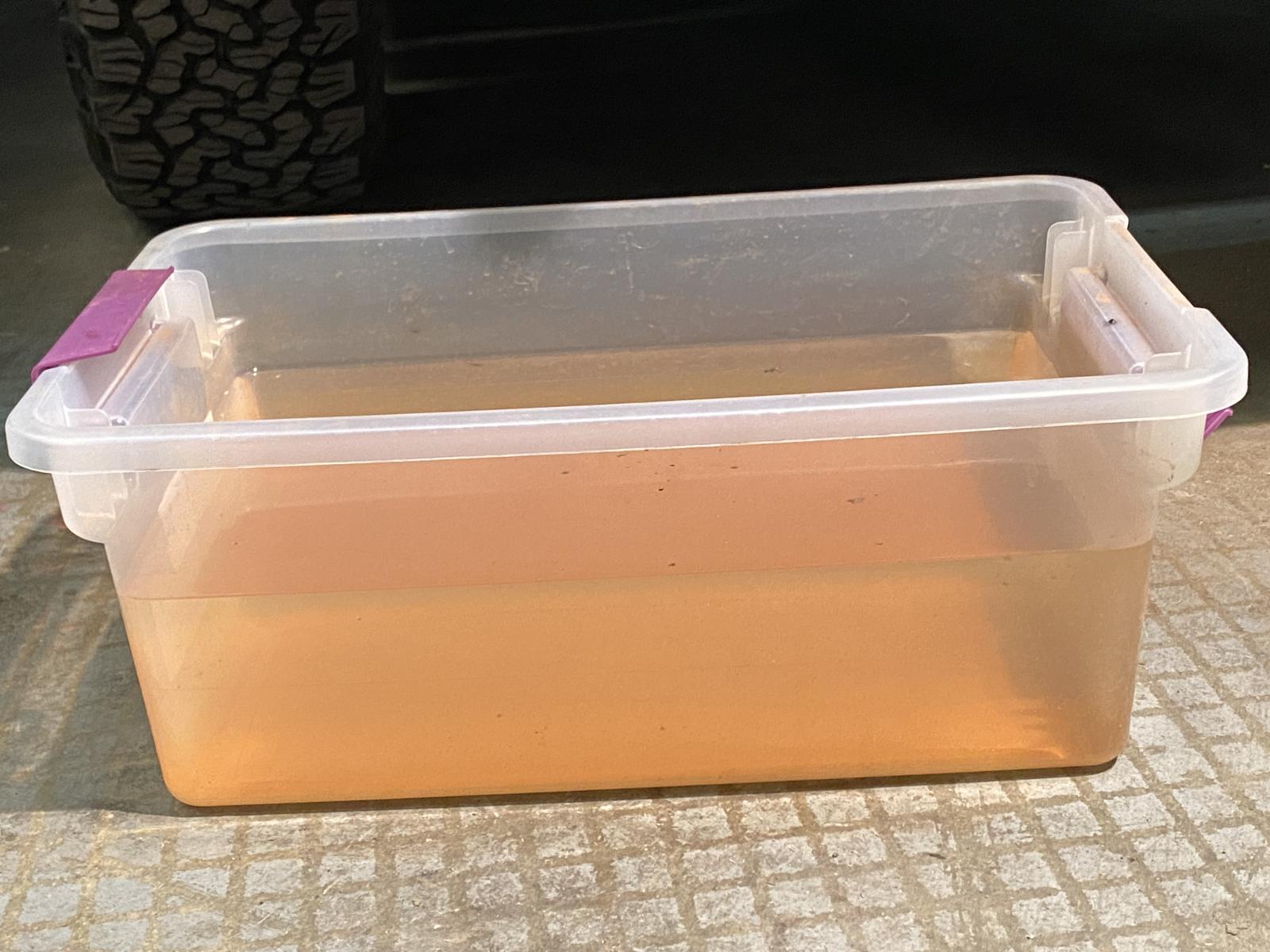
After going through 7-8 gallons of distilled water and still encountering significant signs of rust, decided to take a bit of different approach. Did not drain out water of the last flush so I could reposition the van. Since the Weekender has been up on jack stands since October, now it is time to get it back on its wheels. The tires are mounted on and soon it is back standing on the concrete. Start the engine and head out to the daylight. With the van outside, I can now flush the system out multiple times using a hose. Drain the fluid in the cooling system into a catch basin which again emerges rust-colored.
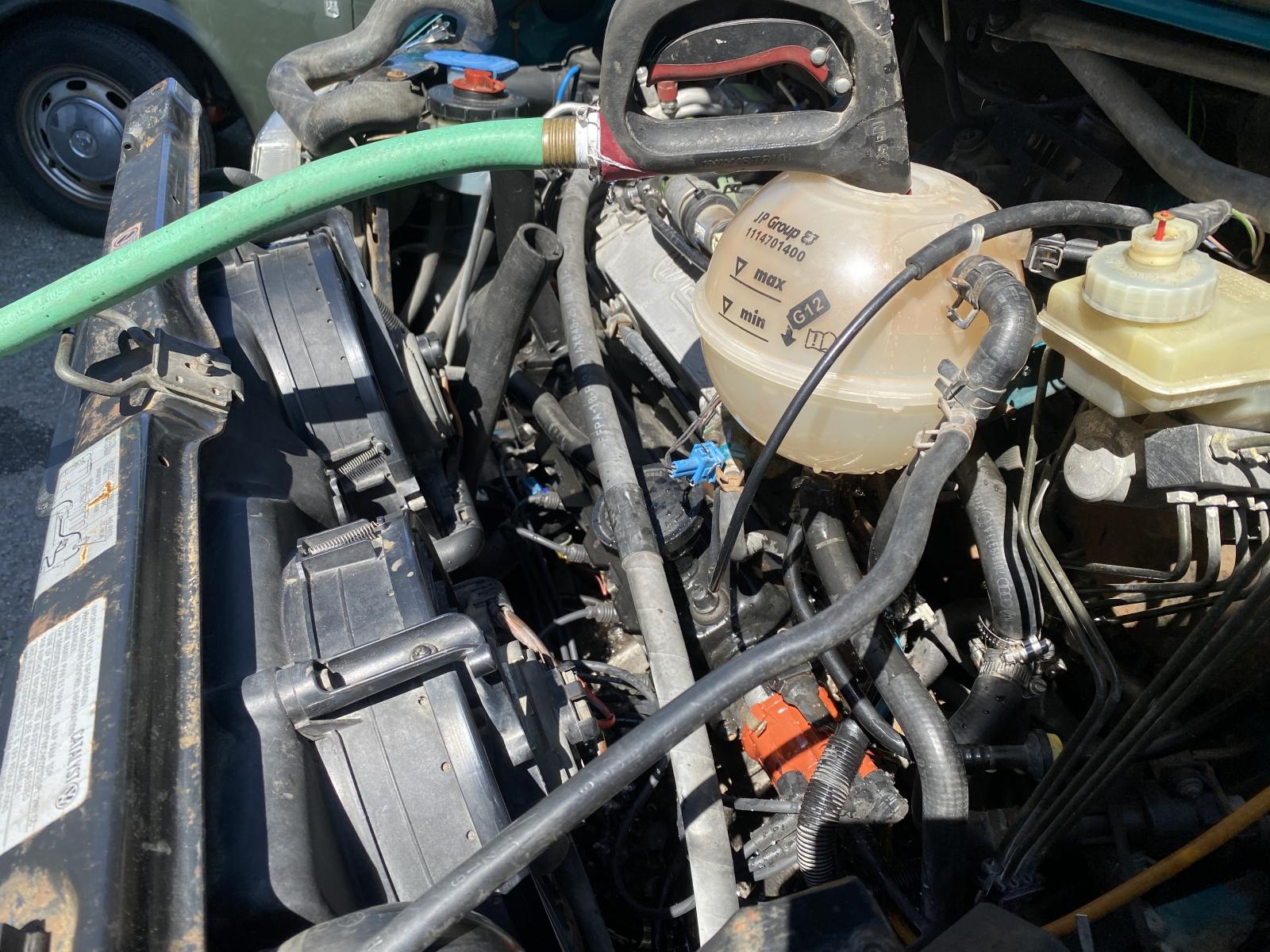
In order to try and rinse out the block, the thermostat housing is removed. Already a rusty silt lies along the bottom of the internal passage, pretty much assume this will be found in all throughout the hoses and the engine block. Undo the hose to the upper coolant sensor flange. Find a length of radiator hose from one of my older Volvos which plugs snuggly onto the flange. Using this hose, water can be shot into the top of the block and escape through the thermostat opening. This will certainly not remove all of the built up deposits inside the engine, it should get a significant amount up and out. After a couple rounds of rinsing water through the flange piece and the reservoir, button everything back together.
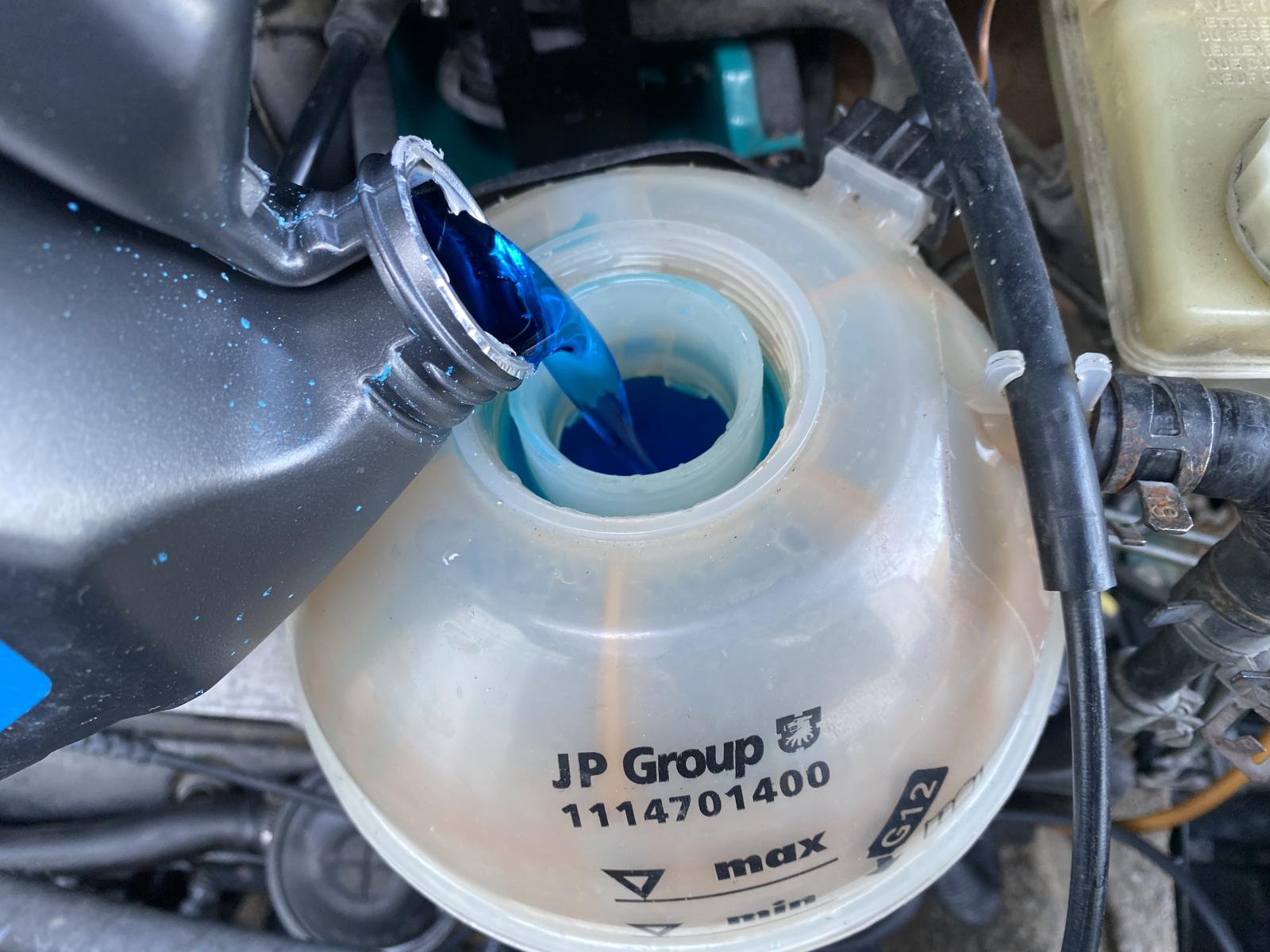
Flush out the cooling system with distilled water twice, first filling then running the engine for a couple minutes with the heater controls on. Draining the second flush into a catch basin, the fluid comes out a lighter orange color rather than the deeper red of the first series of attempts. I now feel comfortable adding coolant into the system. A gallon of straight G11 (blue) is poured into the reservoir and need to open a second bottle to top it off. Run the engine for several minutes to circulate the coolant and top it off with the G11 coolant and the last of the distilled water.
After letting the engine get up to operating temperature, take the Weekender up and down the street several times to really mix up and hopefully fully burp the cooling system. Bring the van back into the garage space and let it sit. Check things two days later and the coolant level is almost at the max line of the reservoir. There are no drips or leaks under the van and the fluid from the final flush in the catch basin has a fine sediment along the bottom of the container. he fluid in the reservoir retains a deep blue color and it does not seemed to be tinged with any sort of red/rust hue, a positive sign. The one issue still occurring is the flashing coolant warning light. though it only happens when the engine cooling system is cold. When the needle finally hits around mid-range on the face, the blinking warning light will remain off after restarting. While an improvement, its also a still a bit of mystery of what the issue is.
Next: Digging into the AC and Fans
. |
|
| Back to top |
|
|
Saturn
Samba Member
Joined: April 06, 2019
Posts: 266
Location: San Francisco
|
| Posted: Wed May 03, 2023 2:57 pm Post subject: Snowballs and AC Systems |
|
|
This past weekend was spent driving on the Snowball Rally in my 1975 Volvo 242. This event takes the back roads through the Sierra Nevada mountains, first starting in Sacramento and into Nevada then back over into Lake Tahoe on the first day. The second day is going north through Truckee and winding back to the finishing point just south of Sacramento. Representing the VW/air cooled contingent was a Karmann Ghia, two Porsche Speedsters and a 914-6. The copious crop of 911/912s usually on this event were instead headed to Luftgekult 9 being held in Vallejo, CA at the former Mare Island Naval Shipyard. If not for the Snowball Rally happening would have probably gone to check that out.
Assessing the AC System
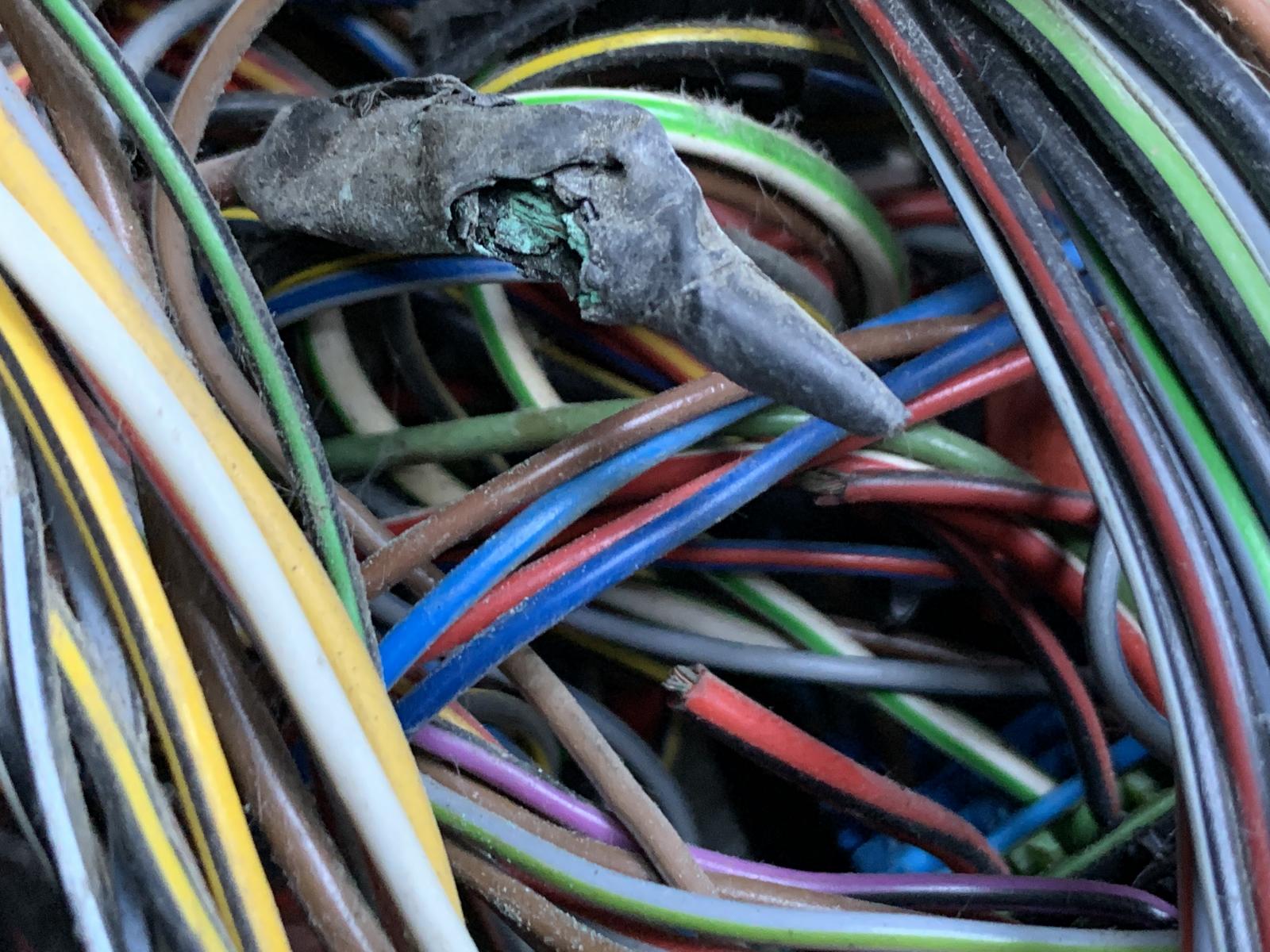
While working on the cooling system on the Weekender, the engine spent a fair amount of time idling to get the engine to operating temperature to help flush the system out. Figured it would be an optimal time to assess the condition of the AC system. When the van was posted up on Craigslist in August, the PO billed the system as operational: “AC works but weak.” During the initial assessment after purchase, it was evident the system was pretty much DOA. Discovered two wires from the N block (AC system) of the “multiple connector arrangement” on the back side of the fuse holder/relay panel had been once crudely soldered together and were broken apart again. 2-3 months ago while working under the dash these two wires were reattached and resoldered back onto the respective leads on the N block.
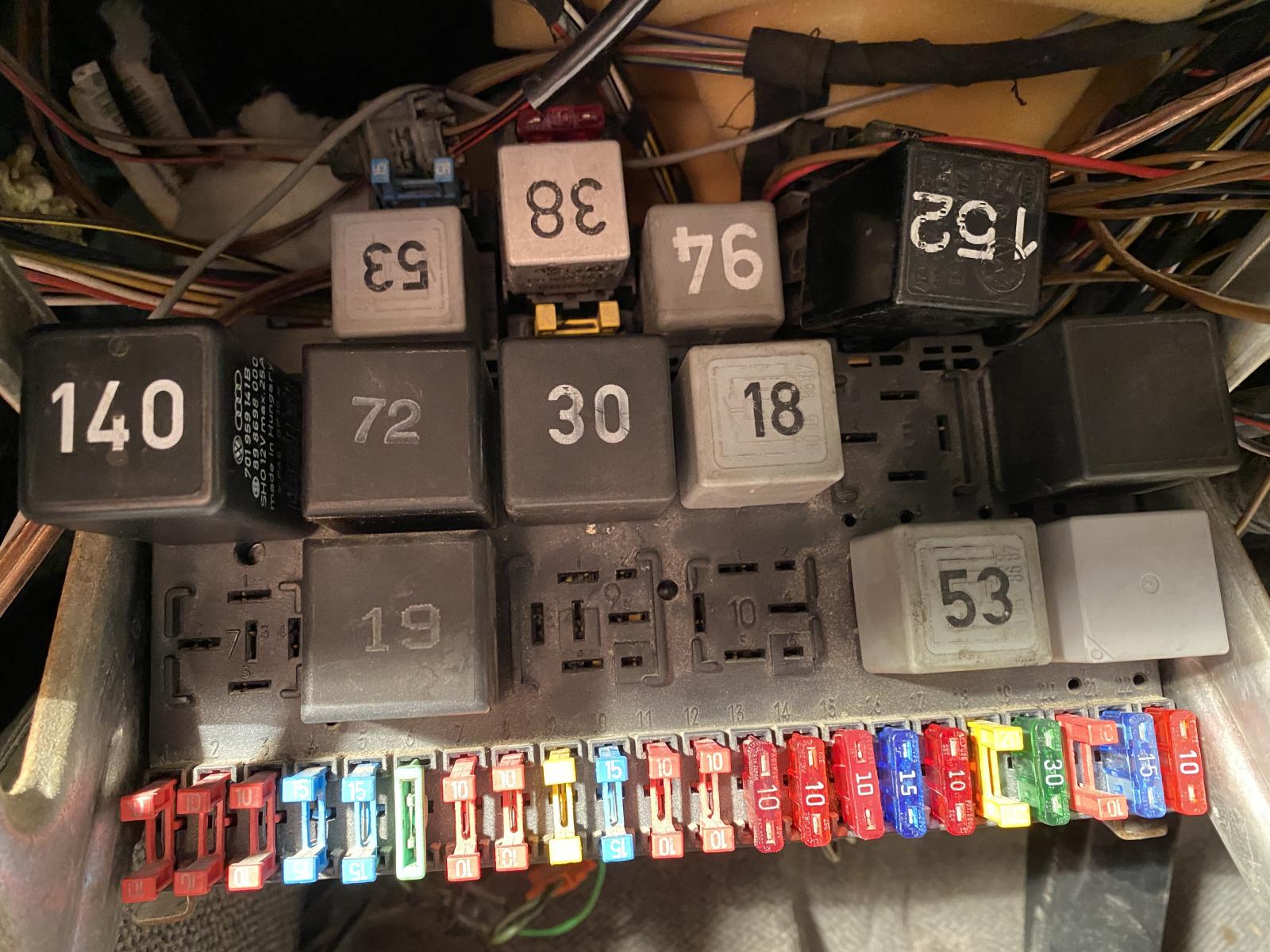
While idling the engine, connect a R134a gauge to the low side port and pleasantly surprised to see the needle swing upward to around 35 psi so the system has been retaining pressure. Going into the cabin, the slide the climate control arm to an AC setting but do not hear fans come on nor the compressor. Dig out a can of refrigerant in case the currently level is below what the compressor needs to turn on. Start adding in the R134a into the system as it reaches near 60 PSI, hear the compressor kick on for a couple second then it shuts down. Wait for it to cycle again but the compressor remains dormant. The system now sits at almost 65 PSI, which should be more than enough for the system to operate. Go in the cabin to move the sliders around and the compressor remains dormant. Check the fuses and discover fuse #19 (radiator fan/air conditioner) is blown. Swap in a new one, restart the engine and shortly hear a distinctive “Snap!” emanate from the fuse block. #19 fuse has self-destructed. Try new fuses two more times to the same result.
Begin to run some searches and begin to read up on what might be going one. Read a couple posts concerning checking the fans to make sure they are operating correctly, the large 40 amp fuses in the engine compartment, the main AC relay (#140) and cooling fan resistors. Additionally, I consult with my friend Jeff who is an electrical engineer and gearhead. Over the phone we look at the wiring diagrams to decipher the AC system and what might be causing the overload. He speculates the crudely patched wiring I discovered and put back to stock was an attempt to bypass the main AC relay. He also expresses bewilderment on encountering differences in the schematics between the Alldata and Bentley wiring diagrams. Getting back to diagnosis work, pull the connector for the cooling fans out of the radiator switch and jump the terminals. Both the low and high speeds work with no problem so that rules out the fans and the fan resistors.
Link
Jeff recommends to check my wire repairs and the both of these lead to the main AC relay. Pull out the main AC relay from the relay panel (#140 in the first slot.) Using a multimeter the two wires are checked for continuity between the N block and the relay block and there are not issues there. The fuse panel is inspected for any other blown fuses as well as if the correct rated fuses are in place. Find two locations, spot 16 (warning lights) and 22 (cigarette lighter) with higher-rated fuses and changed those out to the correct value.
Next item to inspect is the AC relay, remove it from the plastic housing and it does not look pretty. There is a large scorch mark on the circuit board and the solder looks to be quite cooked. After some searching, discover these relays are Eurovan specific (p/n 701959141B) so replacements will be pricey. After contemplating my options, it dawns on me I have easy access to a temporary replacement, the AC relay in my 1995 EVC.
Next: Digging further into the AC system
. |
|
| Back to top |
|
|
Saturn
Samba Member
Joined: April 06, 2019
Posts: 266
Location: San Francisco
|
| Posted: Fri May 12, 2023 7:54 pm Post subject: 1993 AC System Revival: AC Relay & Other Components |
|
|
Reviving the Weekenders AC System
Retrieving the AC relay (140) out of my 1995 Eurovan is a simple task, access the fuse panel and pull it out of the holder. Currently the AC is inoperative in the EVC, the previous owner detailed a sudden depressurization of the system from behind the dash during their ownership. Another trip into the depths of the dashboard is what I get to look forward to when that reaches the top of the to-do list. At my kitchen table open up the 1995 relay revealing pristine inner workings, a large contrast to the singed one from the 1993 Weekender.
Consult my friend Jeff the Electrical Engineer after he reviews the various wiring diagrams for his thoughts. He is trying to figure out what might be the origin of the large draw on the 30A fuse #19 causing it repeatedly to fail. While the scorched insides of the 1993’s relay is the literal and figurative smoking gun, do want to see if it something else could be contributing as well. In the diagrams #19 is cited as supplying block A1/wire 5, we are both unable to actually figure out what & where A1/5 goes to in the wiring diagrams.
Since fuse #19 is listed as supplying the cooling fans and A/C on the plastic fusebox cover while the Bentley Service Manual cites this as the electric water pump and A/C relay, both will be looked at. First look into the fan relay (114) located in the engine compartment. End up having to utilize a set of vice grips to evict the relay from its holder. The connectors on the relay sport some green corrosion which a brass brush makes short work of on the relay. A small pick is used on the female connectors the relay housing, then insert and remove the relay attempting to clean the these connectors as well. Going under the van inspect the wiring going into the electric water pump.
Reinstall a 30A fuse into #19 slot and plug in the good AC relay out of the 1995 Eurovan. Start the engine, activate the AC on the climate control and monitor the fuse panel. The fuse remains intact then notice the RPMs is dropping every couple seconds. Head under the van to see the AC compressor cycling on and off every couple of seconds. Turn off the AC on the dash and the compressor shuts down. Move the slider over and the compressor starts to cycle on/off again. As the engine continues to idle, turn the circulation fan knob up and hold my hand over the center vents. After several minutes the air blowing out remains the same warmish temperature, no sign of any cooling by the system. After running the engine for around 10 minutes hear a small “snap” from inside the cabin. The engine idle settles out no longer dropping down. Look at the #19 fuse and see it has blown. Check the refrigerant level on the gauge and that remains at around 70psi. Shut the engine down and change out the fuse. Begin the search for a replacement AC relay (140) to find new ones are being offered up at around $200. As I am about to travel to Europe, this is as far as I am able progress with testing the AC system until I get back (FYI: The work detailed in this post took place in late March and early April.)
Next: Hunting Down A Replacement A/C Relay
. |
|
| Back to top |
|
|
Skitter
Samba Member
Joined: May 21, 2020
Posts: 12
Location: Richmond, CA
|
| Posted: Sun May 14, 2023 11:43 am Post subject: Re: Space Capsule 1995: Repairs, Roadtrips, Retrofits, & Wrenching |
|
|
| I have a 140 relay you could have....I think you've earned it with all the valuable info you've posted on this topic. I'm in SF everyday and work in the downtown if you want to pick it up. I looked at it and it looks okay, no burn marks like in your pic(s). |
|
| Back to top |
|
|
Saturn
Samba Member
Joined: April 06, 2019
Posts: 266
Location: San Francisco
|
| Posted: Mon May 15, 2023 11:15 pm Post subject: Re: Space Capsule 1995: Repairs, Roadtrips, Retrofits, & Wrenching |
|
|
| Skitter wrote: |
| I have a 140 relay you could have....I think you've earned it with all the valuable info you've posted on this topic. I'm in SF everyday and work in the downtown if you want to pick it up. I looked at it and it looks okay, no burn marks like in your pic(s). |
Thank you very much for offering a replacement relay. Interestingly, I have been able source and acquire one already. I'll be posting the details around that later this week.
Very appreciative of the support from this forum with instances like this from Skitter, it makes documenting and writing these various post up worthwhile. |
|
| Back to top |
|
|
Saturn
Samba Member
Joined: April 06, 2019
Posts: 266
Location: San Francisco
|
| Posted: Fri May 19, 2023 2:07 pm Post subject: Locating an AC Relay (140) for the Weekender |
|
|
Replacement Relay and Other Diversions
One of diagnosis steps I neglected to mention in the May 03, 2023 post dealt with the radiator fans. As previously mentioned, encountered two wires which once had been soldered together and had subsequently separated, When confirming with my friend Jeff on the wiring, he suggested jumping the #2 and #6 connectors or the AC Relay (140) on the relay board. This was being done to see if the wiring to the fans from the really was ok as wells as if this would cause a blown fuse at all. Connected a jumper wire and the fans activated without any issues. Wanted to make sure this was included in the documentation of the diagnosis process.
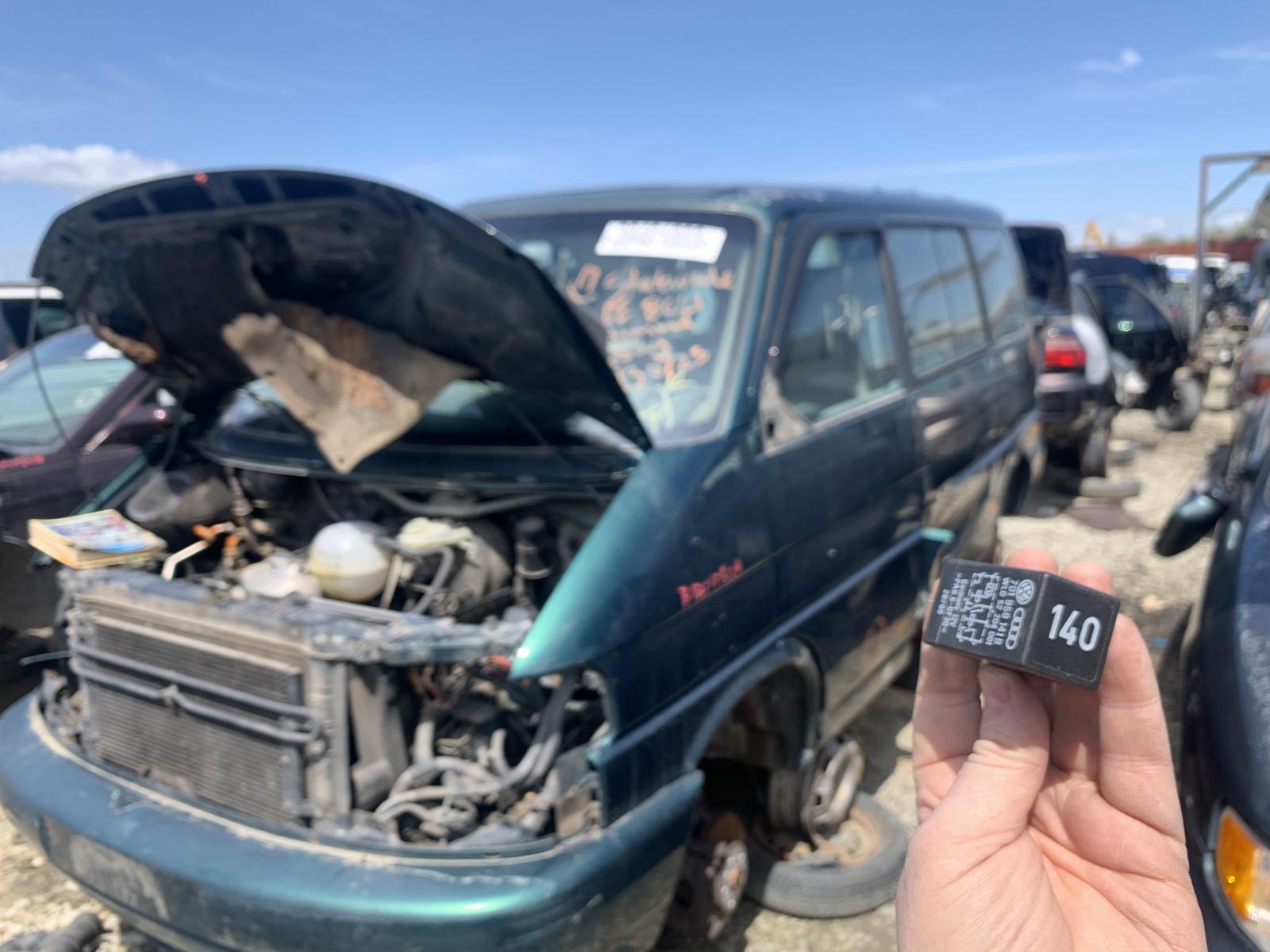
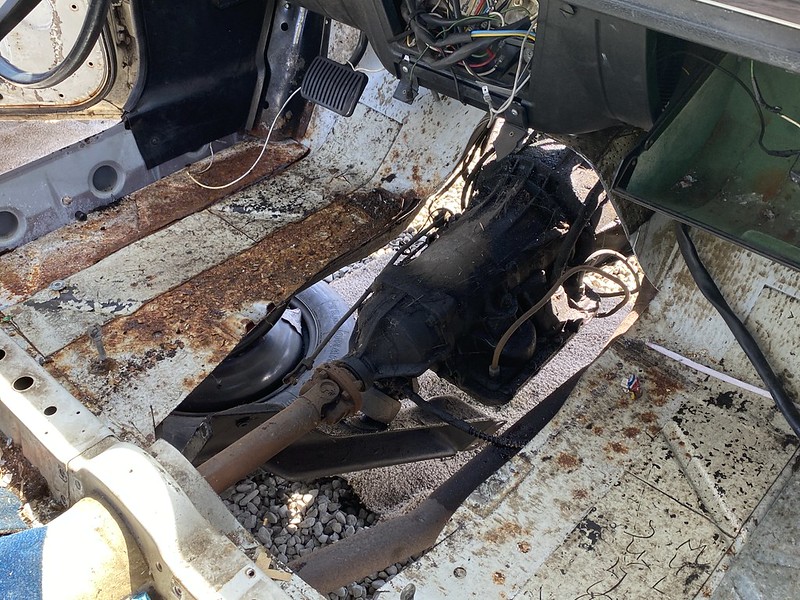
After returning from the Europe trip, discover a 1999 Eurovan is residing at one of the East Bay Pick-n-pulls in Richmond, CA. Meanwhile at a different East Bay junkyard (Oakland), a 1972 Volvo 142 has landed in the rows. Plan an expedition to check both of these potential donors out with my friend Alex who is looking for some parts for his 1967 122S wagon project. Since Eurovan has already been in the boneyard for almost a week and my hopes are not high for finding much on it. Walking through the rows on the way to where the Eurovan sits, we stop and check out several other cars including a severely mangled Mercedes 560SL, as well as a mid-70s malaise-era Lincoln Continental complete with a vintage STP sticker on the air cleaner.
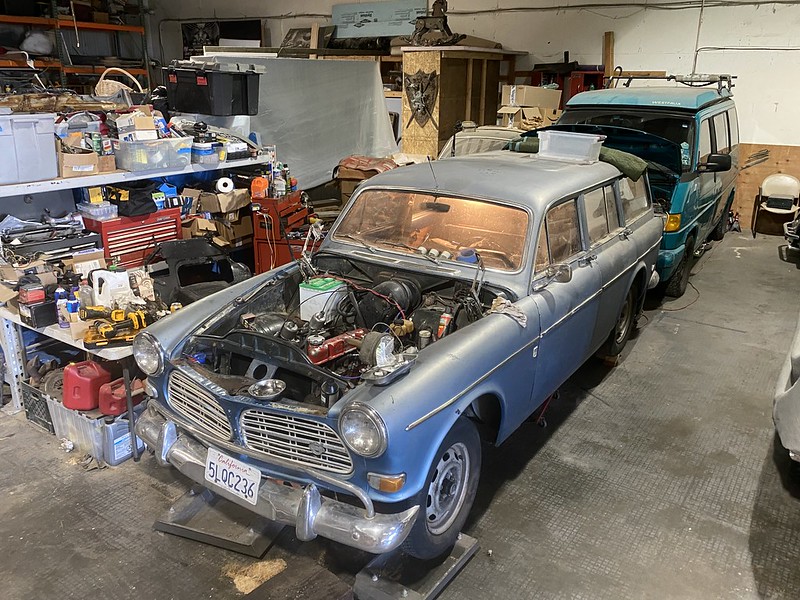
As expected the Eurovan is pretty well picked apart. Long gone are the front headlight assemblies, marker lights, ECU, door mirrors and grill. Inside, the front seats have been liberated as well as various dashboard components. Looking at the fuse panel, see a couple open relay slots but do not encounter an AC relay. When glancing higher up, it is a bit of a surprise to find the 140 relay sitting in the upper-most row. “Hot-diggity damn!” was my initial reaction when confirming the part number. Didn’t initially see it as the relay sits in a different position on the 1999 model then on the 1993/1995 Eurovans. After some browsing of other car-casses it is time to head to Oakland yard take a look at the 51 year old Volvo. The cashier charges $5 for the relay and $7 for the floor storage cupholder piece which sits in front of the shifter (found on VR6 powered vans.) Arrive at the next junkyard to assess the Volvo 142 and find an equally picked over car. End up returning two days later to retrieve the Volvo’s rear axle, transmission tunnel, fuel pump and the exhaust manifold. Two weeks later I recheck the Pick-n-Pull website and the Eurovan is no longer listed in inventory. It is a bit surprising there was a window of less than 4 weeks before the van is sent off to the crusher.
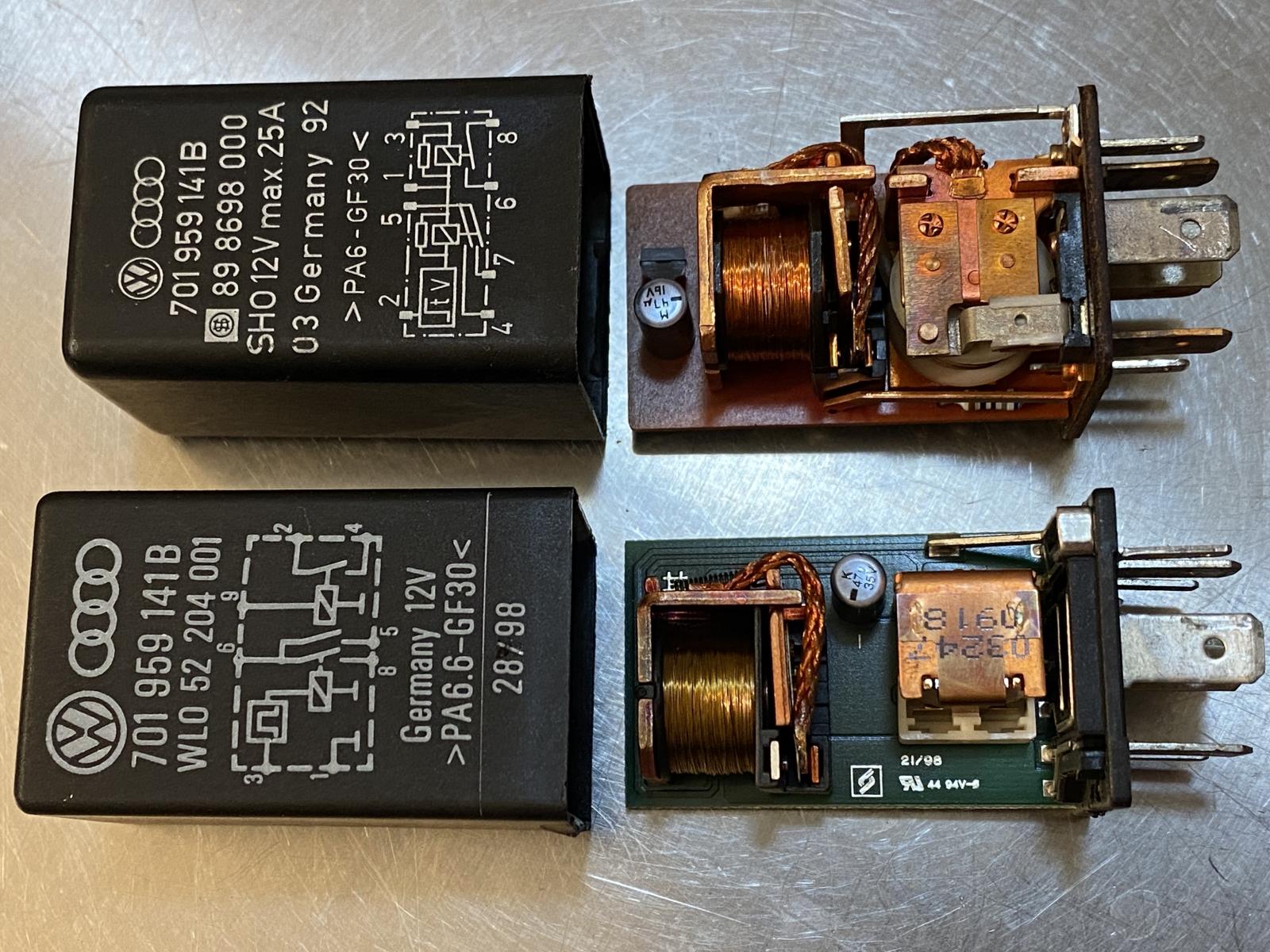
Taking the relay apart, quickly see it is constructed a bit differently than the ones out of the 1993/1995 vans. Additionally the male connectors are not labeled/marked identically, and the schematic printed on the side is not rendered the same as well. Need to make sure they are actually interchangeable with each other. After a couple weeks of letting the van sit, hook up the AC gauges and pleased to find the system is still at the same pressure as before leaving for Europe. While looking through the wiring diagrams in the Bentley service manual further, check to see how and if the AC system changed with the VR6 models. Going through the 1997 model year diagrams the mystery A1/5 wire out of fuse #19 is shown with a destination of the coolant after run pump (v51). Now I need to see if the is accurate or different from the 1993 wiring. Wrenching on the Eurovan is currently paused due to more AC research being required. As a follow up and data point to the cooling system flush attempts, sitting all almost a month is the drain pan from the last coolant flush. The rust particulates have settled to the bottom and the water at the top is almost clear which is a bit of surprise to see.
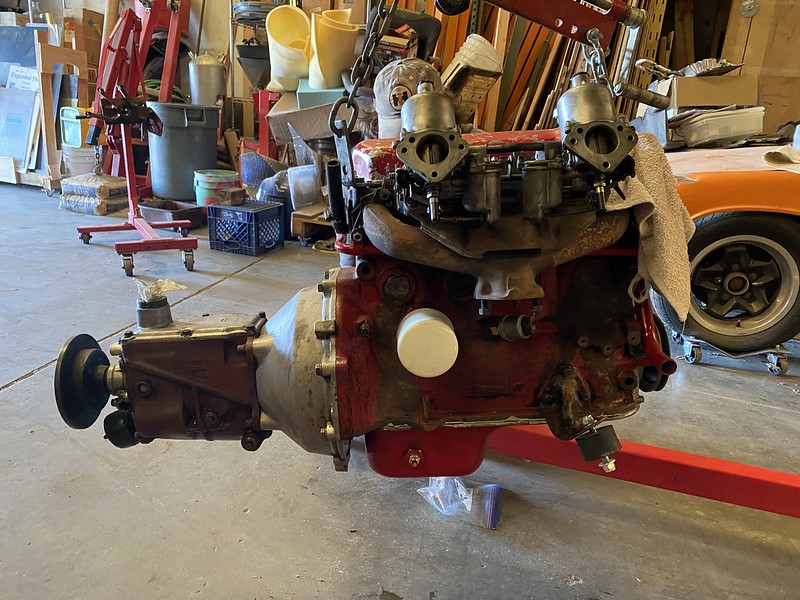
In the meantime, been helping out with an engine transplant on Alex’s 1967 Volvo 122 wagon as well as helping another friend retrieve a 10+ year hibernating 1970s Alfa Romeo from a Nevada hillside. That was quite the PITA job to get it onto the trailer, all of the wheels were locked up with seized calipers on all 4 corners and as well as the e-brake pads on the rear rotors. No keys meant a locked steering wheel and what we initially estimated as 2-2.5 hours to load took us 5 due to a myriad of reasons and “interesting” challenges.
Next: Incremental Improvements on the Weekender
. |
|
| Back to top |
|
|
Saturn
Samba Member
Joined: April 06, 2019
Posts: 266
Location: San Francisco
|
| Posted: Sun May 28, 2023 1:05 am Post subject: Re: Space Capsule 1995: Repairs, Roadtrips, Retrofits, & Wrenching |
|
|
Interior Improvements
During the last six months, the Weekender has spent most of it time on jack stands while I have been working on, in, under and around it. My documentation of work in this thread has primarily encompassed the larger projects I have been tackling. In between these, there have been much smaller ones going on as well. These are the other improvements being done on the van, some of which are maintenance-related while others are enhancements meant to bring the Weekender into the 21st Century.
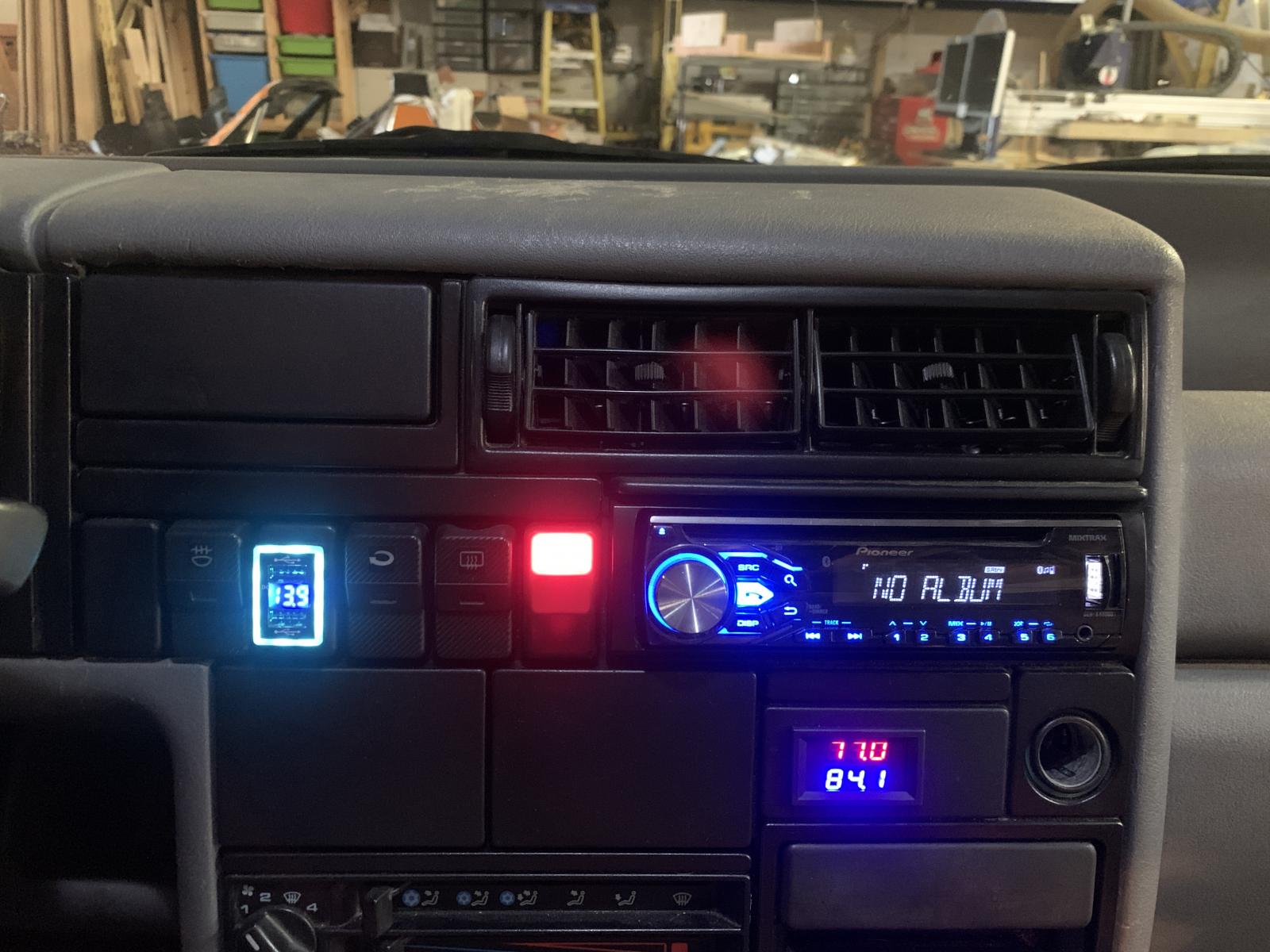
When initially diving into the Weekender to assess what needs to be addressed, an obvious and glaring aspect is the burnt wiring going from the ignition switch to the fuse panel to the stereo. As covered in a post from Oct 22, one of the first initiatives on the van is replacing this damaged wiring. In anticipation of wanting to add other components supplied by the “key-on” circuit, created a power junction using a VW shielded spade connector (P/n 111937081) when rebuilding it. These are utilized on VW Beetles/Ghias and I have sourced these from early 70s donors found during various visits to the junkyard over the years. They are quite useful when installing USB chargers in both of my Eurovans as well as my vintage Volvos as a quick and easy 12V power source for multiple destinations. Presently I have the Weekender’s stereo powered through this connector as well as the dash mounted USB charger. There is still an open spade which could be used for an additional charger, temperature gauge or ??? in the future.
After testing the Alpine bluetooth stereo back in September, it has been wired up though sitting on top of the dash as I wanted to be able to have access to behind the dash. Decide it is now time to fully install the stereo in the dash. The first step is formally repairing the wiring from the stereo into the van’s wiring harness. Badly crimped butt connectors with a dash of wire nuts is the best way to describe the situation. For the speaker wiring, replace out the butt connectors with bullet connectors and the power & ground leads with male/female spade connectors. This will make it easier for the next stereo upgrade which will probably be something with a screen and back-up camera set up. This wiring still has a set of older butt connectors going into the van’s original harness. These were kept in place as the crimps are very robust.
When working on the van or other cars, play music from my phone via bluetooth to the stereo. Standard procedure is putting the key in the ignition and turning it to the right one position and then turning it back to the off position. This would activate the stereo and USB charger though not anything major electrical system to limit the drain on the battery. During the fall-early winter, many times the stereo would cycle shutting down and turning back on. Other times it would only reliably work if the key is set in the first position. After rechecking the wiring several times, start to suspect the ignition switch is the culprit. Knowing this is one of the weak links in the Eurovans, a spare is already on hand. The switch is held in by a single philips screw on the back of the ignition switch assembly. Access is a bit tight, resort to using a smaller, jeweler’s screwdriver to undo it. It takes less than a minute to swap the new replacement unit in place and tightening down the screw. One the new switch is installed do not encounter any other issues or problems.
Next: Additional Improvements on the Weekender
. |
|
| Back to top |
|
|
Saturn
Samba Member
Joined: April 06, 2019
Posts: 266
Location: San Francisco
|
| Posted: Mon Jun 05, 2023 1:06 pm Post subject: Improvements to the Weekender Part II |
|
|
More Improvements to the Weekender
Panel Lighting
During the post-purchase assessment noticed an absence of illumination in the controls for the “secondary heat exchanger” in the center dash. Having light bulbs being non-op wasn’t a huge surprise in a 30 year old vehicle, though a working light in the climate control panel was not something I was expecting. While taking out the instrument cluster to replace out the voltage stabilizer in late January, decide to tackle the illumination for the secondary heat exchanger panel at the same time. This panel is easy to remove from the dashboard, it fully releases after undoing two electrical connectors. The back cover is detached, revealing a single burnt out T5 bulb in a holder. The bulb fits over a plastic octopus looking chamber on the main panel to help distribute the light. Swap in a LED bulb, snap the backing plate in place the plug in the connectors. This control panel is now properly and brightly lit. Figure I should be proactive in replacing out the light for the main climate controls. While the bulb in this particular panel is not made to be serviceable, it can be removed with not much work. This panel gets a replaceable LED light fixture as well, the details of which are here in a separate thread/posting. (https://www.thesamba.com/vw/forum/viewtopic.php?p=10014506#10014506)
Center Cupholders
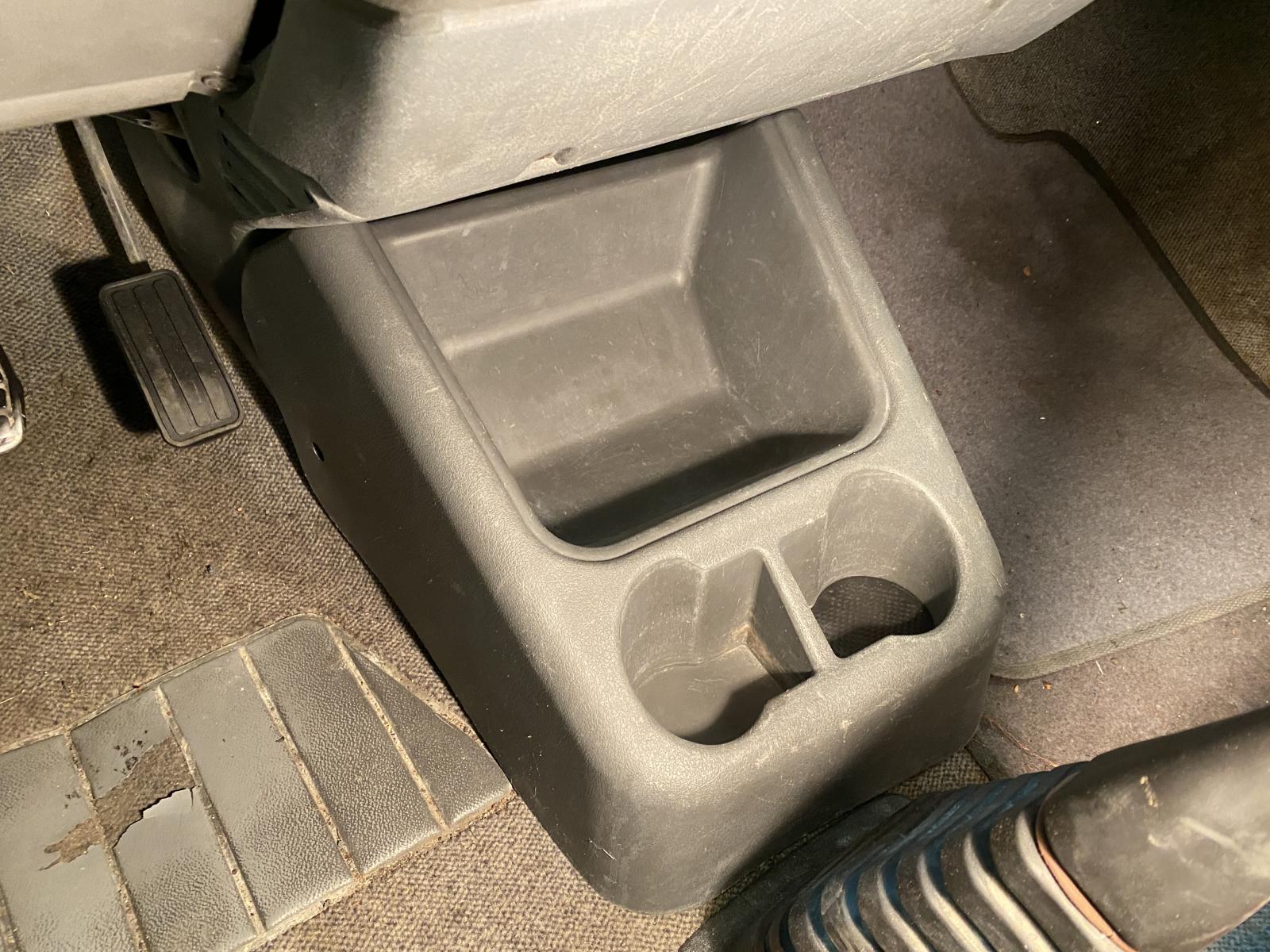
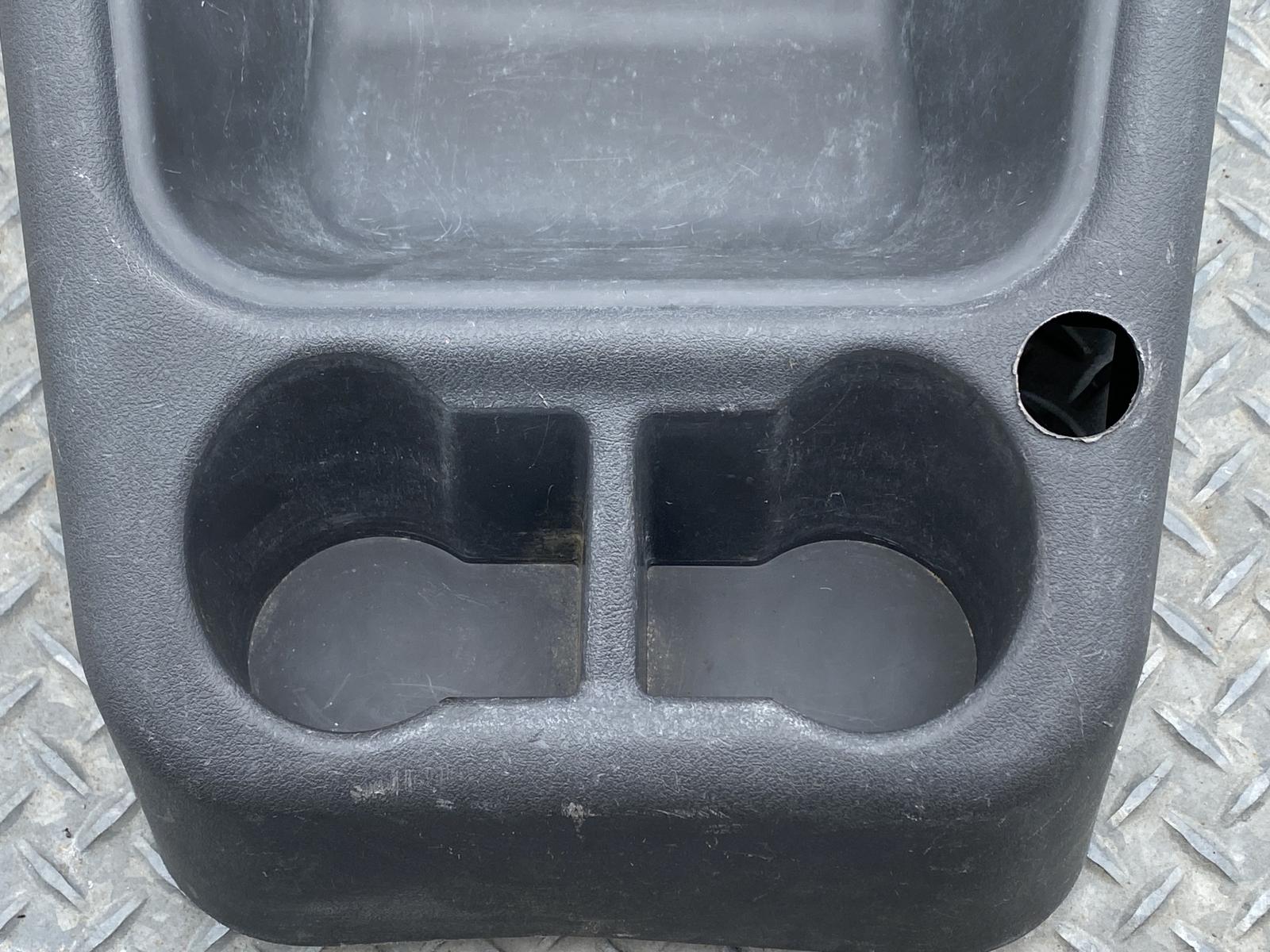
The 1997 and newer vans feature a floor-level storage compartment and cupholder in front of of the shifter. This is something I noticed while going through a Eurovan at the junkyard two-some years ago. Looking at the set up of the VR6-powered vans, the air vent ducting below the dash does not seem any different than the five cylinder vans. Removing this piece out of the well picked-over interior, I am curious to see if it is a simple add-on/retrofit into the older vans. The charge for this part is less than $10 out the door so it is an inexpensive experiment. Adding this storage piece will not block any air flow as the lower center air vents angle from sides of the plastic housing towards the feet of the driver and front passenger. The contour of this part fits into the existing design of the floor vent and has been in my 1995 EVC ever since. After finding another one when searching for the AC relay in mid-April (previous post) the Weekender sports one now as well. I’m sure the VR6 owners have a similar experience, the reach to the cupholder and storage compartment is somewhat of a stretch, even for me with a fairly long reach. That said, it is certainly convenient and a worthwhile addition to the cabin.
1993 Weekender
1995 EVC
Ring Light
A month or so ago while looking at LED lighting, came across a USB powered ring light with a spring clip mount. (https://www.amazon.com/gp/product/B08RNQVZMD) While I do not have the direct need something like this while working from home, started to ponder if this would be a worthwhile addition to the Eurovans. The clip style mount would be useful for regular use inside the van, also potentially for in the engine compartment or while under the van. It can have a flat profile which would give it some advantage over a traditional work light in tight spaces and it can project warm white or cool white illumination as well as be dimmed. The other aspect I though might be useful, it could be independent of the vehicle’s electrical system through plugging it into a USB battery pack. Its overall durability/fragility is something which is an unknown factor, with a price tag of under $10, it is totally worth giving it a shot. Trying out this ring light for several weeks now while working on the Volvo 122 project. It is working well so far, it is certainly way brighter than the stock engine bay lights.
. |
|
| Back to top |
|
|
Saturn
Samba Member
Joined: April 06, 2019
Posts: 266
Location: San Francisco
|
| Posted: Tue Jun 27, 2023 12:26 pm Post subject: Suspension, Test Drives & The Motherlode |
|
|
As previously mentioned for the last 8-10 weeks, the Weekender has been literally and figuratively blocked by my friend Alex’s 1967 Volvo 122S project. A month ago, we finally dropped in the new engine, the tunnel was trimmed and unexpectedly, the transmission installation became a bit of a wrestling match. In the beginning of June, the 122 finally came off the jack stands and stood on its own tires for the first time since the end of March.
Finishing up the Suspension
With the 122 wagon out of the way, fire up the Weekender to drive it forward to access one of the last items on the punch list, fitting in the new Bilstein rear shocks. The front ones had already been replaced at the end of December and the rear set would be “eventually” addressed as swapping new ones in is pretty straightforward. This operation can be done with 19mm (lugnuts), 18mm (upper mounting bolt), and 17mm (lower mounting nut) sockets. Additionally a jack is needed to lift up the hub assembly when installing the new shock. As with the front set, the rear Koni’s were aged and not rebounding at all. Once seating the Bilstein in the lower perch, lifted the hub upward with a hydraulic jack to line up the top of the shock with the upper mounting hole. Tighten the lower mounting nut & upper mounting bolt then reinstall the tire. At a leisurely pace, it takes about 15-20 minutes to complete each side, something a novice mechanic can certainly tackle.
Over the Hill
It is about time, well kind of way overdue to take the Weekender on a short drive after all of the labor on the suspension, cooling system, clutch hydraulics, shifter and brakes. Seeing daylight for the first time in a while, the van unhesitatingly responds to pressing on the gas pedal. The clutch feels normal and does not require a pre-pumping to pressurize it like the previous time coming out of an extended period of rest. Climbing up the first 1/2 of a mile on a steady and mild incline, the engine runs solidly. Head on the normal test loop on the Guadalupe Canyon Parkway, the van continues to power up the 2-mile uphill grade with no complaints. (FWIW, this is the same road on which the famous chase scene from the movie Bullitt concludes in a fiery crash.) A couple hundred feet behind, Alex is part of the test drive to monitor the exhaust output as well as the van in general. Cresting the summit, continue into Daly City for five gallons of fresh 91 octane as the tank is almost empty. At the filling station, Alex reports visible and smellable exhaust when first driving the van though this soon goes away, even while accelerating uphill. Heading back, the van has no trouble ascending the summit or making the round trip for that matter. The only real issue encountered is the mocking coolant warning light on the dashboard as it blinks away all during the drive. The expectation is modeled after running the engine during the flushing of the cooling system that light would not activate once the engine reaches operating temperatures. Unfortunately, this is not the case. On the return trip at every red light, turn off the engine and restart it. After about 20 seconds the blinking light returns on the dashboard. Additionally, notice the water temp needle seems to be reading higher than I expect at the 3/4 mark. This could be cause of the uphill segments of the route, and trying to give it a bit of an Italian tune-up along the way in preparation of taking the van in for a smog test.
The Weekender's Test Drive
Link
The Motherlode
A week and a half ago I participated on the Motherlode Rally through the Sierra Nevadas in my 1975 Volvo 242. This two-day, 600 mile drive is open to 1975 or older cars and goes on some interesting and scenic backroads. This years event was based out of Auburn, CA and there was a Friday noon stage for those coming from the Bay Area starting at the Presidio. Followed the route to the lunch stop in Winters, CA then went off route as I wanted to check out the 1993 Eurovan at the Antelope Pick n Pull. Since its been in the yard for over a month, I didn’t have high expectations of finding much still remaining. As anticipated the van was pretty much a carcass, nothing left of the powertrain or the interior. Did find a couple items, an engine bay light (for my 1995 EVC) and the brake reservoir cap with the built-in low fluid level sensor. Planning on installing this into my 242 as an additional warning device for the brakes.
The rest of the weekend proves to be a fantastic time driving with a very diverse set of classic cars. This year the predominate mark is Alfa Romeo with several GTVs, Guilas, Spiders and even a Sprint Speciale. VW/Porsche was represented by a 356, 911, 914, a hopped-up Beetle and even a Thing. On the first day came across the Beetle out in the middle of nowhere with a dry gas tank. When initially pulling up, his compatriots in the 914 said “We just have a spare quart of gas with us.” My co-pilot turns to me with a furrowed brow, “Who only carries a quart of gas???” Opened the truck and handed over a gallon container and they were soon back on the road.
. |
|
| Back to top |
|
|
Saturn
Samba Member
Joined: April 06, 2019
Posts: 266
Location: San Francisco
|
| Posted: Tue Jul 04, 2023 11:24 am Post subject: Awning, More USB Outlets & Cooling Warning Light |
|
|
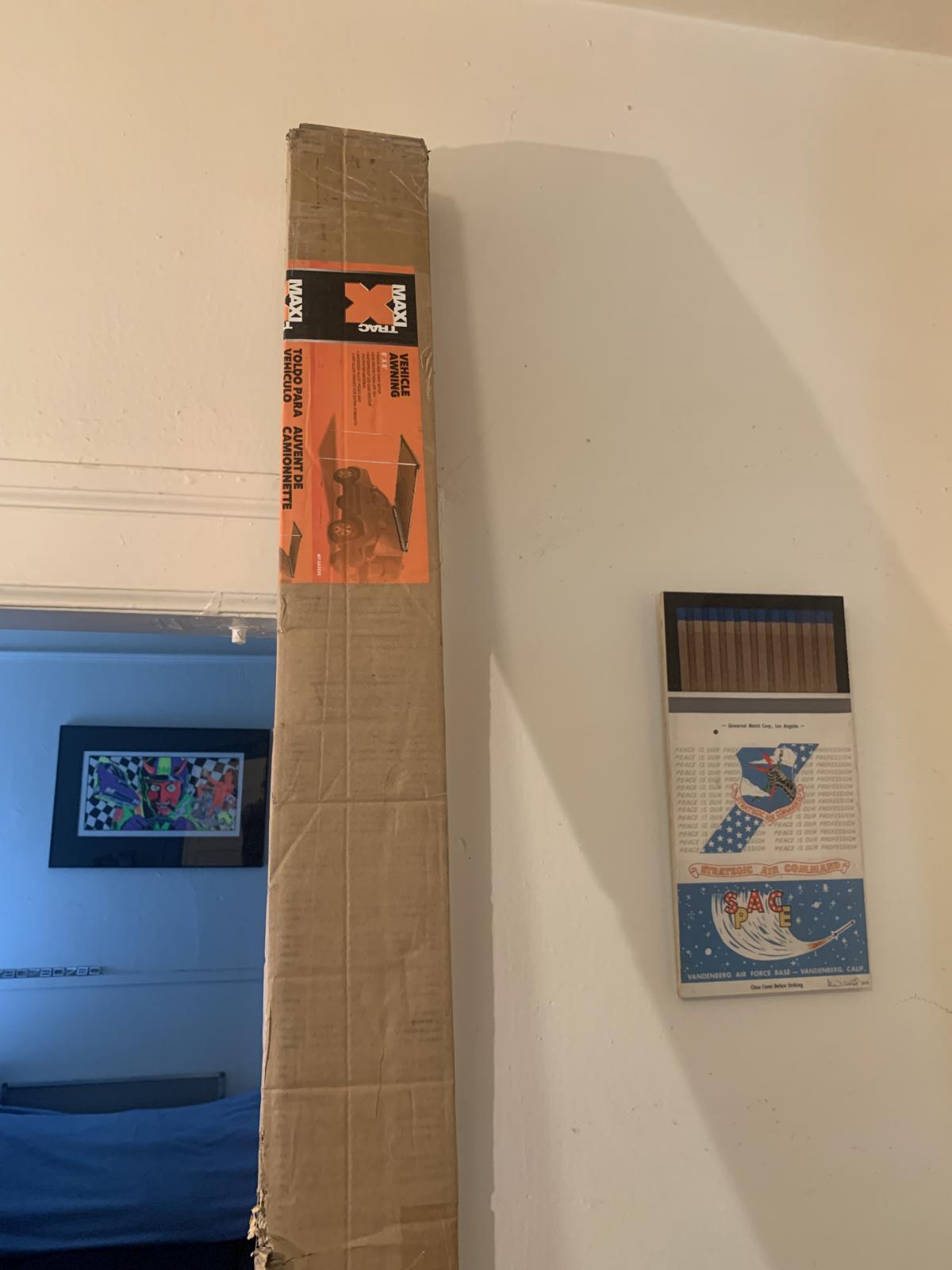
After the Motherlode Rally concluded, remained in Murphys, CA for the evening to hang out with other participants as well as have a leisurely and rested drive back to San Francisco on Monday morning. Before heading on the Motherlode, I ordered one of the NAPA awnings for the Weekender as they are on their monthly special ($139 at most locations.) The closest location to me was out of stock so decided to get order one from one of the stores on the route back from the Rally. My rough calculations pointed to it being able fit into the Volvo 242. After picking it up from NAPA, had to do some rearranging to access the opening through the rear seat into the trunk. Volvo had skiers in mind with this design feature. The box slid in through the trunk almost going all the way up to the shifter. If it was 2 inches longer, I would not be able to get the car into 2nd or 4th gear. While not the most ergonomic set up, we set off on the last leg of the trip only to encounter an unexpected huge back up to get across the bay bridge for an early Monday afternoon. Now need to find a set of mounting brackets for the Weekender.
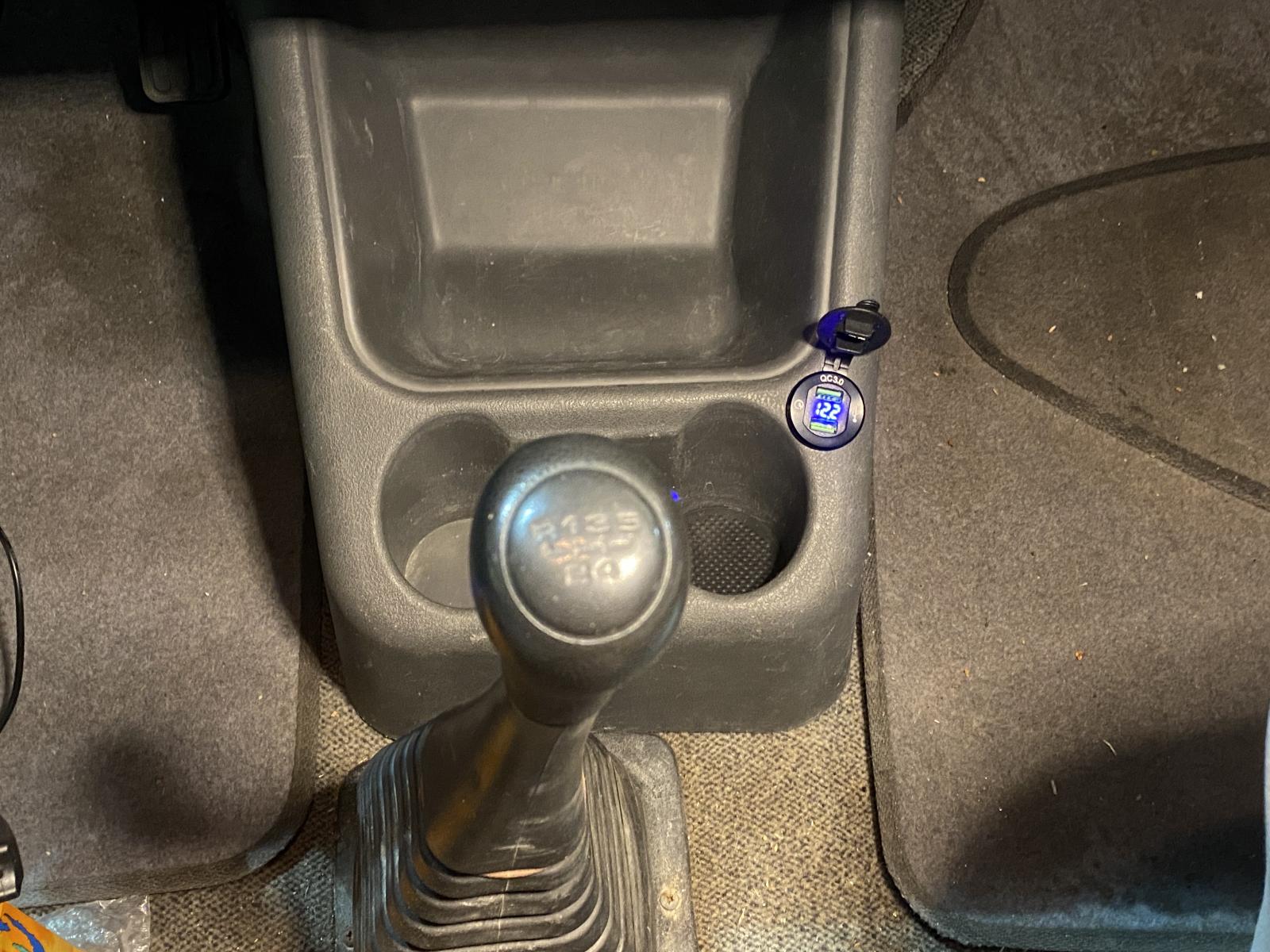
After retrofitting a USB power point next to the center rocker switches, I have been considering where to install another one. Could mirror the first one by mounting another port into a plastic blanks next to the first one. Not a fan of having chords draping in/around the shifter so want to see if there is another logical spot before having to do that. After retrofitting the storage bin scavenged from the 1999 Eurovan in the boneyard, begin to calculate if it could host a charging station. Taking it back out, inspect the console and the proverbial light bulb sputters on for a solution.
It looks like one of the round USB power ports meant for replacing out a cigarette lighter should be able to fit between the cupholder and the main recessed storage area. (Ordered these several months ago so they were on hand: https://www.amazon.com/gp/product/B08PCMJRR2 ) A 29mm hole is needed for the body of the charger to pass through. Grab a 27mm socket as an initial check if an opening can be made without impairing the cupholder or storage area. With a sharpie, outline the target opening (28mm) with the assistance of a plastic stencil template and find the center point. Drill a small pilot hole through the topside. Use this to guide a 1 1/8” (28.5mm) spade bit from the bottom side to create the proper sized opening. The USB charger slides in and is secured into place with the threaded lock ring. Need to loosen it a bit to get the gasket/protective cover to line up correctly then tighten it back up. Route the positive wire to the ignition/key activated connector providing power to the stereo and existing dash USB power port. Run the negative lead to the ground ring to the left steering column. At some point will need a USB-C port in this van somewhere and this position would be an easy place to fit one in when that time arrives.
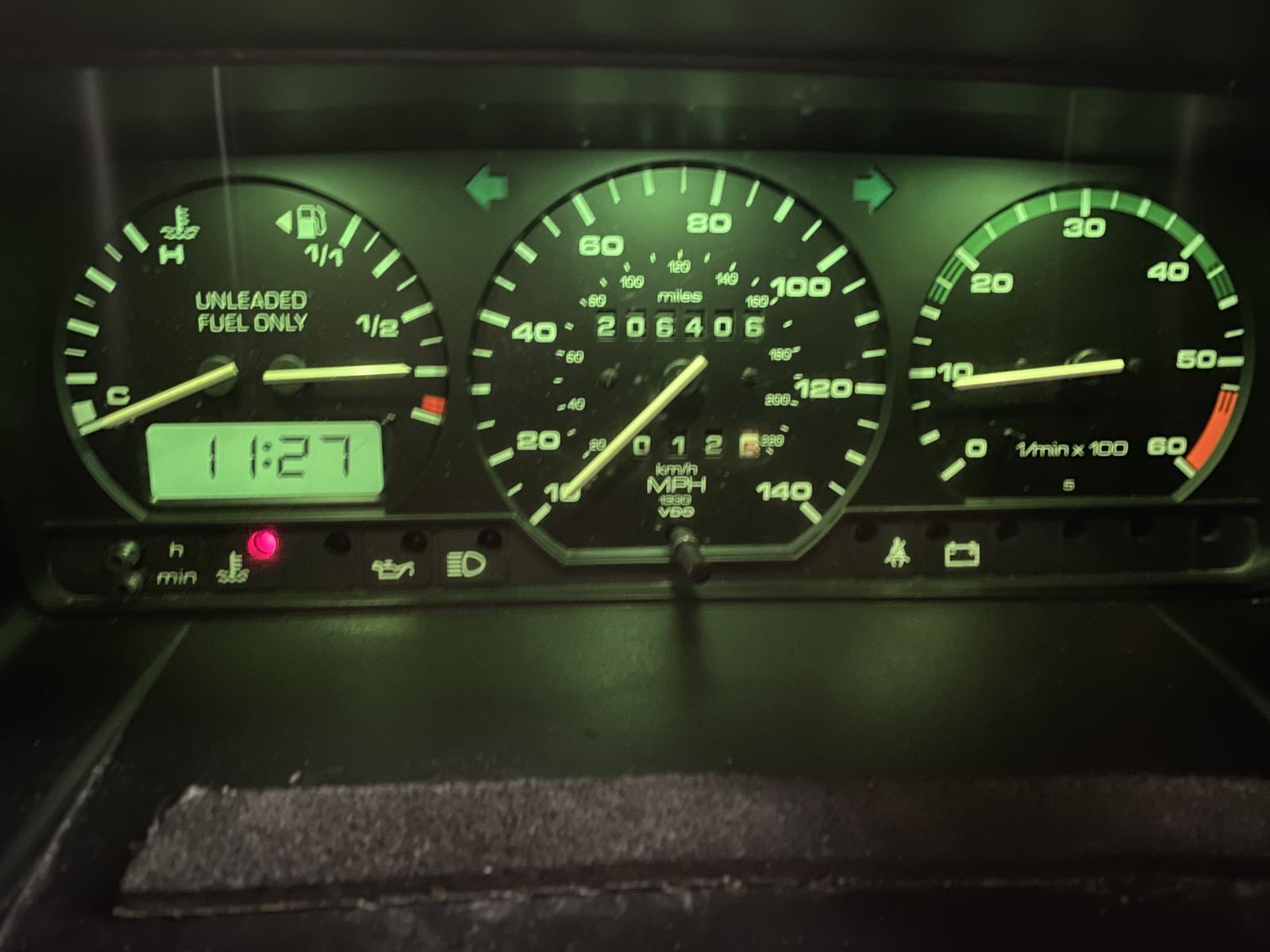
After seeing the blinking red coolant warning light during the test drive, go back to the coolant reservoir and once again pull the connector to the level sensor. Install a jumper wire, fire up the engine and the red light activates again after about 20 seconds. In addition to the jumper I have taken out the instrument cluster to resolder the voltage stabilizer joints, replaced the voltage stabilizer, as well as replaced the coolant temperature sensor. Right now I am pretty much stumped on what else I need to be checking so any suggestions would be very welcome.
. |
|
| Back to top |
|
|
VanGeek
Samba Member
Joined: September 25, 2022
Posts: 365
Location: New England
|
| Posted: Wed Jul 05, 2023 4:58 am Post subject: Re: Space Capsule 1995: Repairs, Roadtrips, Retrofits, & Wrenching |
|
|
| Hey @Saturn thanks for your posts here. Appreciating and learning from them! The center console modification you made for the USB power looks great! How bright is the voltage display when driving at night? Those adapters don't have an option to dim or shut-off the display without losing power to the USB ports, right? |
|
| Back to top |
|
|
Saturn
Samba Member
Joined: April 06, 2019
Posts: 266
Location: San Francisco
|
| Posted: Wed Jul 05, 2023 11:23 pm Post subject: USB Charger in the Weekender |
|
|
| VanGeek wrote: |
| Hey @Saturn thanks for your posts here. Appreciating and learning from them! The center console modification you made for the USB power looks great! How bright is the voltage display when driving at night? Those adapters don't have an option to dim or shut-off the display without losing power to the USB ports, right? |
Thank you for the feedback. Good to know the work I am documenting is of value to the Eurovan forum.
In regards to the powerport, I have yet to experience driving the Weekender at night with the new USB port installed. Usually these chargers are about the same brightness as the display from a DIN-sized aftermarket stereo. Most of my cars have some sort of retrofitted USB charger set up in them so it could be the case I am filtering them out after seeing them for so long. That is why I tend to stick with blue lights/lighting on these power ports. Newer USB chargers do have on/off buttons incorporated in them now, though that is a main switch and not just the lightening of the unit. (https://www.amazon.com/s?k=USB+charger+3.0+dual+socket) If the light is too distracting then apply some tape and block it out with a marker or sharpie. Personally, I don't mind the light generated and think there is reason to have it as it makes it easier to find/use when it is dark. Kind of like the built-in illumination in the door window switches.
The one dash display which trips me up is a red overdrive light on the dash of my 1967 Volvo. I will catch it out of my peripheral vision and will sometimes momentarily set off the oil warning light alarm in my brain. should change it to a blue or green light to help reduce that distraction. Also in darker conditions, the LED flights get blown out by camera phones so they tend to look a lot more intense then they normally appear to the naked eye.
1993 Weekender
1995 EVC
. |
|
| Back to top |
|
|
Saturn
Samba Member
Joined: April 06, 2019
Posts: 266
Location: San Francisco
|
| Posted: Thu Jul 20, 2023 5:23 pm Post subject: Sad Trombone Smog Test |
|
|
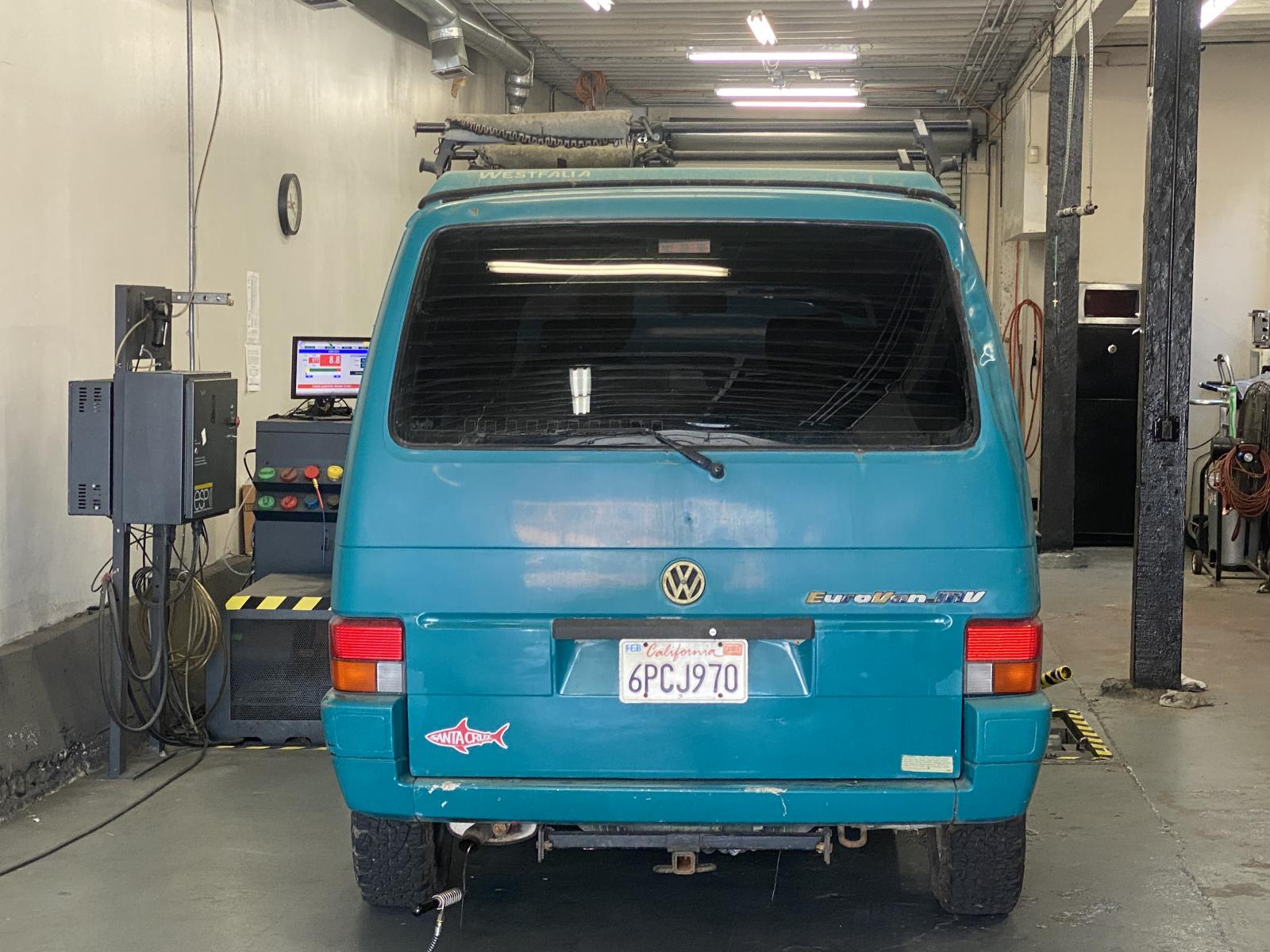
Tuesday afternoon finally get the Weekender out on a drive in order to get it properly warmed up. Proceed to my usual smog test station and the result is the van fails its smog test. In the Bay Area, vehicles must pass a 15mph and 25mph dyno test used simulate actual driving conditions. The van does just fine on the 15mph parameters but ends up failing at the 25mph level. The max of the HC (Hydrocarbons) allowed is 51ppm with the van registering at 81ppm. CO (carbon monoxide) has a max of .73% and the test detects 2.26%, way off the scale. NOx output is way within limits 747ppm max/41ppm measured. Elevated HC & CO usually means incomplete or unburned fuel, so most likely running rich.
When talking to the tech after the test, they indicated a bit of trouble occurring with the Weekender. After situating it on the dyno, the tech needs to put the vehicle in gear and rolling to get to the speed of 15mph. On the first try, the Weekender ends up stalling out trying to get into second gear which I see happen while out in front of the shop. During the 25mph test, I hear the engine straining trying to keep up in 3rd gear and the tech goes back to second gear to run the test. They relate the van seems to be down a bit on power and recommend that I look at the MAF, plugs and/or wires as a starting point. The ignition wires, spark plugs, distributor cap, rotor, are all new, the only part I left alone is the ignition coil.
Beginning to research on what to start looking at so the test can be run in 3rd gear. Want to figure out If this relates to an issue with the ignition/spark, fuel delivery, vacuum leak or something like a blockage in the catalytic converter. When driving the van around the past few weeks, I have not sensed any sort of misfire or the engine being down on power. That said, when I first picked up the Weekender last September, there was an initial feeling it was not running optimally. Because of the original shifting issue, the entire seven mile trip was done all in 3rd gear so that might have made things seem not at 100%. Another aspect to note during the pretest drive and going into the smog shop, the coolant temp gauge was sitting at the 3/4 mark. If the engine was running too hot, then the NOx measurements would be elevated as well.
. |
|
| Back to top |
|
|
Saturn
Samba Member
Joined: April 06, 2019
Posts: 266
Location: San Francisco
|
| Posted: Thu Aug 10, 2023 9:49 am Post subject: Smog Test Part II: reducing the HC & CO |
|
|
The last several weeks have been spent researching what might be the cause(s) of the failed smog test on the Weekender. From interpreting the numbers during the first attempt, my take is the catalytic converter is not the main issue, rather something with or around the ignition system. At the same time I did research on cat replacement which would end up up being minimally around $500 with a C.A.R.B. compliant unit, new O2 sensor and finding someone to weld it in place. My estimate for having this done at a shop would be $750-1000+. After working on the van over last few days and not replacing out the cat, feel it is ready to drive the Weekender back to the smog test shop. 25 minutes later the tech says “Congratulations, it passed. What did you do to it?” while pointing at the gross polluter designation from results from the first visit.
As outlined in the previous post, the one part of the ignition system I have yet to replace is the coil. Several months ago one had been ordered to have around as a spare so there is a replacement on hand. This sits in front of the battery, though need to first get a Shopvac hose in there to remove a large deposit of leafs and other organic material from its time being parked outside by the PO. With clear access and a 10mm socket, remove the old coil out from its position below the ABS components. Find printing on the side of indicating a 2013 manufacture date an also notice some oxidation on the bottom of it. Using some Simple Green and a brass brush, scrub the metal base in the engine compartment as this looks to be a heat transfer spot. Plug in the connector & distributor wire, tighten the mounting bolts and the new coil is place.
If the van did end up requiring a new catalytic converter, a new O2 sensor would be needed as well. Ordered one of these soon after the first test and figured it was a good as time as any to put it in. While trying to get the main plug uncoupled, one of the wires pulls out of van-side connector. It could be pushed back into place, I didn’t believe doing this would be great long term. Cut the corresponding wire on the 02 sensor and crimp on male or female connectors with protective sheath on either side.
One of the areas to look at is if there is any vacuum leaks in the engine bay. Around the vacuum reservoir some lines had already been replaced with silicone hose. On the drivers side of the engine, inspect the hoses going from the engine towards the ECU. At one of the junctions is a capped off line, a perfect spot to hook up a mityvac. Take a reading of the vacuum (around 15 in/hg) with the engine running. Remove the ECU hose and find this one does not seem to retain any sort of vacuum. Inspect both ends which are both cracked and frayed out, trim them and it begins to hold. Restart the engine to test the system again and this time the gauge reads 17 in/hg. Add replacing all of these lines on now on the to-do list.
Since the dyno test mimics road conditions, I focus on if there is anything else which could be done to make the Weekender operate more efficiently. Remembering the difficulties the tech had getting the van up to correct speed during the first test, started to consider rolling resistance. This van has pretty beefy tires on it and realized I have never checked the tire pressure. All four corners measure at 32-35 PSI which is on the low side. They should be at 50 PSI according to the sidewall print and are inflated accordingly. At this point I am ready to retest the Weekender to see if any of these changes make an impact. Get the engine/exhaust fully warmed up and head to the smog shop. In examining the results from both tests, the HC and CO drop dramatically though at the same time NOx shoots way up to almost the maximum allowable. This may mean a new catalytic converter will be needed in the next few years. At the end of the day not sure if it is one or a combination of the fixes which allow the van to pass the test.
Another data point on an ongoing issue. On the way to the test station the temp gauge is reading pretty high and the coolant warning light continues to blink away. At a stoplight several blocks from the destination restart the van and the warning light stays dormant. Still trying to figure out what is going on with this light and how to make it operate in a more consistent manner.
Next: The Deep Clean
. |
|
| Back to top |
|
|
Saturn
Samba Member
Joined: April 06, 2019
Posts: 266
Location: San Francisco
|
| Posted: Thu Aug 24, 2023 7:12 pm Post subject: Re: Space Capsule 1995: Repairs, Roadtrips, Retrofits, & Wrenching |
|
|
With the acquisition of the California Smog certificate, this now allows the Weekender’s title to be transferred into my name and to officially reach operational status. Pretty much not a moment too soon as for almost the last year there has an event the van has been expected to be ready for: Monterey Car Week.
Last year my brother Sanchius had been planning to attend Monterey in his Vanagon when he ended up taking a new job in Indiana and moving there from Reno. He was still planning to come out and I started to look at potential vehicles for him to use/sleep in at our Laguna Seca camping spot aside from my Volvo 240 wagon. That is when I located the 1993 Weekender on Craigslist here in San Francisco, though by this time, he opted-out of attending. After returning from Monterey, I decide to still take a look at the Eurovan and end up picking it up as a project. As I continued to work on it, planning starts for attending Car Week this year and my brother commits to come out after missing last year.
Cleaning & More Cleaning
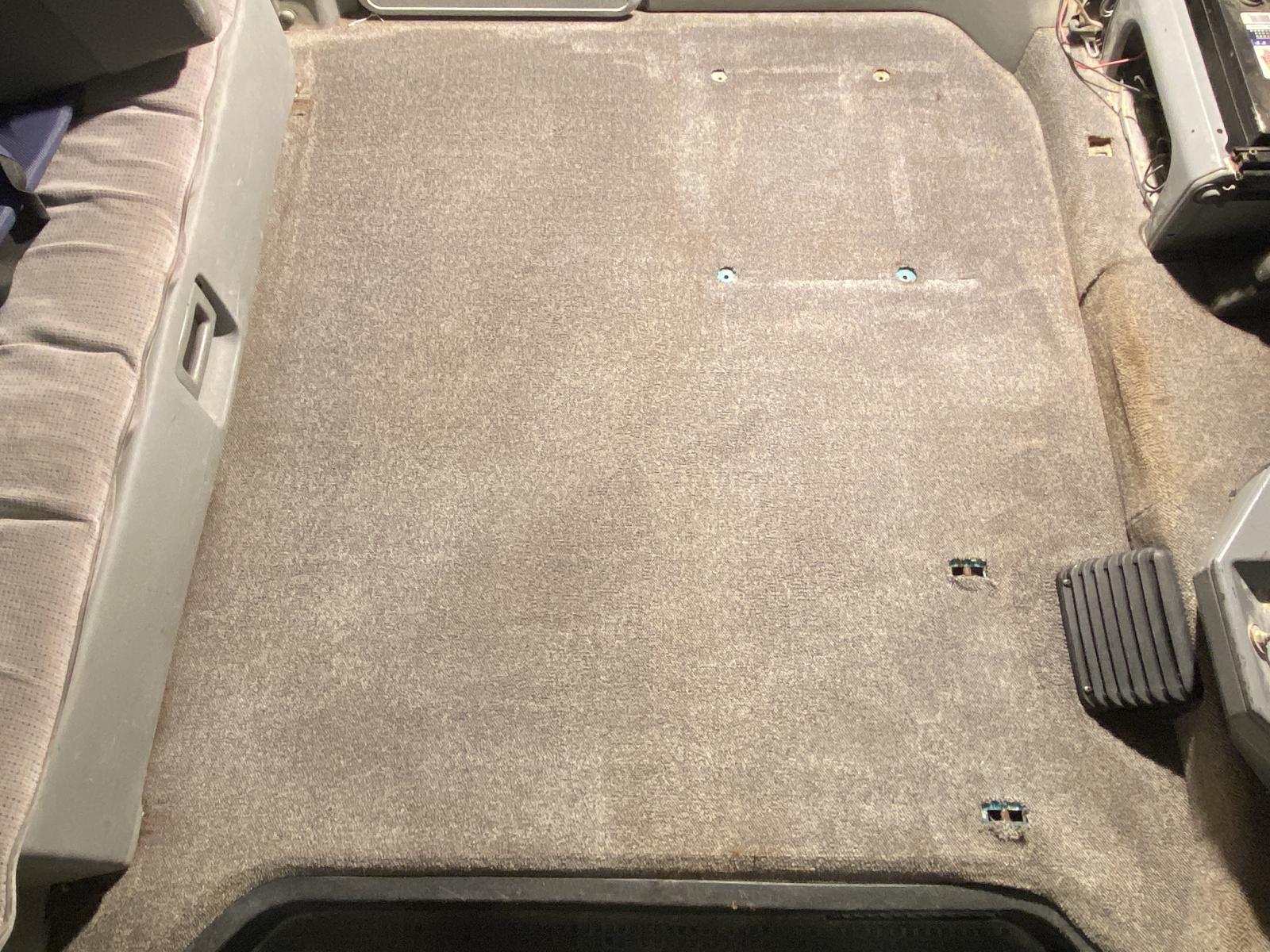
With the event deadline drawing closer, obviously the Weekender requires a pretty deep cleaning of the interior and this starts in earnest at the end of July. Purchased a small capacity wet-vac several months ago as one of the main tools for cleaning the carpet and seats. In a spray bottle put in a mixture of 1/3 simple green, 1/3 vinegar, and 1/3 water as a cleaning agent. Vinegar is needed to break up and remove the alkali playa dust, thus its inclusion. Remove the jump seat, vacuum the floor and begin the carpet cleaning operation in the main cabin. Over the course of a week and a half, spend 6-7 hours with the wet-vac attacking the residual stains multiple times. A dramatic improvement is soon evident, though after drying while the carpet is more of a uniform color, some of the deeper stains still persist. Even after several hours of work, the liquid in the wet-vac reservoir still emerges looking like chocolate milk. Second stage of the cleaning focuses on the front carpets and the rear seat. While looking way more presentable, it is still not perfect (nor do I really expect it to be.) The rest of the van is cleaned with a shop-vac, the wet-vac, the 1/1/1 cleaning solution, paper towels and lots of elbow grease.
The other aspect of the playa dust is on the exterior. After two rounds with a power washer just after acquiring the Weekender it still remains tenacious and hard to evict, especially on the fiberglass pop-top. When initially testing out the 1/1/1 cleaning mixture, apply it on the side of the pop-top just above the drivers door. It cuts through the whitish, chalky residue really well and start to use it on the rest of the van.
Shore Power
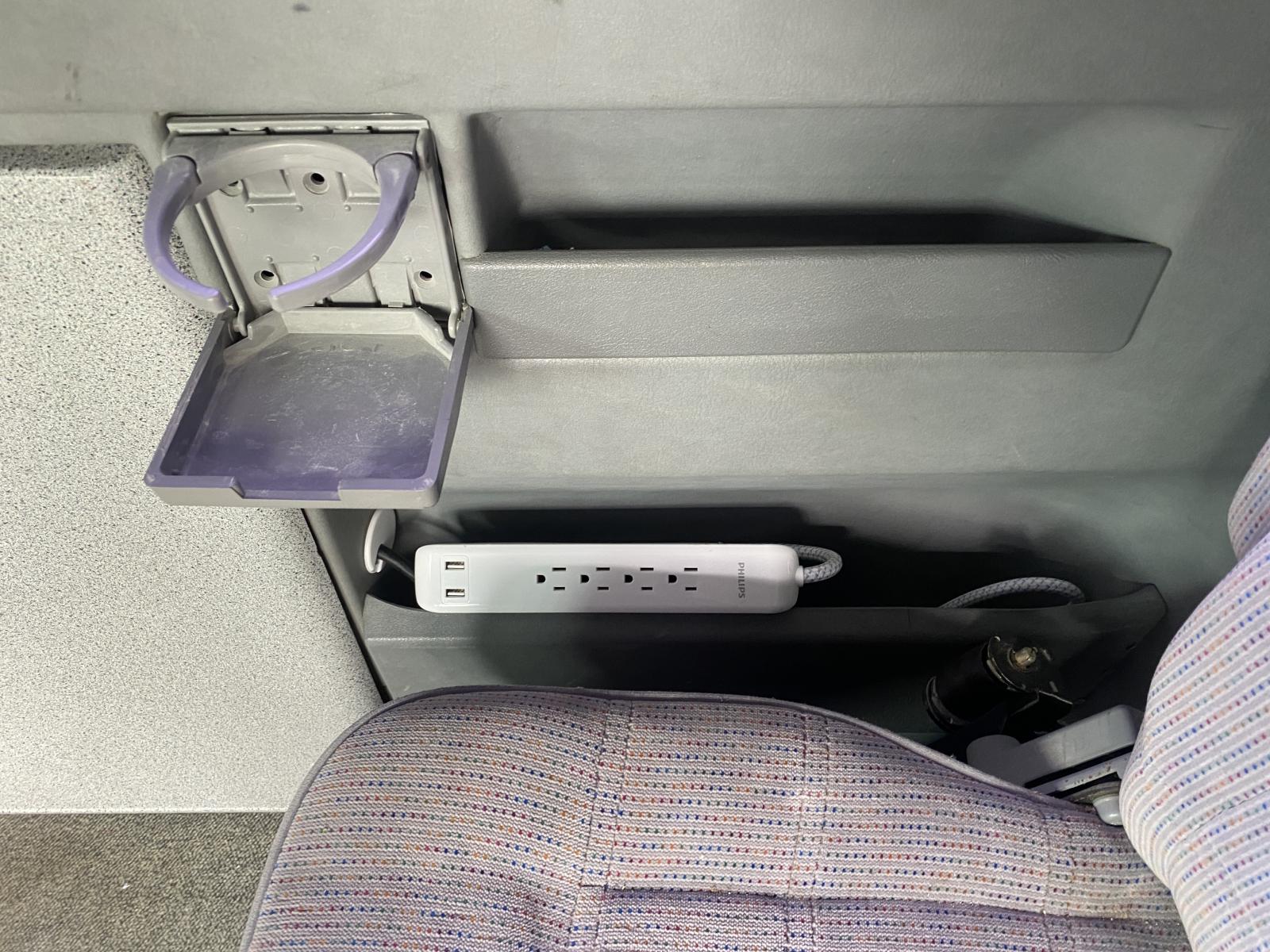
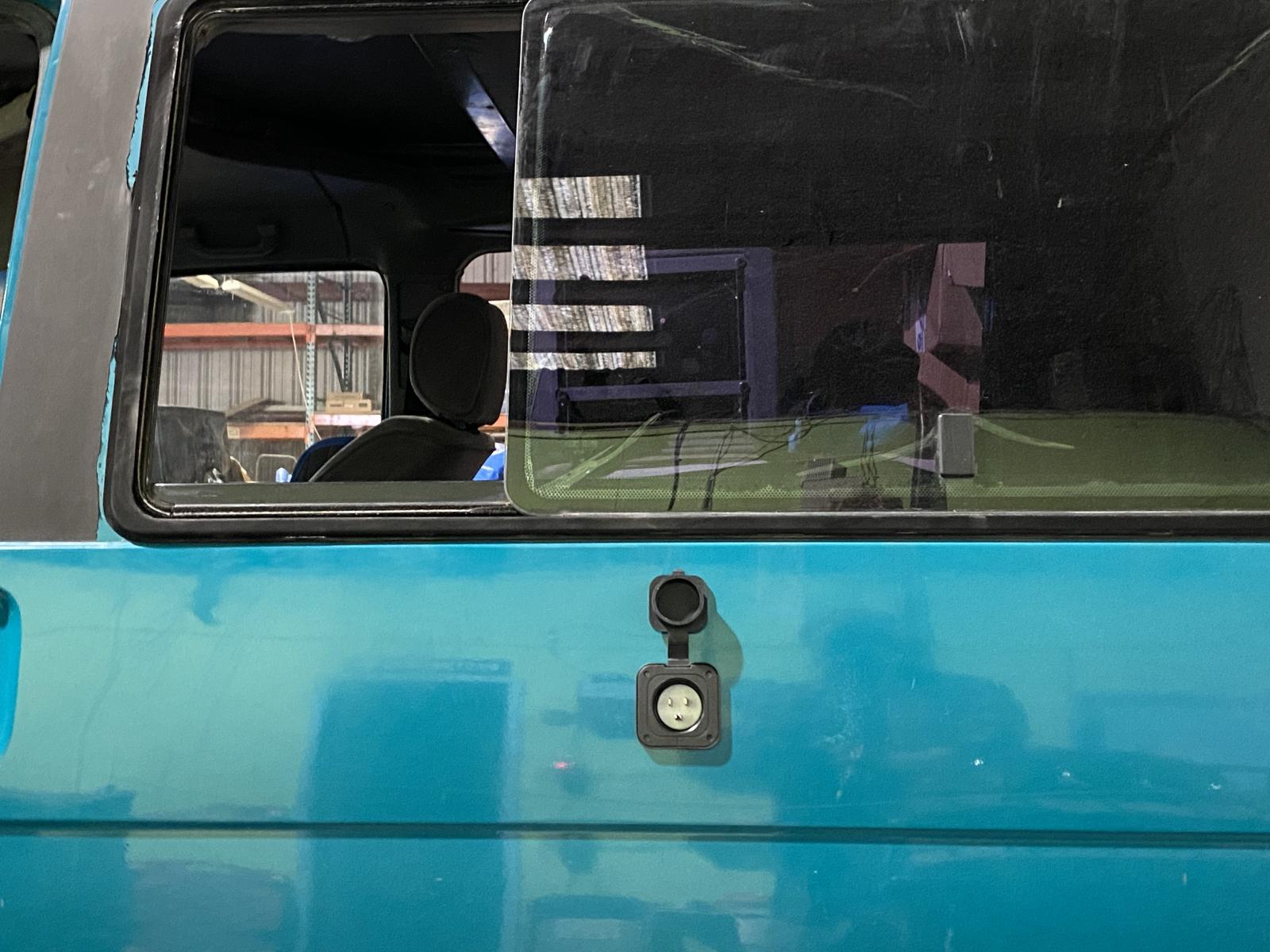
In January, dbeeby posted a well documented procedure on adding shore power into their 2003 Weekender. https://www.thesamba.com/vw/forum/viewtopic.php?t=776533 Bookmarked this how-to guide, and decide to perform a similar install. Instead of a dual plug port, I opt for a singe port as I plan to integrate it into a power strip in one of the storage pockets next to the jump seat. Follow their instructions except for routing the plug through the cup holder. Instead, cut a 1 1/2” hole into the panel wall above the storage pocket to run the power plug through and retain the cupholder for the jump seat. Find an appropriate sized plastic cap on Amazon to cover this hole for a more tidy and finished look.
After installing this into place and putting everything back together close the slide window and see something which will need to be addressed. Sliding the window close, it drags some residual dirt/playa dust which exits out of the drain openings in the channel. Couldn’t ask for a better visual cue on the drainage route as one of those happens to be situated right above the shore power port. My plan is to initially close that channel drain with butyl so water does not leak directly onto the port/opening. If planning this approach to adding shore power, keep this placement in mind. Having this shore power availability is really valuable when working with the wet-vac inside the cabin.
The EVC
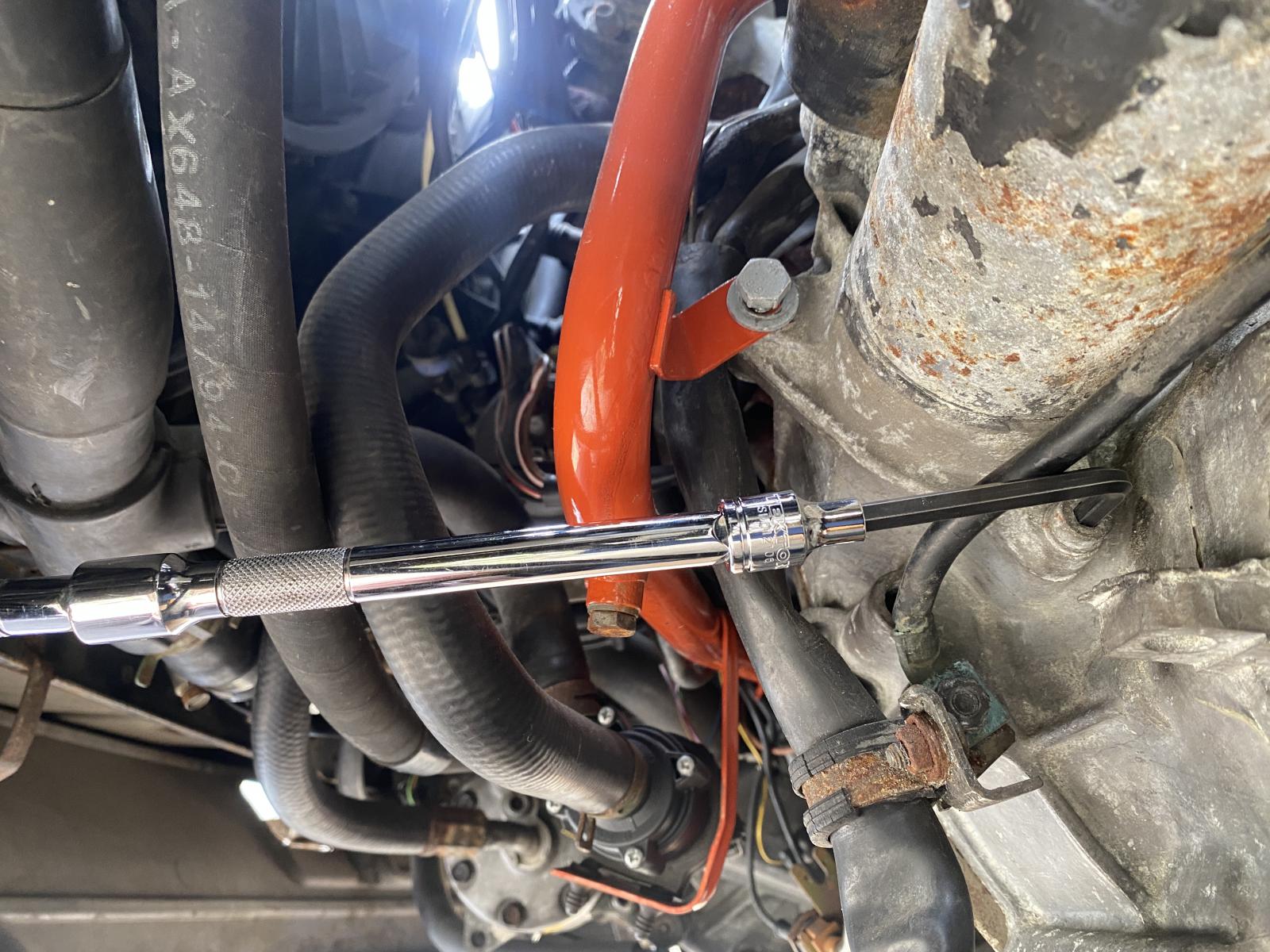
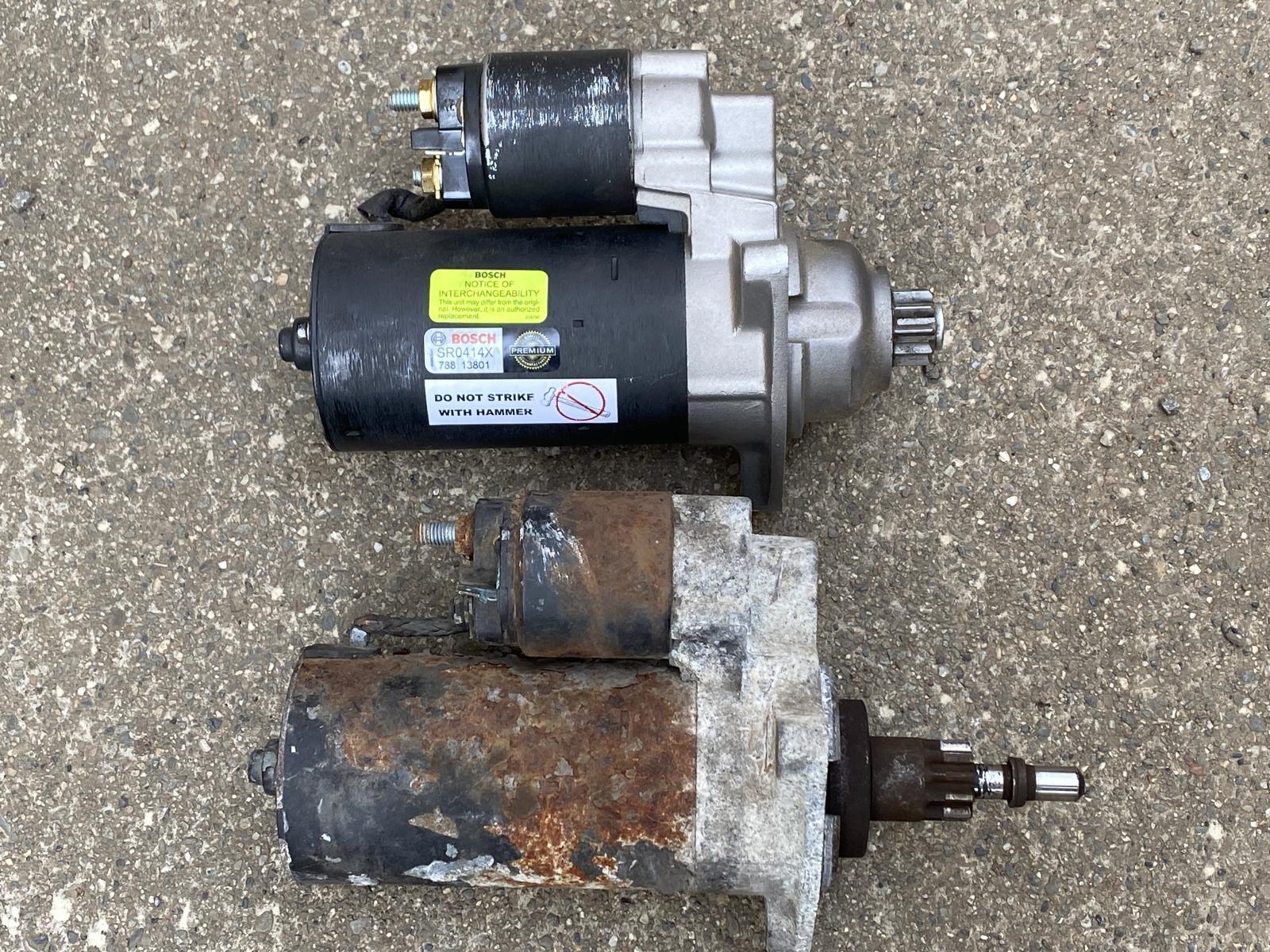
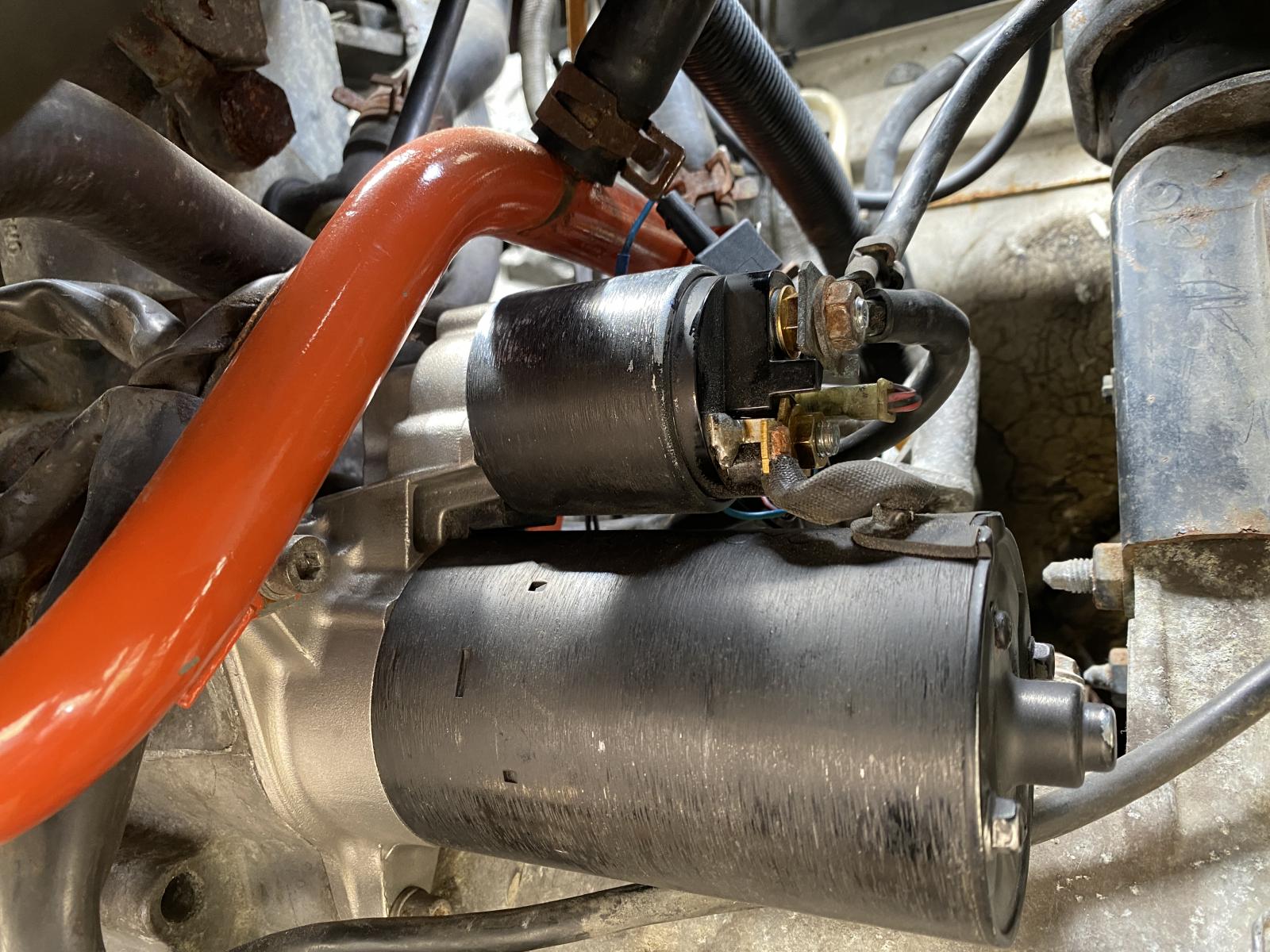
While work and efforts been concentrating on the Weekender to get it ready for the Monterey trip, the 1995 EVC is not being ignored either. In beginning of August, a good friend of mine asked if they could borrow one of the vans to take camping near the Avenues of the Giants (Redwood groves) in Northern California. Since the Weekender was not quite ready, give them the keys to the EVC. But before that goes out on any sort of long-range trip, the main to-do item is replacing the starter. The Campervan is driven up on ramps, the skid plate removed and the process begins to remove the starter. It is a straightforward swap with only 3 mounting bolts, though access can be tight on the upper most one. The new starter is soon tightened into place and all wires connected.
This also provides the opportunity to replace out the gearshift selector bushing aka bearing shell bushing (orange) and the lower pivot bushing for to the shifter itself. Both are pretty straight forward to access and replace from under the van. The old ones are removed and new ones installed, more specific details are in an earlier post from when this was done on the 1993 Weekender: https://www.thesamba.com/vw/forum/viewtopic.php?p=9995942#9995942
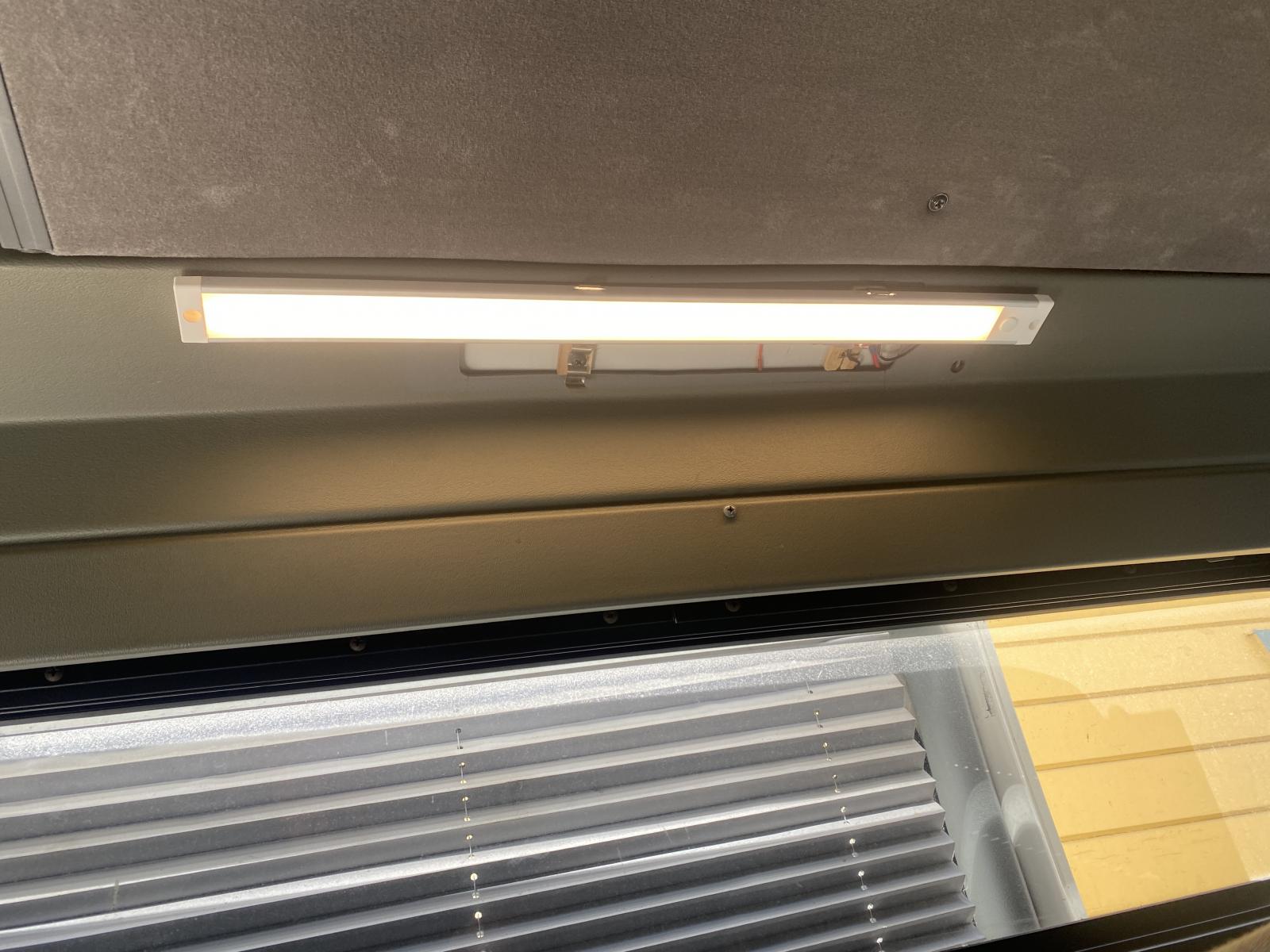
The one other update in the EVC is a swap out of the LED lighting over the pullout bed area. This had been upgraded with dual warm-white LED fixtures, in my opinion provided too much light as they were not dimmable. Additionally, these units have a pretty thin clear cover which I believe to too fragile for a camping rig. Initiate a search for a suitable replacement and end up finding a 20’ long fixture which is dimmable as well as sporting a red/night vision mode. (https://www.amazon.com/dp/B0B62S5ZY3/) Installed one of these in place of the dual fixtures and pretty happy with it. A second one could be installed in the space as well if needed. The EVC is now ready for them to take it on the adventure up north. Four days and 500 miles later it returns back without an incident and ready for the trip down to Laguna Seca.
Next: Dual Eurovan Camp-n-Jamboree
.
Last edited by Saturn on Sat Aug 26, 2023 1:54 pm; edited 1 time in total |
|
| Back to top |
|
|
VanGeek
Samba Member
Joined: September 25, 2022
Posts: 365
Location: New England
|
| Posted: Fri Aug 25, 2023 9:40 am Post subject: Re: Space Capsule 1995: Repairs, Roadtrips, Retrofits, & Wrenching |
|
|
Hey Saturn -- looks good! As always, appreciate your thorough descriptions and photos. I may add shore power to my weekender as well at some point. As others have mentioned, would like to incorporate coach battery charger. Still thinking how I might do that if I also eventually have a DC-DC charger installed under the driver's seat. I'm using an 80aH AGM battery but might go with LifePO4 in the future.
On the EVC starter swap, I recently did the same on my weekender. Did you swap out the copper bushing in the trans housing? It's a wear item, right? |
|
| Back to top |
|
|
Saturn
Samba Member
Joined: April 06, 2019
Posts: 266
Location: San Francisco
|
| Posted: Sat Aug 26, 2023 12:44 pm Post subject: Re: Space Capsule 1995: Repairs, Roadtrips, Retrofits, & Wrenching |
|
|
| VanGeek wrote: |
| Hey Saturn -- looks good! As always, appreciate your thorough descriptions and photos. I may add shore power to my weekender as well at some point. As others have mentioned, would like to incorporate coach battery charger. Still thinking how I might do that if I also eventually have a DC-DC charger installed under the driver's seat. I'm using an 80aH AGM battery but might go with LifePO4 in the future. |
Thank you, appreciate your feedback. I figure once the access point into the interior of the van is established then further modes could be done when needed.
| VanGeek wrote: |
| On the EVC starter swap, I recently did the same on my weekender. Did you swap out the copper bushing in the trans housing? It's a wear item, right? |
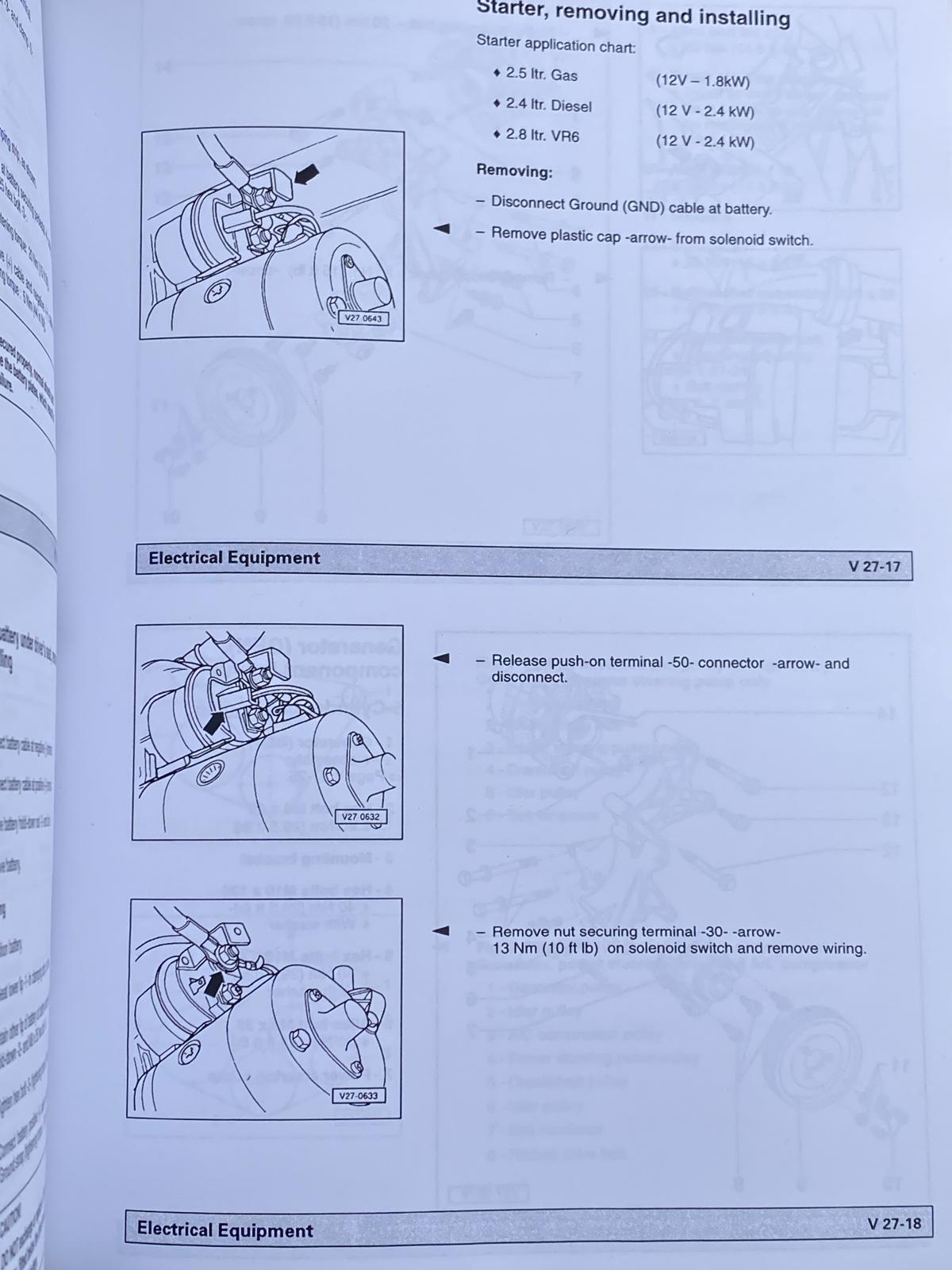
Was not aware of the starter bushing in the transmission, thank you for the heads up/reminder about it. When I do maintenance work on the Eurovan, I check the Bentley manual on the procedure. When looking it up the starter is covered in the Electrical Systems section (V 27-17)
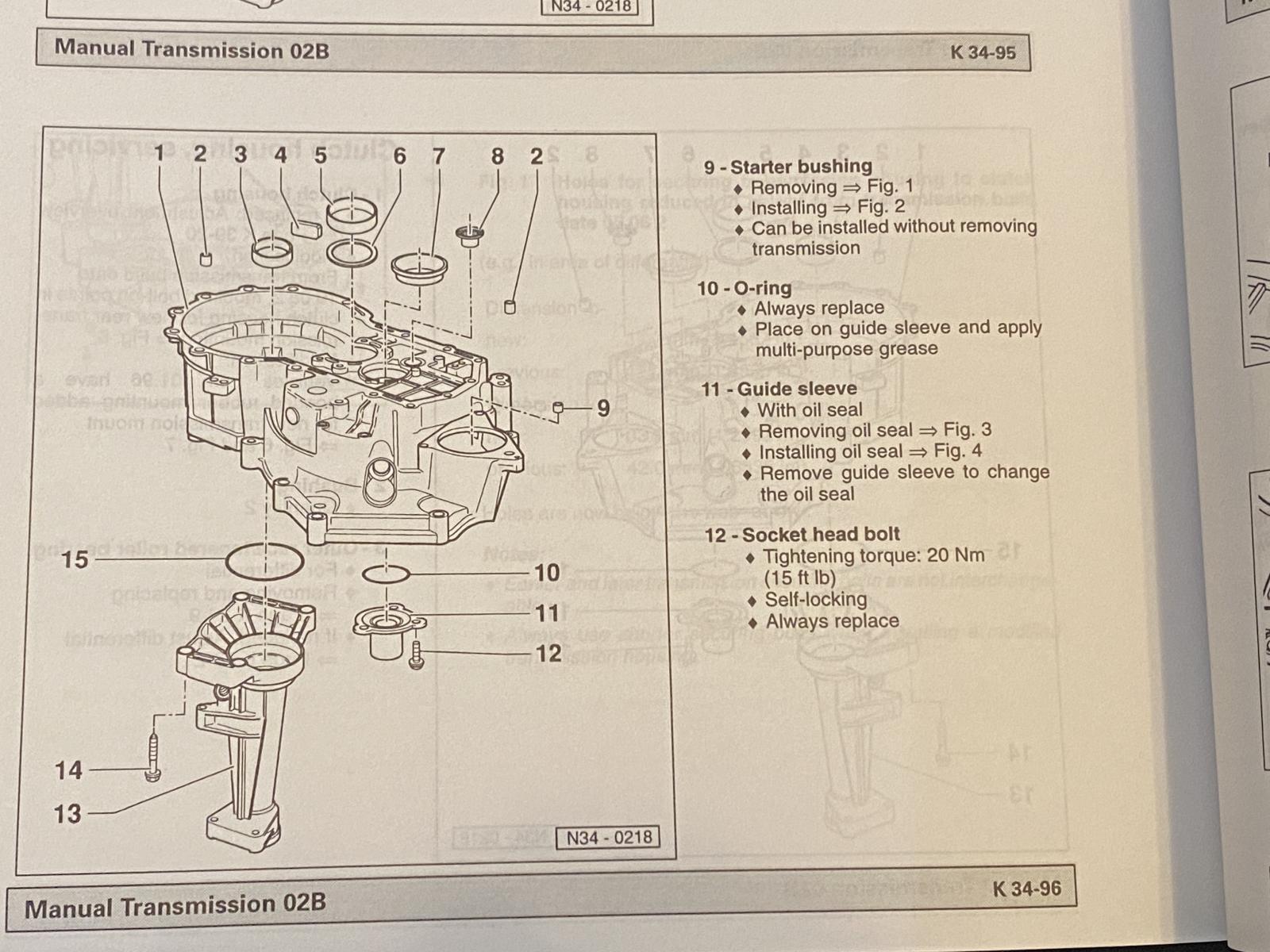
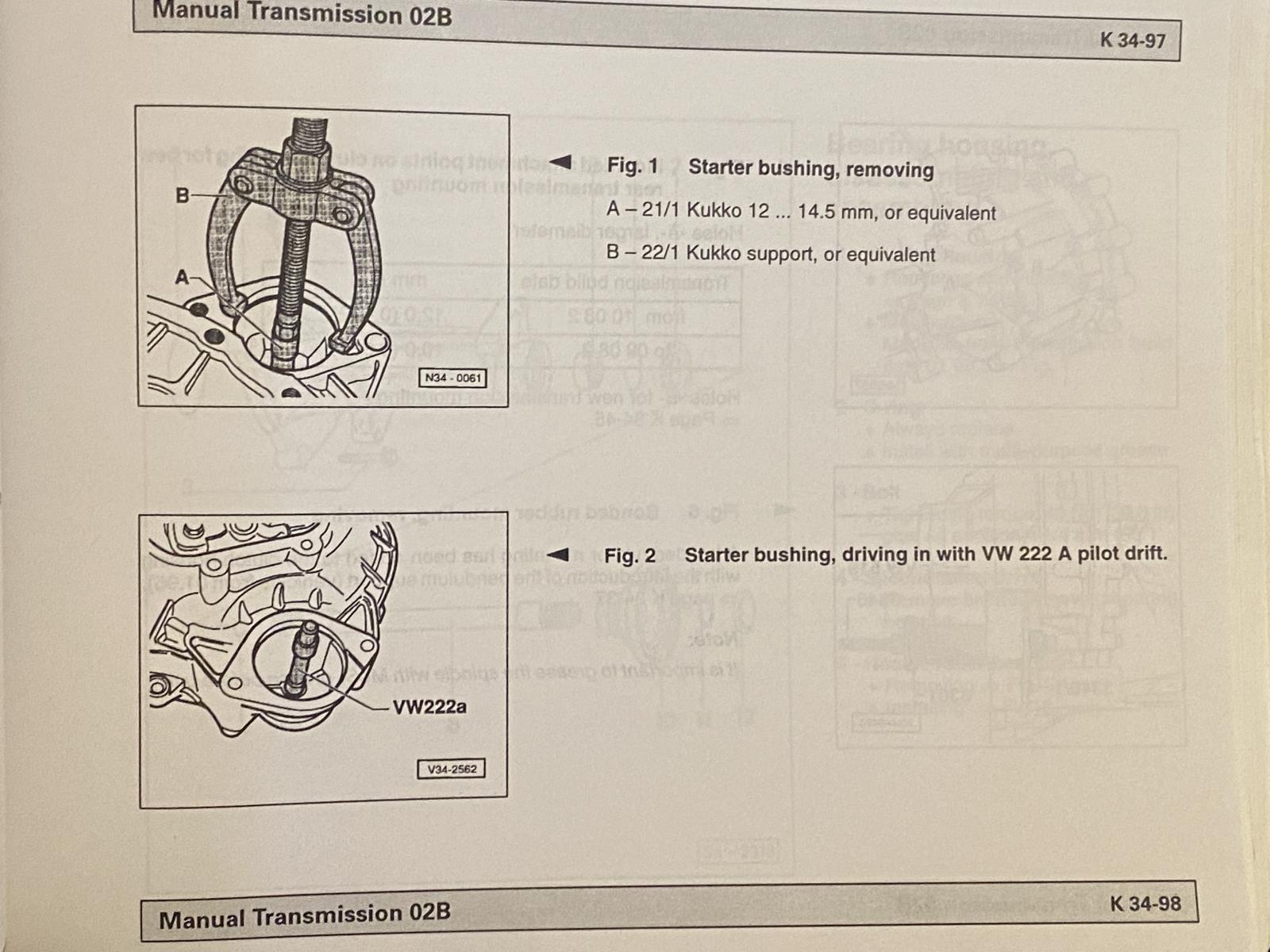
After reading your comment about the bushing I went searching for a notation or reference to it in the Bentley and finally found it in the manual transmission section (K 34-96). Neither of those reference as the bushing as being a wear item with a way to check tolerances or if it should be replaced on a scheduled basis, such as when a new starter is installed. Then looking on the internet, find out this is a design feature of VW transmissions while searching for the part number (014301155) It is there I see the notes about it something to replace at the same time as the starter. The more you know...
. |
|
| Back to top |
|
|
Abscate
Samba Member
Joined: October 05, 2014
Posts: 24490
Location: NYC/Upstate/ROW
|
| Posted: Sat Aug 26, 2023 4:57 pm Post subject: Re: Space Capsule 1995: Repairs, Roadtrips, Retrofits, & Wrenching |
|
|
Saturn
I did a starter replacement on my VR6 and found their both 12 mm and 13 mm starter shaft parts in the supply chain from Bosch.
You have to match yours, of course.
_________________
🇺🇸 🇺🇸 🇺🇸 🇺🇸 🇺🇸 🇺🇸 🇺🇸 🍊 🍊 🍊 |
|
| Back to top |
|
|
Saturn
Samba Member
Joined: April 06, 2019
Posts: 266
Location: San Francisco
|
| Posted: Thu Aug 31, 2023 1:24 am Post subject: Dual Eurovan Camp-n-Jamboree at Car Week: Part 1 |
|
|
| Abscate wrote: |
I did a starter replacement on my VR6 and found their both 12 mm and 13 mm starter shaft parts in the supply chain from Bosch.
You have to match yours, of course. |
Appreciate you passing that information on about the 2 different diameters. Will have to figure out which one I need for my EVC.
--------------------------------------------------------
Dual Eurovans at Car Week: Part 1
With the Monterey excursion just around the corner, much remains on my plate in terms of prep work for not one but two vans and the campsite as well. While I have complete confidence in the ‘95 EVC making the trip, the ’93 Weekender is still a wild card. Its longest trip has been not more than 20 miles so there is definitely some apprehension lingering. Regardless, all work needs to be complete by Monday evening as this is when my brother Sanchius arrives.
Tuesday
Mid-morning the first wave of loading commences, bedding, vittles, supplies and many of the items to support the two campsites of 10 people for 5 nights. Once complete, the next phase is driving to SFO as my friend Beverly is arriving from Baltimore then its to the warehouse space to complete the second wave. Since my brother wants, well more like demands to take Route 1 along the Pacific Ocean, we set a course to Pacifica and points south at 12:30pm. While the sun shines brightly above, the gray marine layer hangs like a shroud just offshore. North of Santa Cruz, the gloom finally starts to obscure the ocean view. Just after 4pm we pass through Fort Ord/Sand City then stop for more provisions next door in Seaside, just west of the track. There, Sanchius proposes we trade keys to compare and contrast the two vans.
After a hearty round of shopping and gassing up, arrive at the entrance of Laguna Sea where we pose the Europeans for a quick photoshoot. Climbing into the EVC my brother turns the key to encounter utter silence. “Oh, Fudge!“ (but I didn’t say fudge…) Climbing behind the wheel and trying myself, I quickly notice there is absolutely no power at all. Jump under the hood and check the master on/off switch to discover the battery cable is quite loose on the terminal. Twist to tension it and the EVC starts right up (Phew!) Will need to tighten that after settling in at the campsite. Check in, park the vans and make quick work of unloading everything. As twilight and cooler temperatures arrive, we activate the fire pit. As the flames begin their flickering and captivating dance, our friend Chris arrives at the campsite.
Over dinner my brother and I compare notes on the vans. We both agree the EVC is a much more refined vehicle, the engine seems peppier, responds better, and ride is smoother. “I had trouble keeping up you at some points” he relates. The other aspect of the Weekender we discuss is the periodic clicking noise emanating from the front passenger side. When trading keys Sanshius tells me to pay attention for the sound. On the final stretch into Laguna Seca, I hear it when letting off on the throttle or with light throttle. Our speculation is this stems from one of the CV joints and something to pay attention to over the next several days as the Weekender will be used as one of the main troop transports for off-track events. As we expect, the marine layer arrives obscuring the stars and our chance to catch the waning Perseid meteor shower.
Wednesday
Need to perform a little work on both vans before heading out for the day. The top item is locating a 10mm socket to tighten the positive battery cable on the EVC. On the Weekender, want to have power for the interior lights, aka the house battery system. When initially buying the van, this battery was DOA and remained low on the fix-it list. The weekend before the trip, pull the house battery out of the EVC to find it is too tall to fit under the drivers seat. As I look for replacements, decide to forgo a battery for this trip instead utilizing a 12V, 5A power supply for providing electrons. Interior lighting and device recharging are the only areas needed to be supplied by shore power. Alligator clamps are connected onto the battery connectors along with wrapping a generous amount of electrical tape on the positive side. Plug in the power supply into the power strip/shore power and the interior fluorescent lights are now operational. This is a stop-gap measure for this week and not intended as a permanent fix.
Today’s schedule includes a drive down through Big Sur with Sanchius & Beverly as they have not been there before. After wading through the traffic going into Monterey the road finally opens up just south of Carmel. Our first stop is at the Rocky Creek Bridge with scenic vistas of the rugged coast. As the sun shines down, the surrounding hilltops are speckled with small clouds from the slowly evaporating marine layer. Just further down is the famous Bixby Bridge, the backdrop for so many car commercials, films and movies.
Due to the recent fierce winter Route 1 is closed due to landslides 25 miles south of Big Sur and this is reenforced through frequent orange CalTrans road signs. During this drive the front-end clicking occasionally appears, though not in a real consistent manner. Continuing south through Big Sur, the Marine layer begins to edge onto the shore and then cloaks any view of the ocean. At this point we decide to turn back towards Monterey/Laguna Seca. Along the way, stop to check out the Naval Facility Point Sur, This place has an interesting history being a secret submarine monitoring facility with a cover story as an oceanographic research station. (https://en.wikipedia.org/wiki/Naval_Facility_Point_Sur)
Back at the track the afternoon is spent watching the different race groups on their practice laps. As most of our compatriots begin to arrive the track quiets down after the last group finishes. Brats and burgers are on the menu for dinner to a highly receptive audience. Circled around the campfire with the last of the orange glow of twilight fading on the western horizon, Chris spots something interesting to the Northwest. Flying through the Big Dipper is a train of about 20 Starlink satellites, tightly packed together from a recent launch. They are brightly lit up by the sun against the dark night sky. The incoming marine layer eventually obscures the skies and by 11pm the camp calls it a night.
Next: Dual Eurovan Camp-n-Jamboree: Part 2
. |
|
| Back to top |
|
|
|