| Author |
Message |
dsh1705 
Samba Member

Joined: June 11, 2014
Posts: 134
Location: Seattle, WA

|
 Posted: Mon Apr 14, 2025 3:39 pm Post subject: Re: Space Capsule 1995: Repairs, Roadtrips, Retrofits, & Wrenching Posted: Mon Apr 14, 2025 3:39 pm Post subject: Re: Space Capsule 1995: Repairs, Roadtrips, Retrofits, & Wrenching |
 |
|
| Quote: |
| Right now I am experiencing another issue with my instrument cluster, my temperature and fuel gauges ranging between not registering at all, reading really low and occasionally working normally. |
This is often the voltage regulator solder joints on the instrument cluster board, I understand.
_________________
David
1705.net
95 EVC
ACU,098 |
|
| Back to top |
|
 |
Saturn
Samba Member

Joined: April 06, 2019
Posts: 265
Location: San Francisco
|
| Posted: Thu Apr 17, 2025 1:43 pm Post subject: Re: Space Capsule 1995: Repairs, Roadtrips, Retrofits, & Wrenching |
|
|
| dsh1705 wrote: |
| Quote: |
| Right now I am experiencing another issue with my instrument cluster, my temperature and fuel gauges ranging between not registering at all, reading really low and occasionally working normally. |
This is often the voltage regulator solder joints on the instrument cluster board, I understand. |
As I am digging into the issue in the instrument cluster, I am not entirely sure what I am seeing is due to the voltage stabilizer/regulator. Reflowing these solder joints is what I have done on both my 1993 Weekender and 1995 EVC, and this did nothing to fix the blinking coolant light condition in the 1993 van. After salvaging two 1993 instruments clusters from the boneyard in the past year and a half, that was also the first thing I did when opening them up.
The role of the stabilizer is to step down the voltage to 10V for the fuel and temperature gauges. One of the main reasons to do this is if the battery voltage drops below 12V due to a charging or battery problem, these gauges will still read accurately. This is a typical VDO design for instrument clusters.
-----------------------------------------------------------------------------------------
The Previous Six Months
During the fall months, the Weekender while being active has been running on fairly mundane tasks and errands. It is on the road at least once a week and usually more often than that. The 1995 EVC goes into into hibernation mode for the time being. This situation changes in December after making the decision to move out of my workshop space just south of San Francisco. The lease came up for renewal and the resulting rent increase became too much for a hobbyist mechanic. Give notice I will be leaving the facility at the end of January, 5 years after initially landing there.
To give context about this space, this is where the majority of my wrenching is performed. This is where the 1995 EVC had its heater core swapped out as well as replacing the foam on the flapper doors on the climate control system. Being able to leave things half-taken apart and tools laying about for a couple days was quite the luxury. In addition to bringing back the Weekender from a barely drivable van to its present state of adventure seeker, three 1967 Volvo 122s have been totally revived and brought back to driving status including one with a totally seized engine. As well as a 1963 Volvo 544 rousted from a decade-long slumber Amid those major projects have been many minor and mid-range repairs, maintenance jobs and fixes for my fleet and friend’s chariots as well. The clock is now starting to tick loudly on not only finishing up the final Volvo 122 project car and packing things up. The Weekender is now assigned to moving detail. My friend Alex who is also in this space will be staying a couple months longer to complete a 1965 Econoline van revival.
Link
In mid-December I go on a trip to Hawaii for 5 days, I lend Alex the Weekender to begin moving some of his larger stuff out. With the removal of the jump seat and flattening the rear seat down, the van easily fits large flat files, lumber and even a Mercedes 280SL hardtop. During one of these transits an accident occurs where gear oil from a steering box spills onto the carpet. Initially the patch is hit with brake cleaner to try to dissipate the oil. After a couple days apply Fast Orange hand cleaner to the spill area, first to hopefully break things down and second to help mask the smell. Unfortunately the aroma is quite fragrant, especially on sunny days.
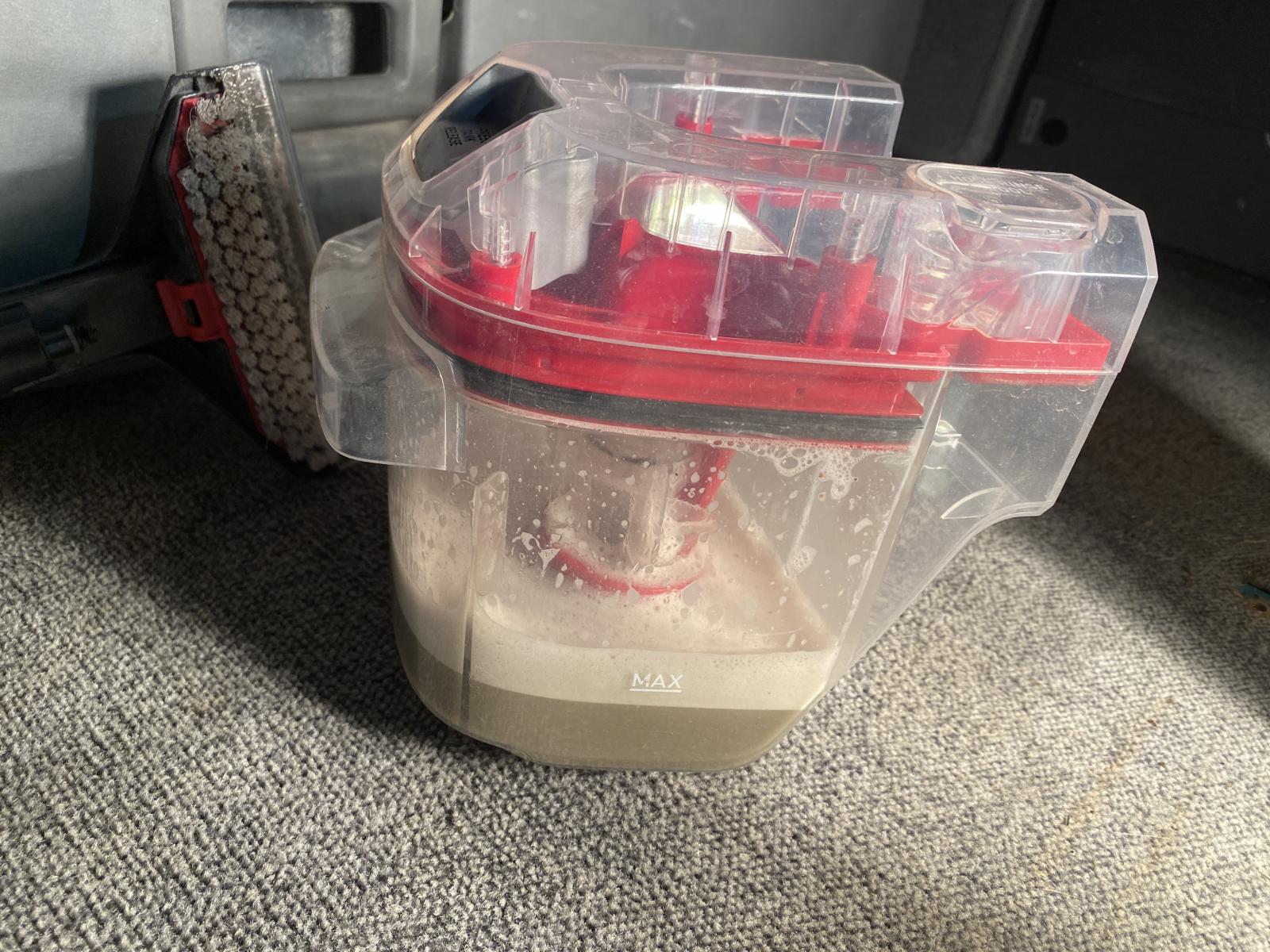
Before I start making runs in the Weekender I spend a couple hours with spray bottles of simple green & orange cleaner as well as a gallon of hot water and my wet vac. Most of the effort is on and around the area of the oil spill. There is a noticeable gear oil smell to the water when dumping out the holding tank on the first two times. Bring back the Fast Orange hand cleaner and a nylon brush to agitate it into the carpet weave. Drive the van out into the sunshine to let the carpet dry, the oil stain is still visible but quite a bit more muted than before. Two days later when climbing into the front seat of the van, the aroma of gear oil still persists though much more subdued than before. A week later I repeat the cleaning process and am able to reduce the smell to just a bare hint and certainly not as overpowering as before.
Through the last two weeks of January, the Weekender helps transport all of my various items large and small out of the warehouse space. Once the move is over there are two more rigorous cleaning efforts focusing on the gear oil spill. While not fortunately enough to completely eradicate the stain from the carpet, we are able to vanquish the aroma.
While driving it in early January, I notice the dash heater fan seems to be no longer functioning. Setting the slide control to defrost and turning the speed knob to 3 or 4 just yields silence. First check the fuses and then the relay panel. When moving the climate selection slider I can feel a click on the relay. Several days later. during one of the last trips from the warehouse, the fan starts to run again. Will have to see if I can recreate this issue, as for now it seems to be working normally.
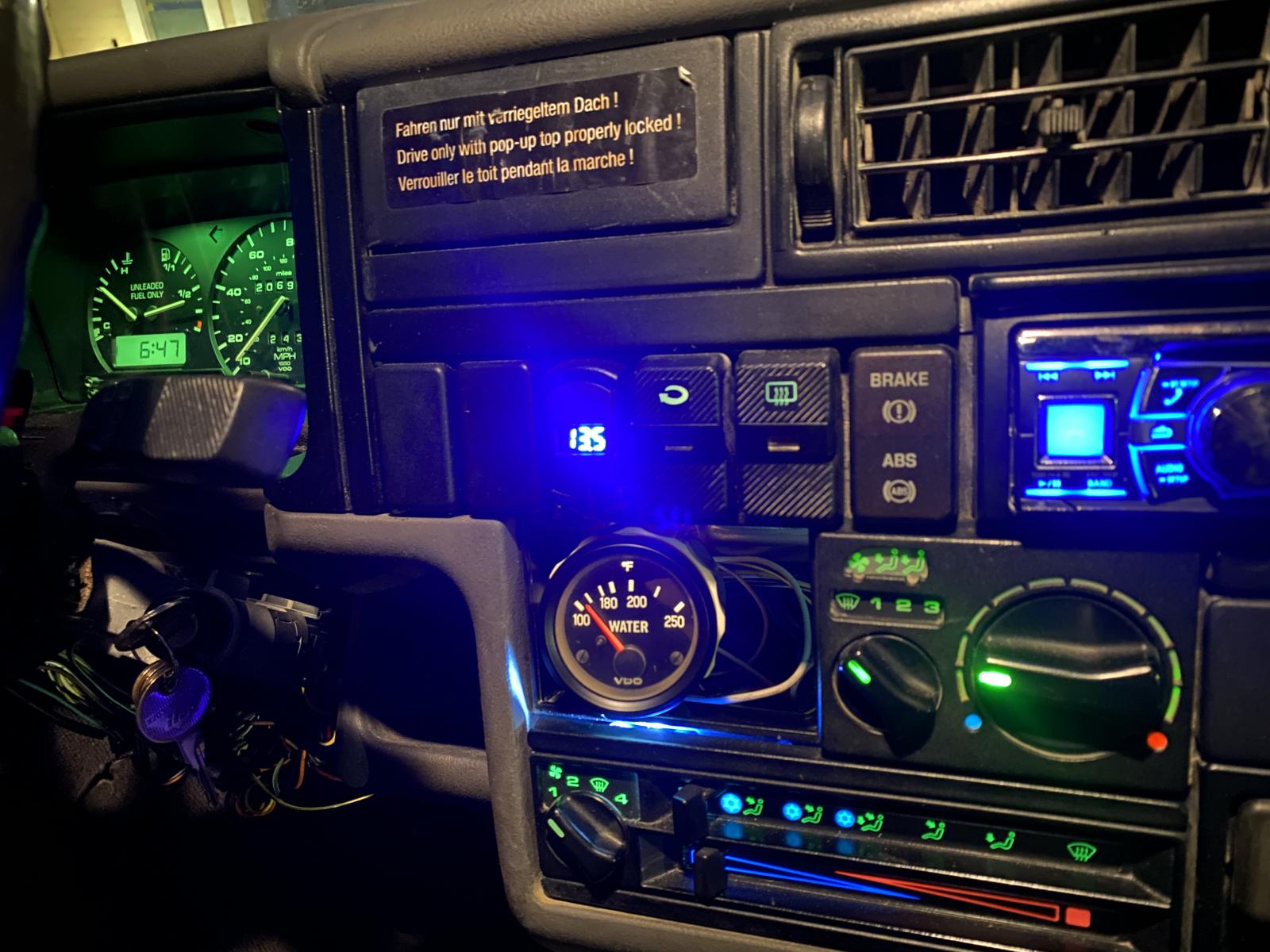
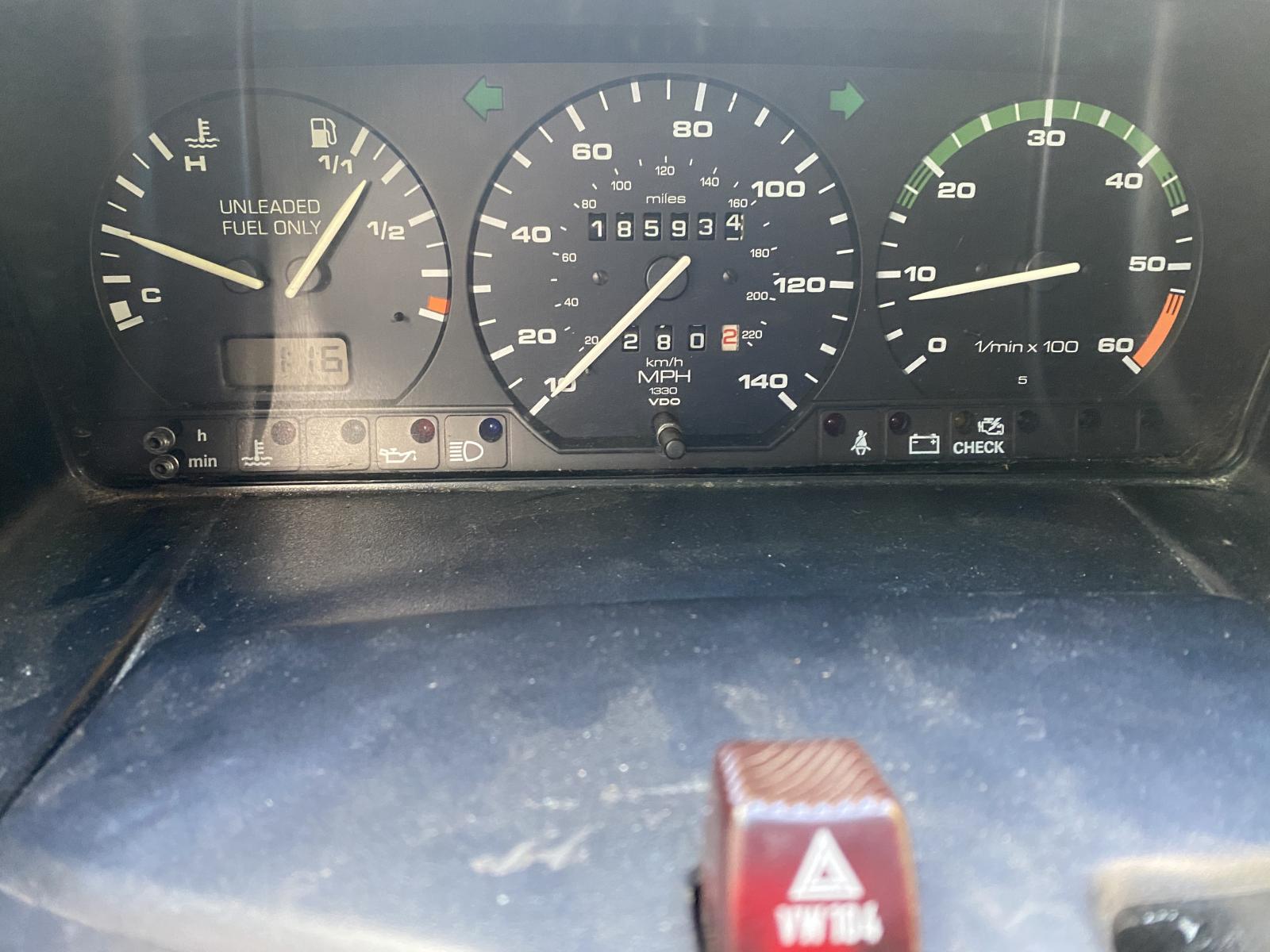
The other issue being encountered lately is the lack of a readout from the temp and gas gauges. This seems to be occurring more in colder temperatures. After driving for a little while these will come back online. Will need to pull the cluster and relook at some of the solder joints. When chasing down the blinking cooling light issue last year, I did reflow all of the solder joints at the main 28 pin connector on the circuit board. Below are pictures of the gauges barely at the bottom of the scale and not reading at all. Compare the water temp gauge to the reading of the 52mm unit in the center dash area.
Next: Taking Apart the Instrument Cluster (Yet Again…)
. |
|
| Back to top |
|
|
Saturn
Samba Member
Joined: April 06, 2019
Posts: 265
Location: San Francisco
|
| Posted: Fri Apr 18, 2025 4:34 pm Post subject: Taking Apart The Instrument Cluster (Yet Again…) |
|
|
Back At It With The Instrument Cluster
Between some of the recent posts on the Eurovan forum about instrument clusters and a couple side phone calls with bcollins about issues/challenges he is running into, figure it is time to pull the instrument cluster, hopefully once and for all. Per my previous posts, the water temperature and fuel gauges are being quite contemptuous as most of the time they are barely registering or not at all. One technique I would try is to reach behind the dash to rock and/or press on the 28-pin connector. While this would sometimes bring the gauges back online, it seemed to be working less and less.
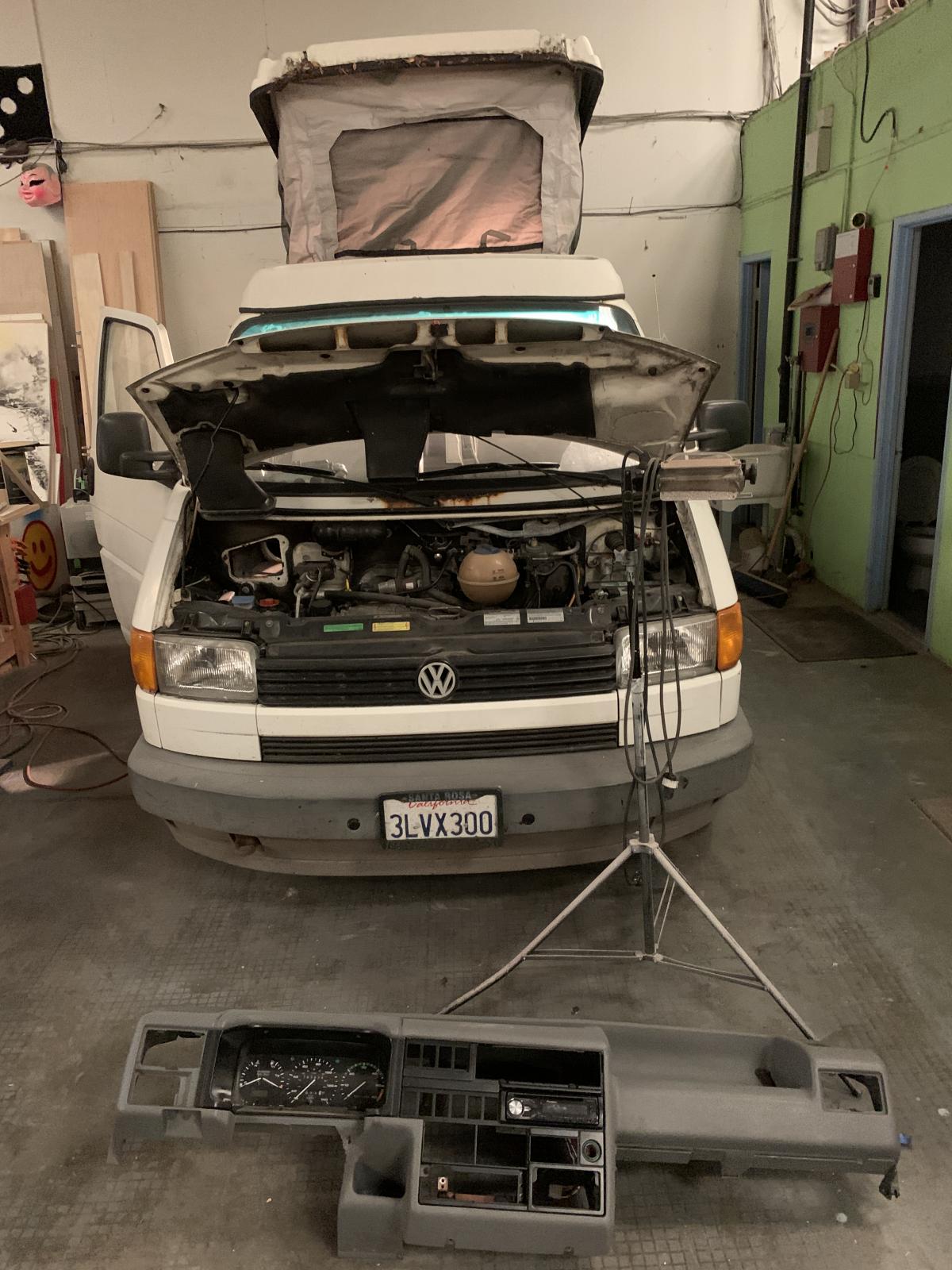
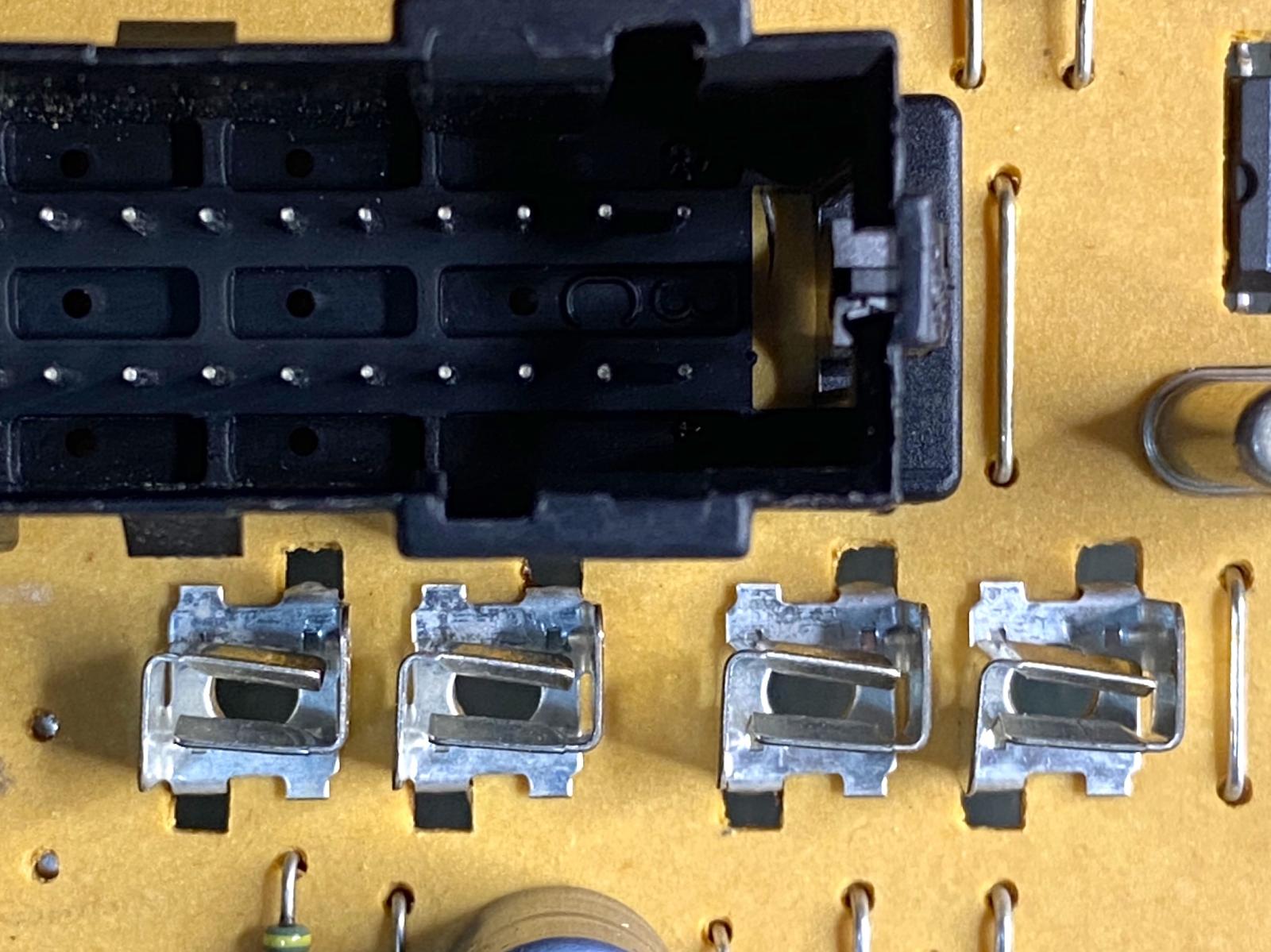
This past Monday afternoon with the help of a 24mm deep socket, remove the steering wheel. Five minutes later with the instrument cluster in my hand, perch at the kitchen table to disassemble it. Between chasing down the blinking coolant warning light and the erratic gauges I estimate I have removed and reinstalled the instrument cluster over 30 times by now. After pulling off the twin gauges and the tachometer from the circuit board, plug in the soldering iron in preparation of reheating solder joints. Undo the main board from the housing and look at it under bright light, unable to identify anything obviously amiss. Pull open the Bentley manual, sort through the wiring diagram (page X223-225) to figure out the gauge inputs arrive though connectors #21 (G1 -fuel sender ) and #23 (G3- water temp sender). Hit those two with the iron to reflow the solder as well as #3 (ground). Back In the van, plug the main connector in the cluster and turn the key to energize the ignition system. The warning lights illuminate and flash but the gas gauge doesn’t budge. After pressing on the 28-pin connector, the gas gauge shows a bit of life then flatlines again. Return to the kitchen table to ponder this problem some more.
After fully disassembling the circuit board, I start to realize I am probably barking up the wrong tree. Since pressing on the main connector would sometimes revive the gauges, that is where my focus went to. While looking at the back of the board, what dawned on me was pressing hard on the back of the cluster would also be potentially moving other parts around. The main connector was a little bit of a red herring as why would two solder joints go bad that are not next to one another? The two gauges are mounted in a single assembly onto the main board. There are two plastic posts which they press fit into along with the connectors to the gauges themselves, These are 4 metal pins which pass through the circuit board and mechanically mate into a connector on the backside. My theory now is those 4 pins are the source of the intermittent connection/signal.
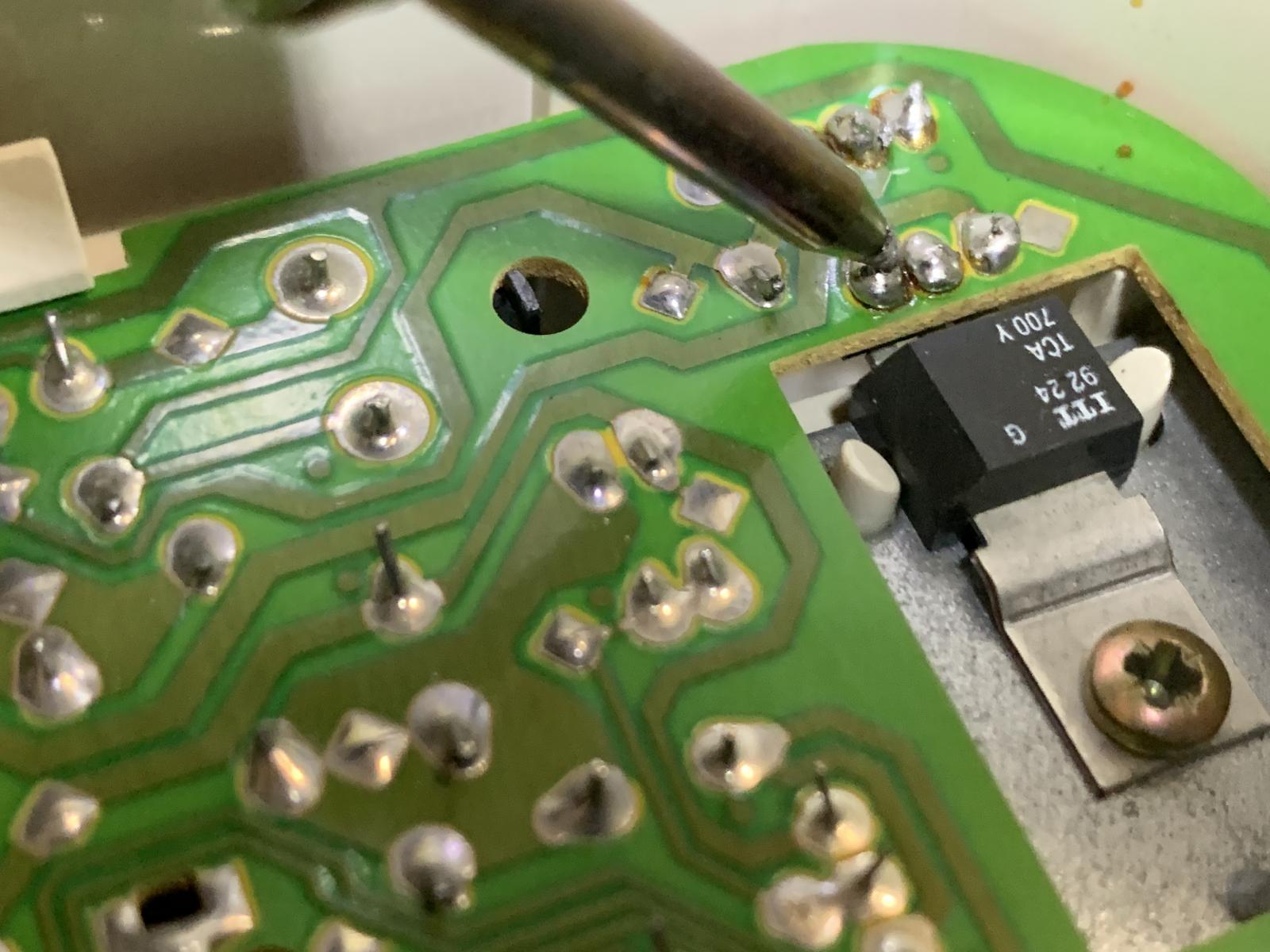
Last September this gauge assembly was removed multiple times to swap it with the one from the junkyard which has the numerical temperature and gallon marking on the face. (URL) Exchanging these units out several times most likely loosened the mechanical connection, this would explain the gauges working intermittently or stop working after a bump or jolt. To rectify this, carefully bend the arms inward on all four of these contact points and do the same on the four used for the tachometer for good measure. Decide to swap out the voltage stabilizer with one from a spare Volco instrument cluster and reflow the six solder joints just in case. Button everything back together and return to the van. Turn the key and after a couple seconds, the gas gauge slowly begins to climb upward.
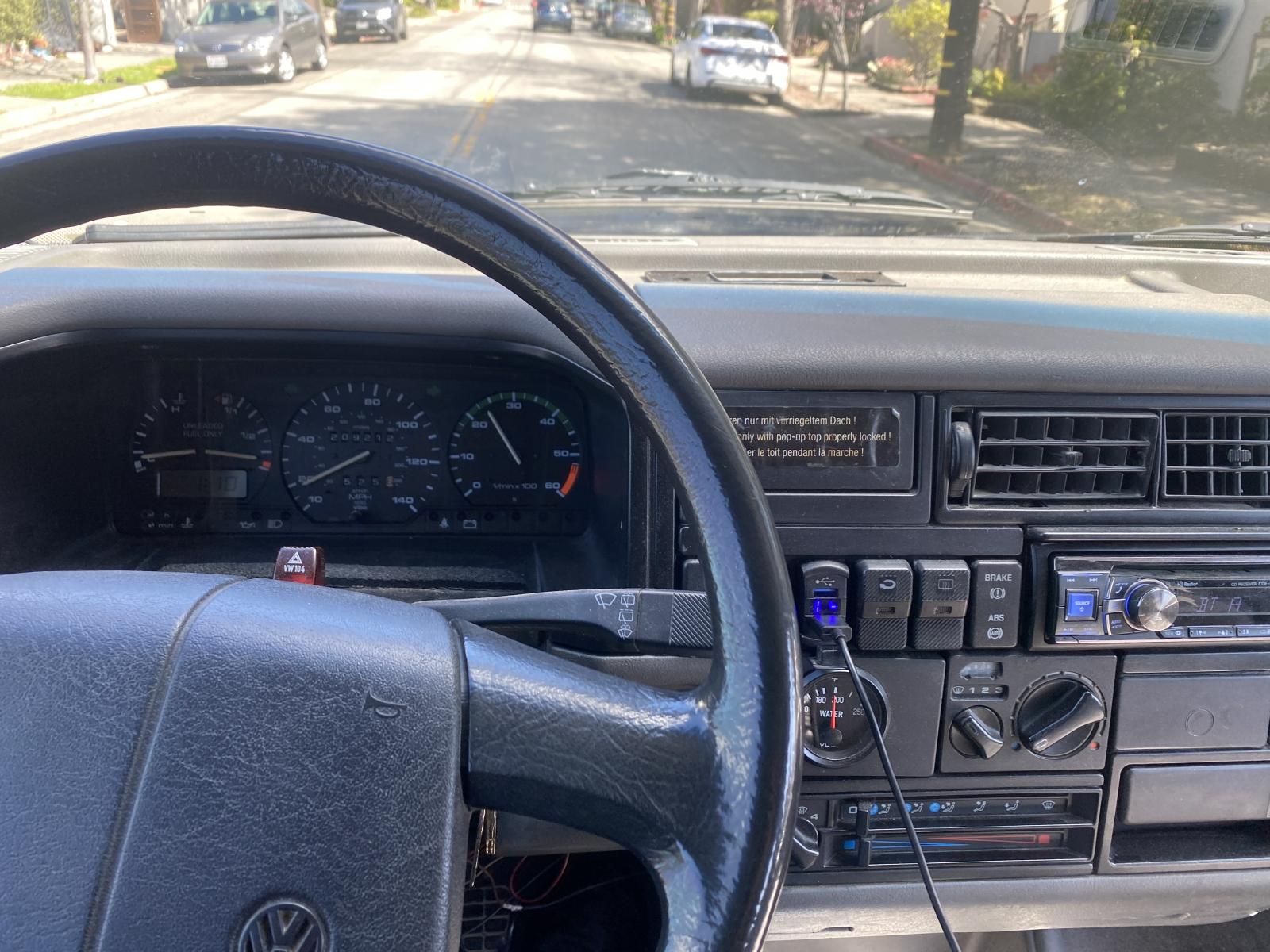
Fully install the dashboard and steering wheel and take the van for a spin. It takes a couple minutes before the temp gauge stirs and starts the slow climb upward as the engine heads towards operating temperatures. After 3-4 drives, the gauges are now reading normally and consistently. At last the instrument cluster is finally fully operational. The picture below was taken near the same spot on the Bay Bridge on the way to Oakland Tuesday morning as the one at the top of this post.
. |
|
| Back to top |
|
|
bcolins
Samba Member
Joined: December 04, 2020
Posts: 884
Location: Austin, TX
|
| Posted: Mon Apr 21, 2025 10:08 am Post subject: Re: Space Capsule 1995: Repairs, Roadtrips, Retrofits, & Wrenching |
|
|
Congrats on the fix!!!!! Since this is such a common problem,...perhaps a separate post with a link to this solution. Has this solution in any way changed your thinking on the also wide spread blinking coolant light?
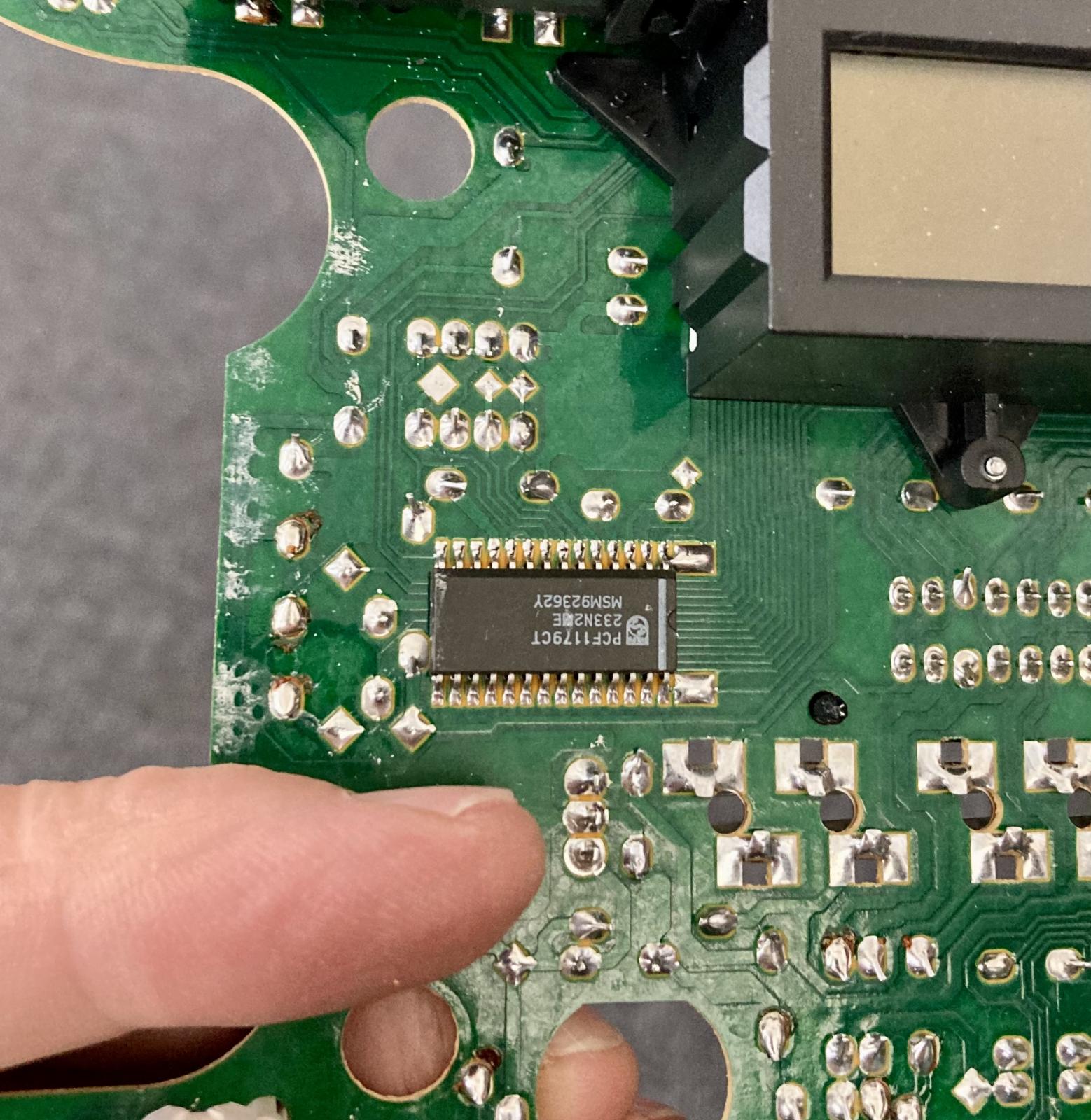
Since you are working on your cluster again,....I thought this might be a good time to post a pic of my circuit board from my 95 which is different from every other Early (5 cyl) EV circuit board pics or video I have seen,...so that others following your thread will be aware that there is at least one different board,......AND that in spite of the difference I have the flashing coolant light on cold start up and at one point had the blinking gear indicator digital display, that has now gone to no gear indication at all. Just the PRND21 with no indication. You will note that the regulator/stabilizer is not in the typical upper right corner, but rather is located somewhat centrally to one side of the board near the multi pin connector. and also appears to have only 3 solder joints (see my finger pointing to this). I additionally do have an intermittent check engine light,...and in the past have done the "Blink Code" test and that yielded 4 sets of 4 blinks each which is supposed to indicate "No fault/code stored"
Brian in Austin
|
|
| Back to top |
|
|
bcolins
Samba Member
Joined: December 04, 2020
Posts: 884
Location: Austin, TX
|
| Posted: Mon Apr 21, 2025 11:07 am Post subject: Re: Space Capsule 1995: Repairs, Roadtrips, Retrofits, & Wrenching |
|
|
| dsh1705 wrote: |
| Quote: |
| Right now I am experiencing another issue with my instrument cluster, my temperature and fuel gauges ranging between not registering at all, reading really low and occasionally working normally. |
This is often the voltage regulator solder joints on the instrument cluster board, I understand. |
See Ben's final fix for this above!!! Not the regulator! |
|
| Back to top |
|
|
TheOneTrueQuux
Samba Member
Joined: May 26, 2021
Posts: 460
Location: Winona, MN
|
| Posted: Mon Apr 21, 2025 11:26 am Post subject: Re: Space Capsule 1995: Repairs, Roadtrips, Retrofits, & Wrenching |
|
|
| bcolins wrote: |
Since you are working on your cluster again,....I thought this might be a good time to post a pic of my circuit board from my 95 which is different from every other Early (5 cyl) EV circuit board pics or video I have seen,...so that others following your thread will be aware that there is at least one different board,......AND that in spite of the difference I have the flashing
Brian in Austin
|
See my attached crop of your photo, I think it shows a cracked joint. Have you reflowed those yet? |
|
| Back to top |
|
|
Saturn
Samba Member
Joined: April 06, 2019
Posts: 265
Location: San Francisco
|
| Posted: Sun May 04, 2025 8:19 pm Post subject: Instrument Cluster Wiring Diagrams |
|
|
| bcolins wrote: |
Congrats on the fix!!!!! Since this is such a common problem,...perhaps a separate post with a link to this solution. Has this solution in any way changed your thinking on the also wide spread blinking coolant light?
|
After pondering and thinking about the coolant warning light system, here is my current perspective. Also read in your recent post you took your circuit board in to get the solder joints redone which solved your blinking cooling light issue. It would be interesting to figure out if reflowing one of the 28-pin connections or another component was the issue(s).
As far as I have been able to determine, the Bentley Book does not feature any sort of advanced or detailed schematics of any of the sub-systems within the Instrument cluster. With my limited knowledge this is how I am approaching the warning lights and gauges and how they operate. Happy to get educated by a more knowledgeable person if my thinking is wrong.inadequate or misinformed.
One of the reference documents on the instrument cluster: http://rialtainfo.com/vw/vw_images/engine_repair_1...cument.pdf
Coolant warning light has two main inputs:
1) Coolant level sensor in the reservoir, which has a binary signal of open or close.
2) Coolant temperature sensor mounted in a coolant hose. This sensor also signals the radiator fans as well. This produces a value which is read by what I assume is an integrated circuit on the instrument cluster board.
Depending on the value it sees will either keep the light extinguished or make it start blinking. When the ignition system is activated when turning the key to the #2 position, this system powers up and part of this sequence is to flash the light twice to show it is on-line. My thinking is if the temperature gauge is not spiking, and the warning light is flashing, especially when cold, is most likely an issue with the circuitry inside the instrument cluster. This is definitely a more complex circuit and probably is the source of the issue.
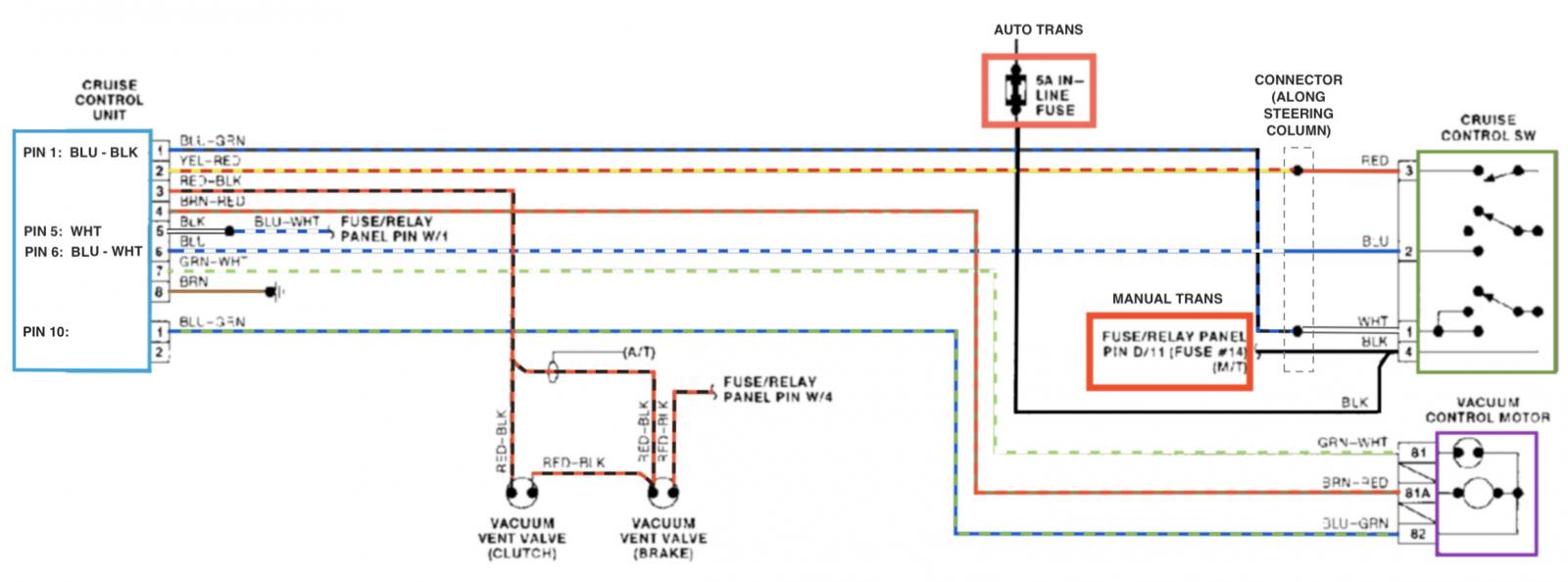
While recently working on my instrument cluster, I began to compile some various wiring diagrams from different sources. To these diagrams i started to add color and additional labeling to assist in better understanding the 28 pin connector. After going through and labeling each one of the wires, come to see that only 60% (17/28) of the connectors are actually utilized by a typical Eurovan.
. |
|
| Back to top |
|
|
dsh1705
Samba Member
Joined: June 11, 2014
Posts: 134
Location: Seattle, WA
|
| Posted: Sun May 04, 2025 8:29 pm Post subject: Re: Space Capsule 1995: Repairs, Roadtrips, Retrofits, & Wrenching |
|
|
WOW! This is awesome. What timing, as I am about to go into my cluster again.
I plan to resolder (desolder, then solder) ONLY the 28 pin connector, and see if that fixes things. All the solder joints on my board look fine under a 10X loupe, but I will redo the connector anyway.
Where did you find the diagrams you based your notes on? (says the document junky).
My hat goes off to you, sir. Brilliant.
_________________
David
1705.net
95 EVC
ACU,098 |
|
| Back to top |
|
|
Saturn
Samba Member
Joined: April 06, 2019
Posts: 265
Location: San Francisco
|
| Posted: Mon May 05, 2025 1:57 am Post subject: Wiring Diagrams and Source Material |
|
|
| dsh1705 wrote: |
Where did you find the diagrams you based your notes on? (says the document junky).
My hat goes off to you, sir. Brilliant. |
Thank you. Good to know it will be of some use to you for your van. As a reminder, those colorized diagrams are for the 1993 model year, there may some differences with the 1995 EVCs. One I can think of is my 1995 EVC has a check engine LED under the tach while the 1993 Weekender does not.
1995 EVC
1993 Weekender
When composing my previous post I wanted to add links to the wiring diagram documents. Unfortunately it looks like the site I initially found these at is currently off-line (https://just-t4s.co.uk). Not quite certain if this is temporary or permanent. Many of those files housed there originated from the Mitchell wiring diagram collection (CD?) from 1998. Some of these are just wiring diagrams but others also include component diagrams (aka where they are located at). I have saved .pdf's for the AC system, heater, ECU/Digitfant system, etc. The file used for instrument cluster is part of is a 12 page .pdf for the 1993 Eurovan, while not totally comprehensive, is usually a good foundation. It use to be accessible here: just-t4s.co.uk/downloads/25989-wiring%20diag%202.pdf
This is another file of the 1995 Eurovan electrical system in a different layout: https://www.westfaliat4.info/1995_VW_T4_Wiring_DiagramsWM.pdf
When I take a deep dive in a specific system, usually end up isolating the specific diagrams and sometime go the extra step to colorize and notate them. The mental exercise of mapping the wiring diagram helps cement the cognitive understanding of the system, well at least for me that is. This is something I did when debugging the cruise control system in the Weekender a year or so ago.
. |
|
| Back to top |
|
|
TheOneTrueQuux
Samba Member
Joined: May 26, 2021
Posts: 460
Location: Winona, MN
|
| Posted: Mon May 05, 2025 7:15 am Post subject: Re: Wiring Diagrams and Source Material |
|
|
| Saturn wrote: |
When composing my previous post I wanted to add links to the wiring diagram documents. Unfortunately it looks like the site I initially found these at is currently off-line (https://just-t4s.co.uk). Not quite certain if this is temporary or permanent. Many of those files housed there originated from the Mitchell wiring diagram collection (CD?) from 1998. Some of these are just wiring diagrams but others also include component diagrams (aka where they are located at). I have saved .pdf's for the AC system, heater, ECU/Digitfant system, etc. The file used for instrument cluster is part of is a 12 page .pdf for the 1993 Eurovan, while not totally comprehensive, is usually a good foundation. It use to be accessible here: just-t4s.co.uk/downloads/25989-wiring%20diag%202.pdf
. |
You might be able to use the wayback machine to get it. |
|
| Back to top |
|
|
67rustavenger
Samba Member

Joined: February 24, 2015
Posts: 11615
Location: Oregon

|
| Posted: Mon May 05, 2025 8:25 am Post subject: Re: Wiring Diagrams and Source Material |
|
|
| TheOneTrueQuux wrote: |
| Saturn wrote: |
When composing my previous post I wanted to add links to the wiring diagram documents. Unfortunately it looks like the site I initially found these at is currently off-line (https://just-t4s.co.uk). Not quite certain if this is temporary or permanent. Many of those files housed there originated from the Mitchell wiring diagram collection (CD?) from 1998. Some of these are just wiring diagrams but others also include component diagrams (aka where they are located at). I have saved .pdf's for the AC system, heater, ECU/Digitfant system, etc. The file used for instrument cluster is part of is a 12 page .pdf for the 1993 Eurovan, while not totally comprehensive, is usually a good foundation. It use to be accessible here: just-t4s.co.uk/downloads/25989-wiring%20diag%202.pdf
. |
You might be able to use the wayback machine to get it. |
I just checked the "wayback machine." The (https://just-t4s.co.uk) forum can be accessed, but the content is all marked as "private." At least it was for me. 
_________________
I have learned over the years.
Cheap parts are gonna disappoint you.
Buy Once, Cry Once!
There's never enough time to do it right the first time. But there's always enough time to do it thrice.
GFY's Xevin and VW_Jimbo!
2003 Astrovan? GFYS again, Xevin! 
Don't let your bad ideas remain, ideas! |
|
| Back to top |
|
|
BuckyRoad
Samba Member
Joined: October 12, 2023
Posts: 7
|
| Posted: Thu May 29, 2025 6:03 pm Post subject: Re: Audio Upgrades: Dash Speakers |
|
|
| Saturn wrote: |
Updating the Audio Capabilities
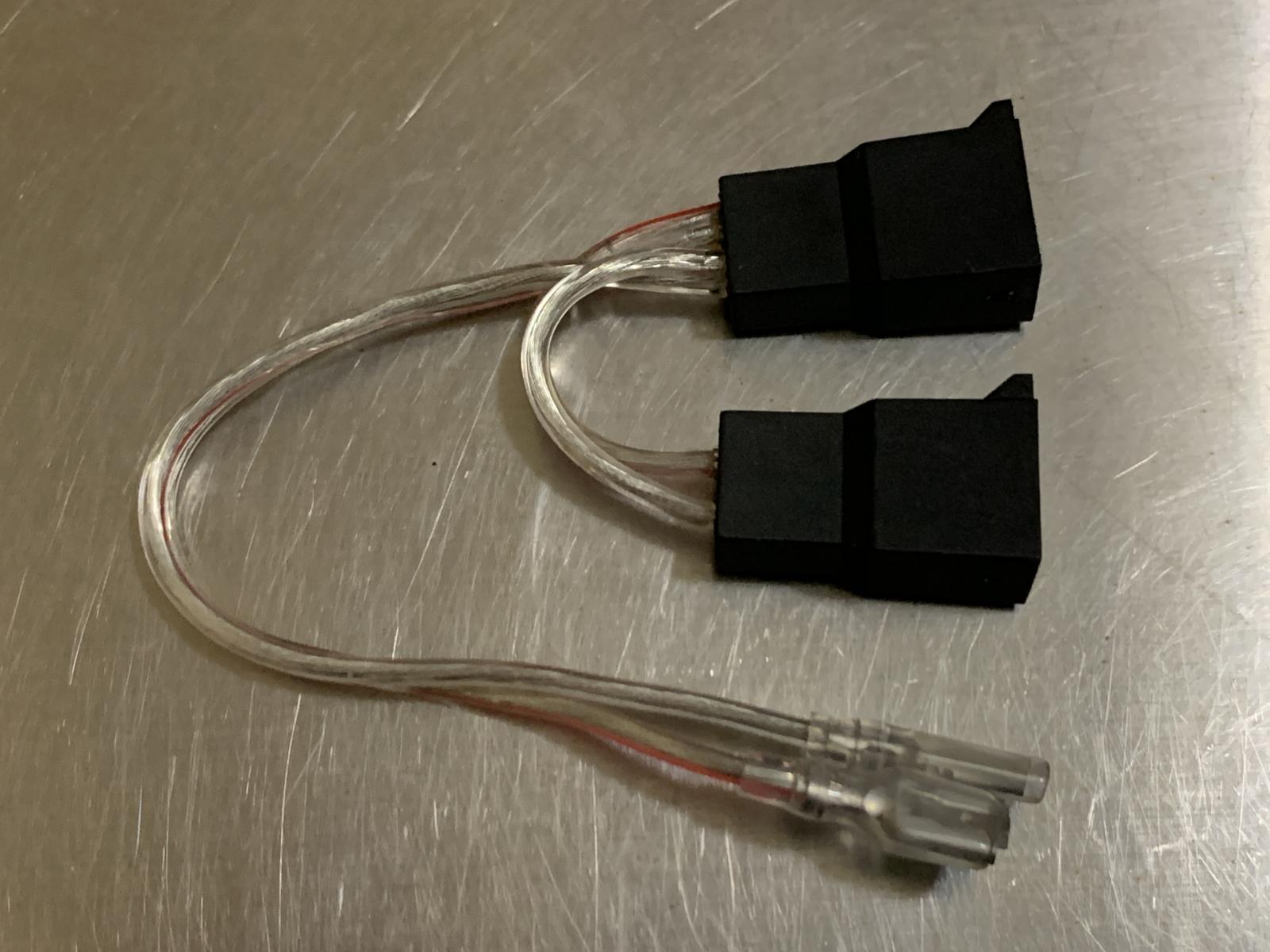
One of my aims when retrofitting things into to vehicles is to leave as much of the stock wiring in place. When examining the two plugs going into the tweeter, I speculated this is a common plug design for VW/Audi door speakers. After some searching on Amazon, locate and order a set of the correct female connectors. (https://www.amazon.com/dp/B09PD7TB4J) Using a jewelers screwdriver, detach the male connectors out all the housings. There is a metal tab needing to be depressed to fully remove each connector. To create a jumper, on one of the harnesses snip off the male ends on each of the leads, strip off the insulation then solder the respective wires onto end of the intact connectors. These male leads are slipped back into the plastic housing. This creates a plug and play insert for both the dash and door speakers into the Eurovan’s existing wiring which if needed, can be easily removed and put back to original condition.
. |
I would gladly pay someone to make these harness connections. I have tried for several hours and cannot get the plugs apart to solder the connections and I am at my wits ends.
Anyone able to help here? |
|
| Back to top |
|
|
Saturn
Samba Member
Joined: April 06, 2019
Posts: 265
Location: San Francisco
|
| Posted: Fri May 30, 2025 12:30 am Post subject: Re: Audio Upgrades: Dash Speakers |
|
|
| BuckyRoad wrote: |
I would gladly pay someone to make these harness connections. I have tried for several hours and cannot get the plugs apart to solder the connections and I am at my wits ends.
Anyone able to help here? |
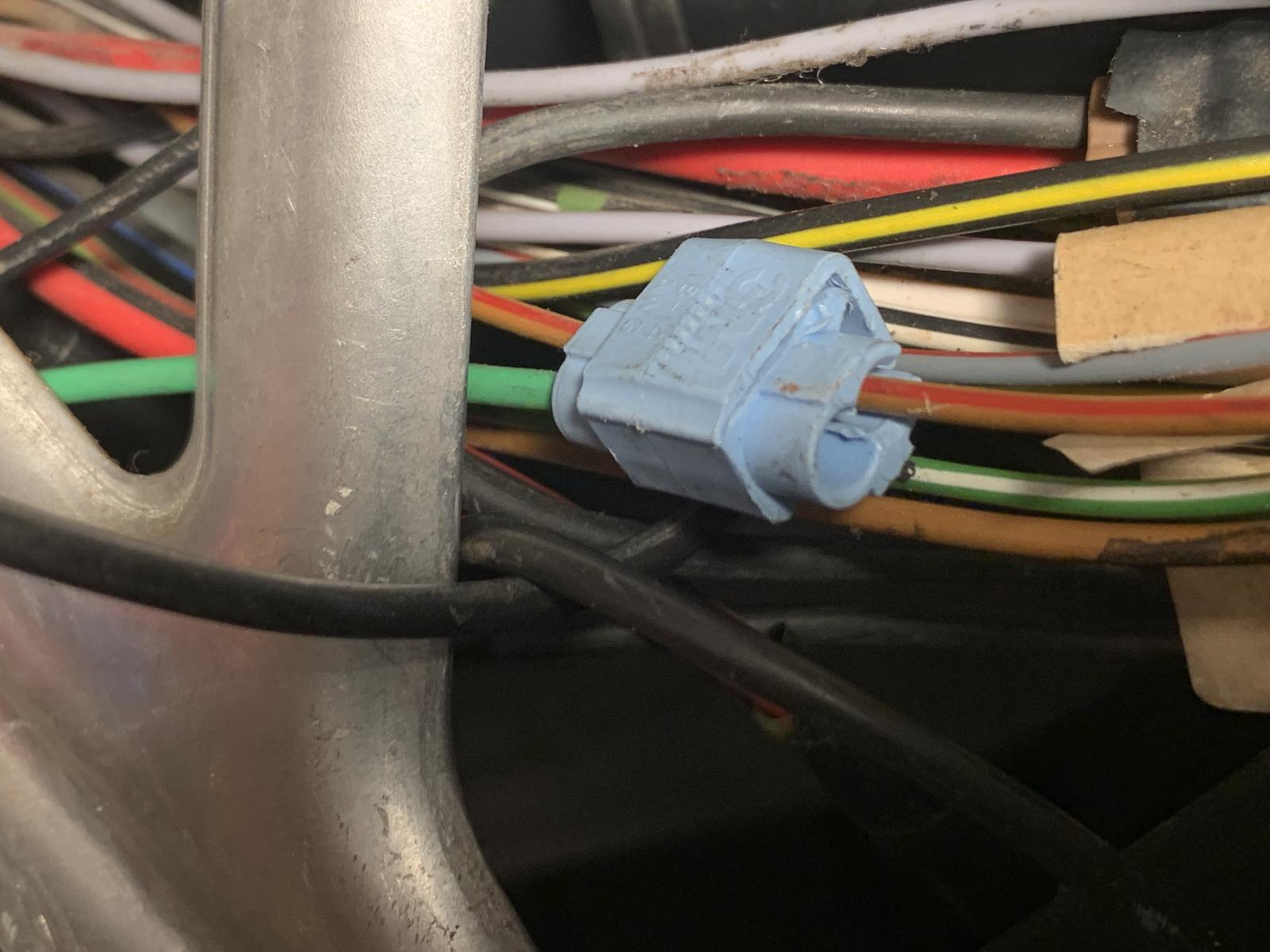
There are multiple ways to merge this speaker wiring. I took the connectors apart to make it a more clean and compact set up while retaining the stock connectors. One easy DIY method is through a set of tap connectors. These connect and secure two wires via a metal "bridge" mounted in a plastic housing. These do not need to be soldered as metal piece pierces through the insulation on both wires. This assembly is locked in place. with an arm which snaps in one side, securing everything together.
Since speaker wiring tends to be thicker would recommend the 10-12AWG (yellow) type. Through Amazon you can order several of these or a lifetime supply for about the same price. Some examples of the tap connectors:
10 pack: https://a.co/d/f0liavg
50 pack: https://a.co/d/b5BOdIn
I have utilized a tap connector to provide power to my 1995 EVC's dashboard USB chargers. This allows them to be active anytime the key in the ignition and not just when the key is turned to the #1 position. The red/brown wire is from the ignition switch and the green wire goes to a relay which activates the USB chargers. More details here: https://www.thesamba.com/vw/forum/viewtopic.php?p=9842502#9842502
Modified connectors to the dash and door speakers:
. |
|
| Back to top |
|
|
Abscate
Samba Member
Joined: October 05, 2014
Posts: 24472
Location: NYC/Upstate/ROW
|
| Posted: Fri May 30, 2025 3:00 am Post subject: Re: Space Capsule 1995: Repairs, Roadtrips, Retrofits, & Wrenching |
|
|
I hate those vampire connectors with a passion , Saturn. Think about replacing with a tapped connector or dual wire at the terminus.
Nice red block , Swede!
_________________
🇺🇸 🇺🇸 🇺🇸 🇺🇸 🇺🇸 🇺🇸 🇺🇸 🍊 🍊 🍊 |
|
| Back to top |
|
|
Saturn
Samba Member
Joined: April 06, 2019
Posts: 265
Location: San Francisco
|
| Posted: Fri May 30, 2025 11:05 am Post subject: Re: Space Capsule 1995: Repairs, Roadtrips, Retrofits, & Wrenching |
|
|
| Abscate wrote: |
I hate those vampire connectors with a passion , Saturn. Think about replacing with a tapped connector or dual wire at the terminus.
Nice red block , Swede! |
Curious on why you have such a reaction to using tap connectors in places like gauges or stereo speaker applications.
- Personal opinion?
- Personal experience?
- Professional directive?
I know Volvo dealers/techs used these type of connectors when installing the wiring for accessory gauges (voltmeter, oil pressure, ambient temperature, etc.) in the 240s back in the day. Will say the only time I use those connectors is for non-critical areas, would never use them on the FI system, ignition-related wiring or any high current situations.
In terms of the pushrod redblock(s), the stable keeps growing. In the group shot below, the middle three are mine and the white 1965 1800S has a vintage Judson supercharger under the hood. Recently picked up another 1800E which was in hibernation for almost 20 years.
|
|
| Back to top |
|
|
Abscate
Samba Member
Joined: October 05, 2014
Posts: 24472
Location: NYC/Upstate/ROW
|
| Posted: Fri May 30, 2025 12:38 pm Post subject: Re: Space Capsule 1995: Repairs, Roadtrips, Retrofits, & Wrenching |
|
|
Absolutely Saintly.
I always find those on crappy trailer light installs and they shake, break, or corrode to decay.
_________________
🇺🇸 🇺🇸 🇺🇸 🇺🇸 🇺🇸 🇺🇸 🇺🇸 🍊 🍊 🍊 |
|
| Back to top |
|
|
rckolson
Samba Member
Joined: December 14, 2024
Posts: 9
Location: S. Maine
|
| Posted: Fri May 30, 2025 4:09 pm Post subject: Re: Space Capsule 1995: Repairs, Roadtrips, Retrofits, & Wrenching |
|
|
| Saturn wrote: |
| Abscate wrote: |
I hate those vampire connectors with a passion , Saturn. Think about replacing with a tapped connector or dual wire at the terminus.
Nice red block , Swede! |
Curious on why you have such a reaction to using tap connectors in places like gauges or stereo speaker applications.
- Personal opinion?
- Personal experience?
- Professional directive?
I know Volvo dealers/techs used these type of connectors when installing the wiring for accessory gauges (voltmeter, oil pressure, ambient temperature, etc.) in the 240s back in the day. Will say the only time I use those connectors is for non-critical areas, would never use them on the FI system, ignition-related wiring or any high current situations.! |
From my experience, these type of connectors, are ok for interior/weather protected areas. I live in Maine where they use a lot of corrosive stuff on the roads in the winter. I would not recommend them for anything exposed to the outside. I had a hitch and trailer lights installed at a U-haul dealer on a Dodge van. A few years later the rear lights on the van started acting up. Three hundred some dollars later at the Dodge dealer I was told these connectors were used on the trailer lights install and not wrapped or protected and the corrosion has traveled up the wire requiring a more expensive repair.
I prefer the taps with the pin and the cap screw that secured the tap wire. Either type, for exterior installs, I would wrap or otherwise protect from the elements. |
|
| Back to top |
|
|
Saturn
Samba Member
Joined: April 06, 2019
Posts: 265
Location: San Francisco
|
| Posted: Mon Aug 25, 2025 1:50 pm Post subject: Teal Teutonic Troop Transport in Cargo Mode |
|
|
| rckolson wrote: |
From my experience, these type of connectors, are ok for interior/weather protected areas. I live in Maine where they use a lot of corrosive stuff on the roads in the winter. I would not recommend them for anything exposed to the outside. |
I totally concur about not using these taps on exterior wiring. The only places where I used tap connectors is for auxiliary gauges (oil temp/pressure, volts, etc. & illumination, USB charging ports and stereos. Anything outside the cabin will need to be soldered and weatherized to hold up for any sort of duration. Be interesting to hear how BuckyRoad resolved this. Always a bit disappointing when there is not any follow-up after questions like that are posted.
------------------------------------------------------------------------------
Teal Teutonic Troop Transport in Cargo Mode
Over the last several months I have not performed any moderate or major wrenching on either of the vans. One of the main reasons why there have not been any recent updates.
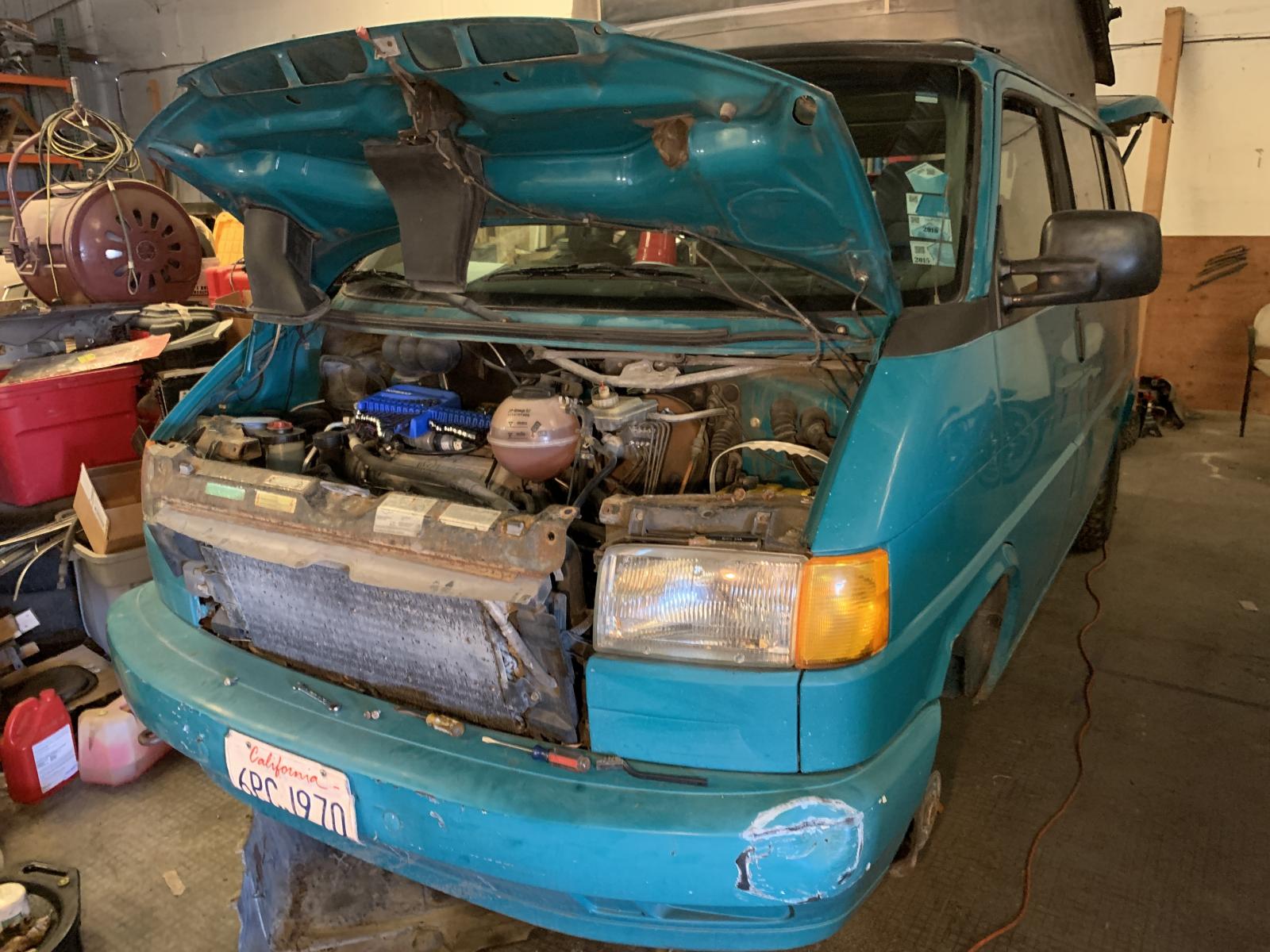
During the move out of the workshop space, there was something else brewing in the background which I alluded to in a previous post. At the end of December I was connected with a family near Sacramento who had a vintage Volvo they were looking to rehome. This originally was a father/son project where they started restoring a 1971 1800E (aka P1800). As they finished up the Volvo, the son headed to college and the car ends up garaged in extended hibernation for 18-some years. After making a trip to check it out, a deal is struck and I now have another project in my stable. It takes about 3 months to get the title, registration and paperwork sorted before being ready to be flatbedded back to San Francisco. This deal also includes all of the leftovers from a parts car they had when starting the project. Early on a Saturday morning, fire up the Weekender to start the journey eastward to Davis, CA. About 5 minutes away from my destination, I call AAA to start the process of getting the car towed home. Amazingly, the AAA truck arrives in less than 25 minutes and by 10:20am the Volvo is secured onto the trailer. Meanwhile the Weekender swallows up all the boxes of parts, seats, dashboard, interior and door panels with ease. Soon I’m back on the road trying to catch up to the flatbed about 10 minutes ahead. Just past noon, the 1800E sits shining in front of my garage as I begin the thorough assessment on what will be needed to return it to the road.
At the end of Spring, one of my good friends requests the services of the Weekender to assist in moving a bunch of large, canine-related items. She volunteers at an organization which re-homes senior dogs aka Muttville. Her primary duty is being in charge of all the physical donations coming in from the community, which is a sizable amount. With the donation storage room overflowing, she decides to set up a booth at a Sunday flea market here in San Francisco to deal with some of the excess items. Saturday morning stuff the Weekender to the gills with dog beds, carriers, barriers, steps, as well as boxes full of harnesses, collars, food bowls, sweaters and even costumes. Her Ford pickup is likewise filled as well. Arrive at 6:20am to unload everything. While being very successful with the sale, packing up in the afterwards there is quite a lot to go back into both our vehicles. Though now I can kind of see out of the rearview mirror. On Tuesday I drive over to Oakland to drop everything off where it's being stored. On the way, I stop off at the public scales to see how much all of this stuff weighs. Alas, I am thwarted in this plan due to the scale not functioning correctly.
A month later, the Weekender is again pressed into service to transport a fair number of car parts being harvested off another P1800. The Volvo’s body is being transplanted onto the chassis of a BMW M3. Back in December the interior and engine and FI parts went up for sale. Now that the body has been removed, all of the driveline, suspension and steering parts are now up for grabs. Alex and I make the trek north to Vallejo, CA to spend 3 or so hours stripping these various components from the car-cass. These get transferred into the Weekender and we return to SF. Still marveling how much the van can fit into the cargo area.
Next: Time Once More to Break out the Wrenches and Tools
. |
|
| Back to top |
|
|
Saturn
Samba Member
Joined: April 06, 2019
Posts: 265
Location: San Francisco
|
| Posted: Wed Sep 17, 2025 9:49 am Post subject: Re: Space Capsule 1995: Repairs, Roadtrips, Retrofits, & Wrenching |
|
|
Turning Wrenches on the EVC
The 1995 EVC is getting called up for camping duty and will need a once-over after pretty much taking off the summer. Both of my Eurovans ('95 EVC & '93 Weekender) will be heading for the annual 5-day expedition to the Monterey Peninsula for Car Week. This year my brother and one his long time friends, will be joining us at our traditional Laguna Seca camping spots overlooking Turn 5 and have reserved the Weekender.
One of the overdue items for the EVC is having its biannual smog test. First order of business is to take the van out for a drive to get the exhaust system to operating temperature before stopping at the testing station down the street. The camper van is driven onto the dyno, and the sniffer takes its position in the tailpipe. Fortunately the test is uneventful and the EVC passes with pretty much flying colors. Head down to the local AAA office to pick up my 2026 registration sticker and later in the afternoon it is applied to the license plate.
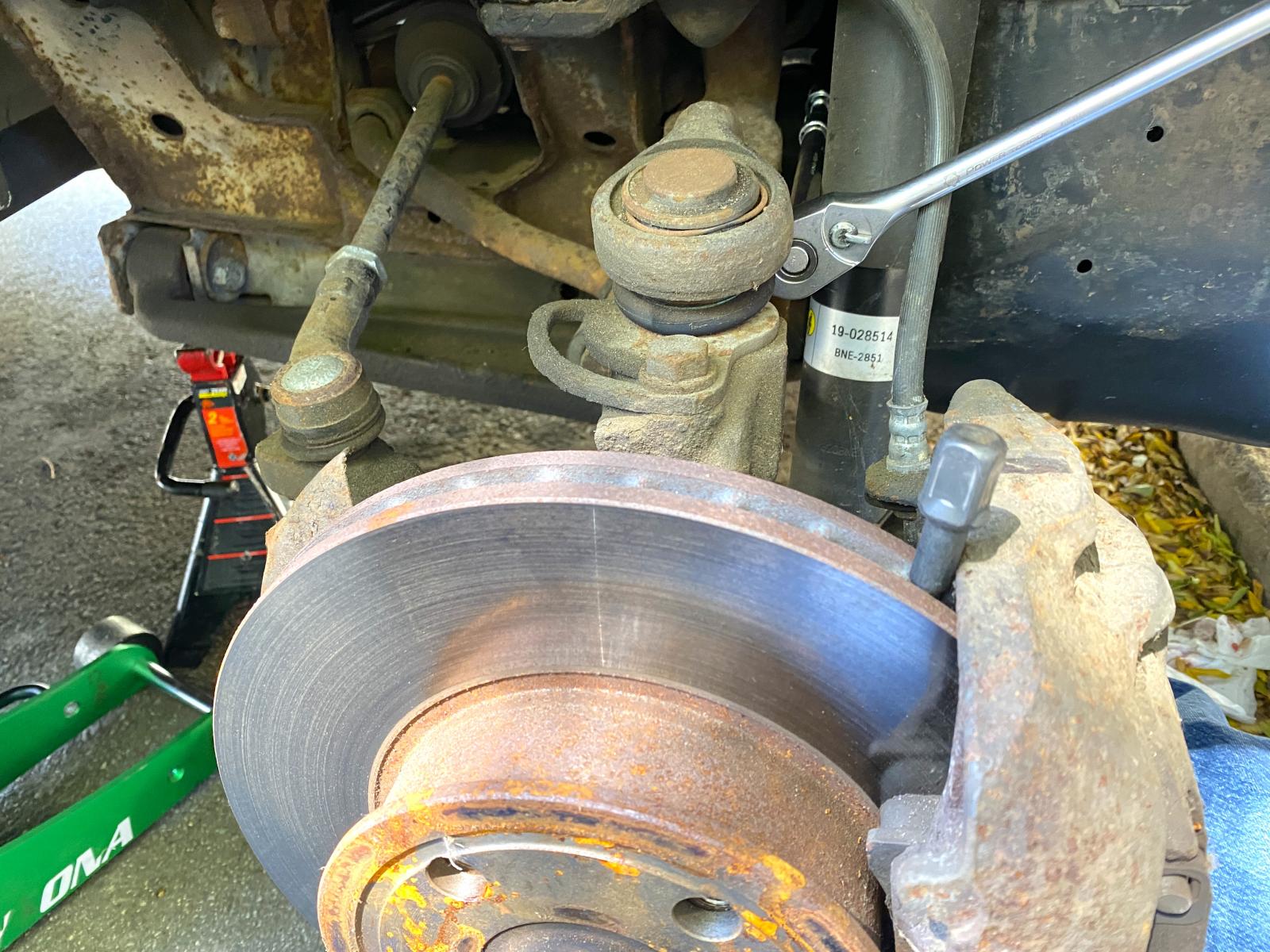
Before taking it on a drive down the coast, one of the areas I want to check are the right side inner CV bolts. Two years ago while under the van changing out the starter, I noticed these bolts had worked their way loose, some of them were not even finger tight. Back in 2021, I replaced the entire passenger side axle/CV joints and thought I had tightened everything sufficiently. Removing the front tire off the van, I can access the bolts using several extensions. As suspected, they are loose though not to the same extent as two years previously. Using a M10 XZN socket, tighten all 6 bolts once again. This is done by turning the axle to line up a bolt in the gap and placing a socket extension into the center vent of the rotor. This locks things from turning to be able to fully tighten these fasteners. Since they have a history of working their way loose, give a bit more muscle on their last round. Check all the fluid levels, coolant hoses and vacuum lines.
While lounging in the sun over the summer, the double-sided tape anchoring the window shades across the windshield and rear hatch reached the end of useful service. These (aftermarket) window coverings were installed about 5 years ago, when I found a set for the EVC on Craigslist. I believe they were originally offered through GoWesty to replace the OEM shades. The ones for the windshield and rear hatch window are secured by plastic footings with heavy-duty double-sided tape though are exposed to UV through the glass. The repair/ tape replacement is pretty straightforward and should be good for another 5 or so years. Aside from reconnecting the house battery and cleaning, the EVC is ready for the trip to Monterey.
Next: An Old Issue Reemerges
. |
|
| Back to top |
|
|
Saturn
Samba Member
Joined: April 06, 2019
Posts: 265
Location: San Francisco
|
| Posted: Fri Oct 03, 2025 12:14 pm Post subject: Taking Apart The Instrument Cluster (Yet Again…) |
|
|
The Contemptuous Gauges Return
My friend Armando is borrowing the Weekender for his family’s yearly trip to the Avenue of the Giants so I need to hand the van off to him. While driving it during the summer, it is obvious my repairs to the instrument cluster are not indeed permanent, just temporary. The temp and gas gauges once again are reading low which become annoying pretty quickly. Come to the decision to swap out the main circuit board from one of the spare instrument clusters I picked up last year during a visit to the junkyard.
Start the now familiar process of removing the steering wheel and stalk controls to pull out the gauge assembly. Field-strip the cluster to swap the main circuit board out with the spare one. Get it all back together, plug in the main connector and start the van. Watch the needle of the gas gauge slowly rise to its proper position. Restart the engine several times and that is when I notice the battery warning light is failing to illuminate. Swap out the LED bulb with no change. After thinking about it for a bit, decide it is something I can live with for the time being as in the center dash there is a USB charger with integrated voltmeter clearly visible. There is a second one mounted in the storage caddie mounted just forward of the shifter.
Another issue which the Weekender is experiencing is the lack of a working horn. First noticed this in the springtime but had not really dived into seeing what the issue might be. While working on the instrument cluster, performed some preliminary testing on wiring/connections of the stalk collars and the steering wheel. The only real issue I found was part of the brass arm which rides on the back of the steering wheel has eroded away. Find there is continuity in the wiring from the horn pad to the stalk connectors but that is as far as I am able to get diagnostic-wise. Run out of time to get the house battery hooked up before Armando arrives to pick up the Weekender. I give the run down on what to be aware of before he drives off. He’ll have the van back the day before my brother and I will be heading to Monterey.
Next: Monterey Car Week
. |
|
| Back to top |
|
|
|