| Author |
Message |
aircooled356
Samba Member

Joined: October 27, 2006
Posts: 500
Location: Yosemite, CA

|
 Posted: Sun May 20, 2012 12:01 am Post subject: Posted: Sun May 20, 2012 12:01 am Post subject: |
 |
|
Just checkin' in. I'm about ready to pull the trigger on primer.....finally.
You guys have either been busy or you're bored to death with Body/Paint.
Not much action here.
Well, it is spring and all. Time to get movin', don't you think.
I'll post some pics, promise.....I know how much you guys like pics.  |
|
| Back to top |
|
 |
volksgroove
Samba Member
Joined: October 19, 2010
Posts: 239
Location: Apopka, FL
|
| Posted: Sun May 20, 2012 5:48 am Post subject: |
|
|
I just wanted to pipe in regarding soft blocks vs. rigid blocks for making a VW straight...
I've been sculpting and painting high end hot rods for years now, and recently opened a body shop in Leesburg, FL. I was trained by a gentleman that is nationally known for black paint jobs... and black is either straight, or it's not. I walked in with my paint stick wrapped with sand paper and told him I knew how to make a car straight. He told me to put that thing down before I hurt myself... he then rolled out a cart full of dozens of different sanding blocks. some were purchased, and some were custom made.
The rule of thumb he told me that changed my whole approach to blocking is as follows...
Look at the shape you are trying to make... find a block that can make that same shape BEFORE you put the sand paper on it!
people like to bring stiff, straight blocks out to work on a car that really has no perfectly straight panels on it. when you put a rigid block onto a panel that has a subtle curve, you are really only sanding with a small section of that big ol' flat block. The term "straight" simply means that the reflection you see in the shiny surface will follow the body without distorting due to "waves" or inconsistencies... I have actually taken a skill saw and cut 1/4" grooves 1" apart on the tops of some of my blocks to allow me to curve them onto a surface they normally wouldn't have been flexible enough to mimic. They remain rather rigid, but pliable enough to make the curved shape I need.
Anyways... this is a link to the block set I use for nearly all my high end work... but I also get creative and make blocks to create a unique shape when I need it.
http://www.tcpglobal.com/AutoBodyDepot/ItemDetail....nAodgRztpA
the larger blocks in this set will make the side of your VW straighter than a rigid block. Use 3M gold sandpaper that comes on a continuous roll, and cut it to the length of your block. BEFORE you put paper on block, hold block up to the side of the car to see that the WHOLE block is slightly curved and touching the panel... then stick the paper to it. Next, hold the block up to the panel again to see that it is not over/under curved to match the body. Do not put paper on a flexible block and then try to force the block to the shape you want. If you make the shape first, and then stick the paper to it... the adhesive will hold the block to the desired shape.
and the next best advise is as follows.... LET THE SANDPAPER DO THE WORK!
so often I have watched bodymen struggle to make a panel straight, and the thing they are doing wrong is they are pushing against the panel too hard. This is counter productive, though it seems like the logical thing to do. When you push against the panel too hard, you change the shape of the panel and are sanding incorrectly... you are actually making a low spot. Proper blocking is more like "gliding" over the surface with different grits of paper, depending on how much or little you are trying to remove. You apply just enough pressure to assist, but not enough to push the panel and distort the metal.
my next advise is to purchase 3M powder guide coat. It is basically finger print powder that you apply with a foam applicator over the area you are sanding. When you have the correct block with the correct shape, and you use sharp sandpaper with proper "cross hatching" or "X" pattern sanding... the guide coat will sand off from the high spots, and remain in the low spots. Spray paint has been used for this purpose as well, but the drops of paint are too large to remain in the subtle low spots or waves.
one of these days I plan on making some short video tutorials to help the do it yourselfer master the basics of body work... in the mean time, message me any time you may have questions...
if you are curious at the quality I am accustomed to doing, I have some pics on my facebook page... the link is below in my signature...
_________________
1969 Riviera "Ethel"
1965 beetle father/son build
1988 Scirocco 16v father/son build |
|
| Back to top |
|
|
bugger101
Samba Member
Joined: September 04, 2010
Posts: 1558
Location: orlando
|
| Posted: Mon May 21, 2012 10:19 am Post subject: |
|
|
| buguy wrote: |
Nope I still have it. I will never get rid of it...my granny bought it new. I did, however, leave it Iowa when I moved to Florida. I live in a condo and have no garage at home, so until that changes, it will stay there under my fathers "care". I say that because about a year ago he ran into it with his truck. Swiped the rear drivers fender and scratched it pretty bad. But again, another + for the glass fenders.....no dents to pound out! The scooter however, went to Georgia.
So thats why im on the hunt to build a driver that i dont mind if it sits outside. You should see what the weather here did to my beautiful 65 Pontiac!! Yikes! I had a lock on a very original 64 that needed pans, brakes, and an interior (and paint of course). I figured I could work the old lady down from 4k to closer to 2k, but she wouldnt budge from $3500. So im still looking. |
I know of a 61 rag a body guy just did the pan on and is trying to get rid of it.
_________________
75 west deluxe http://www.thesamba.com/vw/forum/viewtopic.php?p=5270450#5270450
2010 ford focus |
|
| Back to top |
|
|
aircooled356
Samba Member
Joined: October 27, 2006
Posts: 500
Location: Yosemite, CA
|
| Posted: Tue Jun 12, 2012 3:39 pm Post subject: |
|
|
Thanks for taking the time to explain the fine art of sanding Volksgroove. What you say makes a lot of sense.
This is just the info us guys are looking for. The secrets.
I'm sure your explanations and tips will help many of us that don't do this for a living.
I am still on hold for primer. Seems with the warm weather, all of my friends now want their bugs worked on for the summer.
What was I thinking when I got them into VW's?  |
|
| Back to top |
|
|
aircooled356
Samba Member
Joined: October 27, 2006
Posts: 500
Location: Yosemite, CA
|
| Posted: Mon Jul 16, 2012 12:08 am Post subject: |
|
|
It has been quite a journey. I've finally painted something and it feels real good. I wet sanded everything to 220gt. I love water. So that's why they call H2O the universal solvent. I like it....
I bought a Durablock kit, some 220 and 320 rolls, and wet sanded the rollcage, dash, doors and jams, by hand.
So I'm strolling thru Tractor Supply and they are having a paint sale. A gallon of primer grey enamel for like $25. 
Why not hit the interior, trunk area and recently repaired areas with a heavy duty enamel instead of a gallon of epoxy primer at 4X the cost.
I did and I shouldn't have. It sealed everything fine. It just took two weeks to cure!
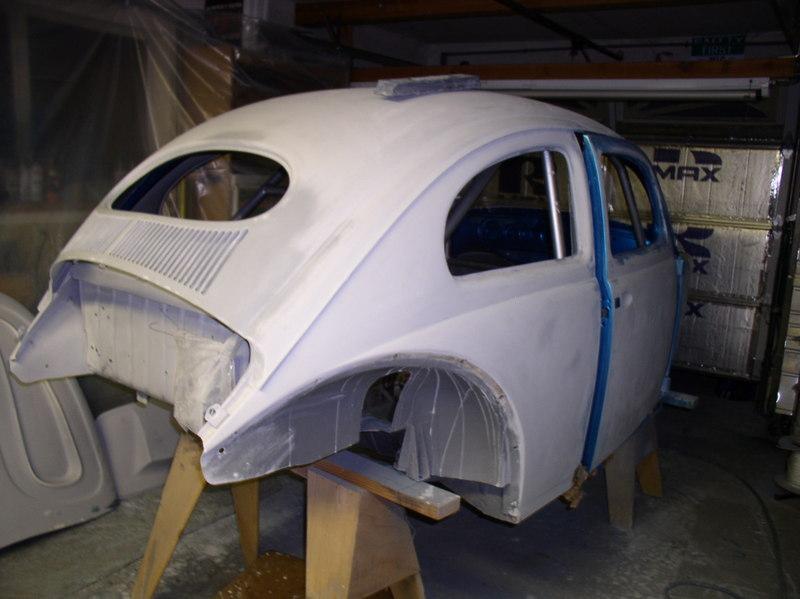
During the .....outgassing period....I worked on the outer body in preparation for the one gallon of Polyester primer.
I've got some old school siphon guns that I'll be using on this project. Go ahead flame away. I used a cheap flea market set that I picked up along the way for like $10.
One quart and a touch up gun both with 1.8mm tips. I'll be using an old DeVilbiss gun that I've had for 25 yrs for the final two stage paint.
The paint I've purchased is from Restoration Design. This line of paint is very reasonably priced but I hear that it is of very good quality. It's close for shipping, CA VOC compliant and they had plenty of colors to choose from. I've got a family to feed so I'm on a slim budget. Aren't we all?
Here is the Durablock kit, cost about $50.
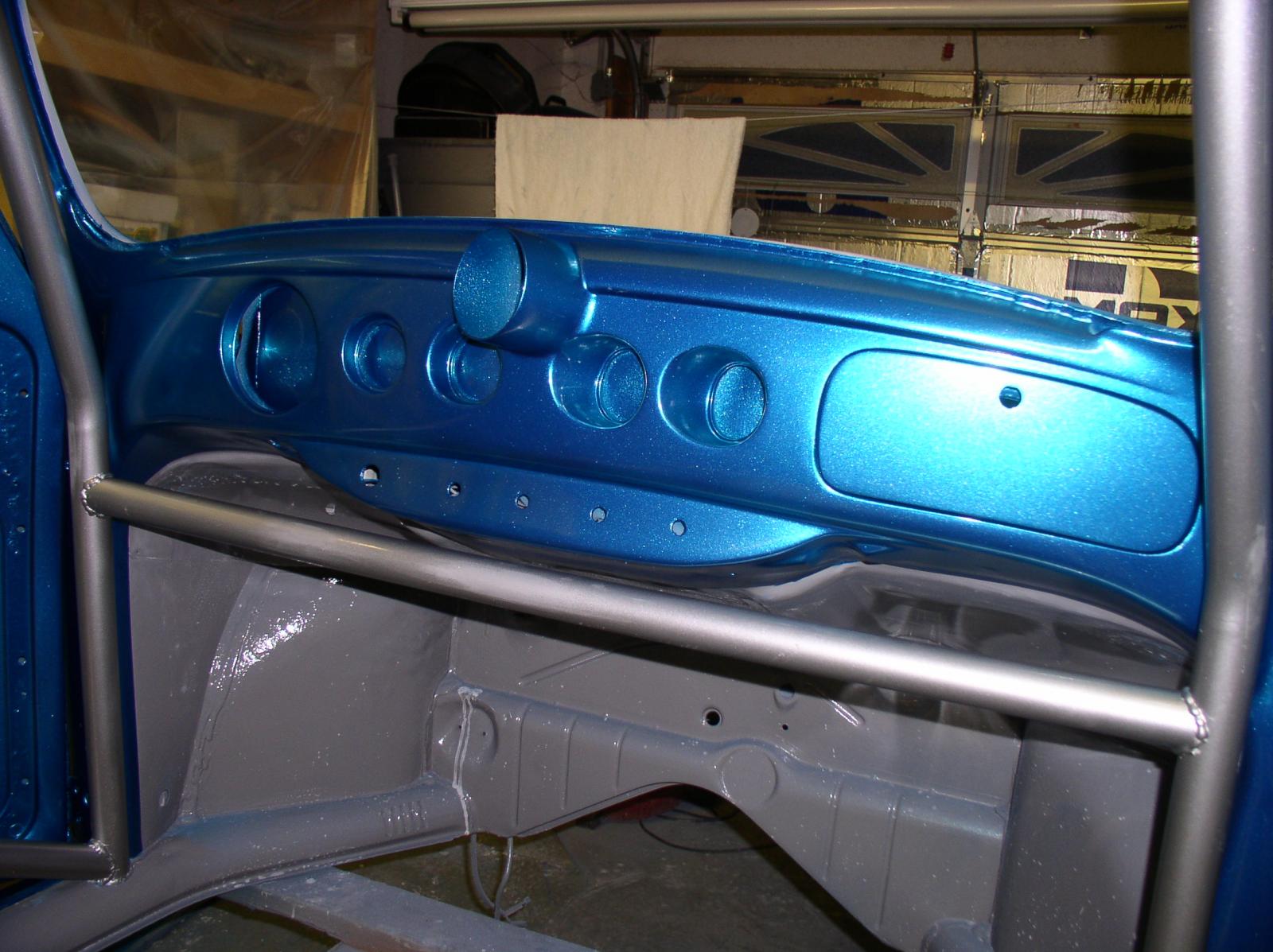
Here is a shot of the dash and footwell shot with TS Grey Primer.
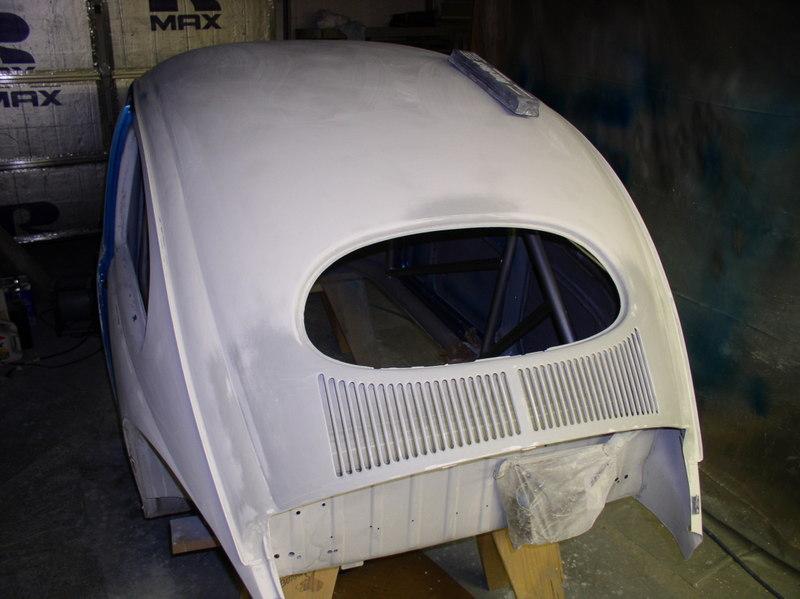
I wet sanded the entire exterior and shot it with the poly primer. Talk about thick sh*$%t. I just laid it on wet and hoped for the best. Turned out ok except for this one spot.
I've got a reaction going on here that I've never had to deal with before. I've obviously got a problem between the poly primer and the base material. How do I proceed with this area? |
|
| Back to top |
|
|
volksgroove
Samba Member
Joined: October 19, 2010
Posts: 239
Location: Apopka, FL
|
| Posted: Mon Jul 16, 2012 3:31 am Post subject: |
|
|
just sand the area down with 150-220 grit... Feather it out till you feel you have good adhesion, then scuff past it lightly with 220... Spray your poly primer back over the repaired are but stay inside the prepped area
Should be fine... Check rest of car for flaws, and spot in the same way... When you block all the primer, you may break through here an there... Spot in the same way so when you are done with this step, you have no break throughs anywhere that aren't primed.
_________________
1969 Riviera "Ethel"
1965 beetle father/son build
1988 Scirocco 16v father/son build |
|
| Back to top |
|
|
aircooled356
Samba Member
Joined: October 27, 2006
Posts: 500
Location: Yosemite, CA
|
| Posted: Tue Jul 31, 2012 3:33 pm Post subject: |
|
|
Nice work Volksgroove. Some of those cars are gorgeous.
So I learned a very valuable lesson over the past couple of weeks. What seemed at the time to be a very good idea....wasn't and cost me a lot of time and frustration.
I'm not afraid to say I made a mistake. Never have. I'll lick my wounds and press on.
The primer that I picked up at Tractor Supply was cheap (first clue), probably old (second clue), and was not a flat primer but a glossy primer grey color (third clue).
Like I said, it would not cure properly. Wherever I had sanded down to that layer and not reprimed with a real primer, the basecoat would react with it and basically melted and produced like a crinkle coat. Not pretty.
Yesterday I sanded and painted the dash and A-pillars....three times, yes three times.  Practice makes perfect right! Practice makes perfect right!
After the second episode, I primered it all again really thick and sanded with 320 grit making sure not to burn through to the primer coat from hell.
One final basecoat color spray and then cleared all of the repaired areas. Done with the interior spray finally.
What is interesting is this. Prior to the basecoat, I sprayed the rollbar a single stage silver urethane, and the roof/rear area with a dove grey single stage urethane. No reactions with that.
So....a bit of advice to anyone trying to save a buck. Don't do it. Buy good primer. It can make or break your wonderful painting experience!
I'll load some pics for you guys when I get home tonight. Till then..... |
|
| Back to top |
|
|
volksgroove
Samba Member
Joined: October 19, 2010
Posts: 239
Location: Apopka, FL
|
| Posted: Tue Jul 31, 2012 5:45 pm Post subject: |
|
|
i've been doing this a long time... and could bore you for hours with all the hard lessons I've learned... feel free to ask me any questions... I will always try and save someone a headache if I can... good luck!
_________________
1969 Riviera "Ethel"
1965 beetle father/son build
1988 Scirocco 16v father/son build |
|
| Back to top |
|
|
aircooled356
Samba Member
Joined: October 27, 2006
Posts: 500
Location: Yosemite, CA
|
| Posted: Tue Jul 31, 2012 11:02 pm Post subject: |
|
|
Bore away. Knowledge is a powerful thing. Pics as promised.
I wet sanded everything to 320 grit. It is imperitive that you do not sand thru the primer layer. Whatever you spray could react with the other paint, leaving you very sad.
If you sand thru the primer, reprimer w/couple of coats to get you back to level.
When you wet sand it feels like you are making everything super smooth which produces a slimy claylike ooze. Keep it wet and mop up the excess with a wet towel.
The interior paint was a nightmare. The cheap chinese touch up gun I am using is great. You can throw a circle pattern or fan it a bit to get the pattern you like. I am running 45 psi at the gun thru an inline desiccating filter to remove any moisture (which is non existant this time of year). Temps in my garage were averaging 80F-85F. I used medium reducer for 70F-90F.
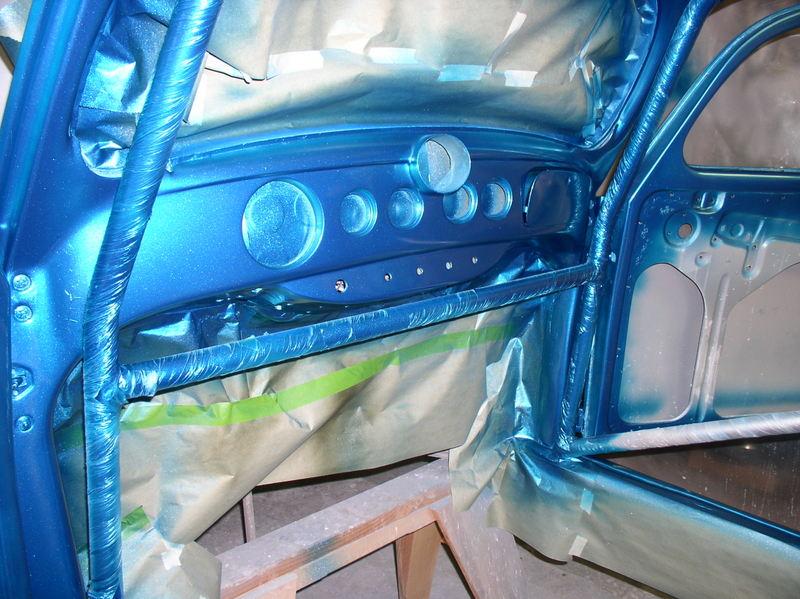
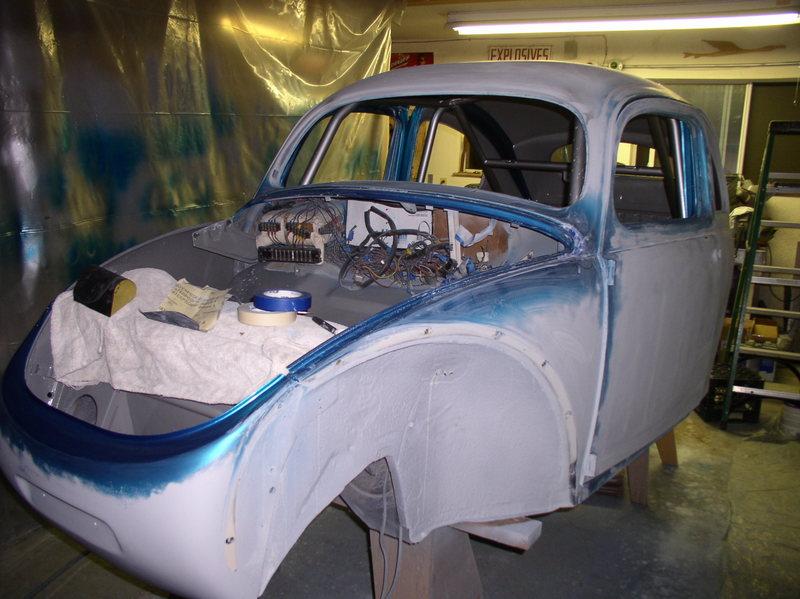
Here is the rollbar in silver. What a pain in the ass to spray. You cannot do this with a full size gun. The dreaded Tractor Supply primer was used in this area.
Rollbar wrapped and dash wet sanded.
Tape job. Ugly but efficient.
Here is basecoat #2. Note the crinkle at the left of the dash.
The doors came out nice....a lot of nooks and crannies to paint. Missed a couple of spots on the interior but I can touch those up later.
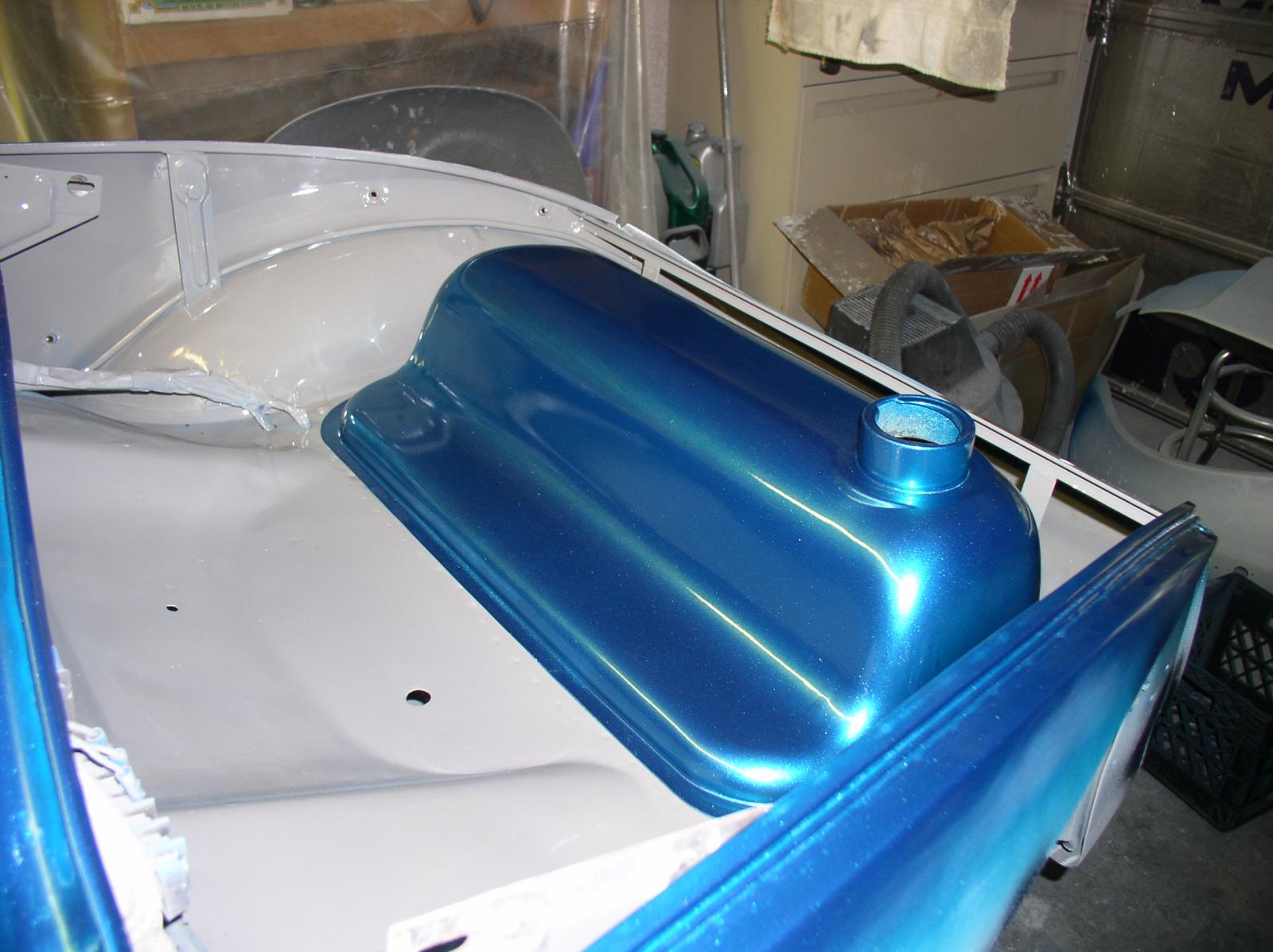
Here are the finished pics. I am so looking forward to spraying something slightly rounded. 
|
|
| Back to top |
|
|
artie325
Samba Member

Joined: July 25, 2005
Posts: 187
Location: Hamburg, NY
|
| Posted: Wed Aug 01, 2012 9:37 am Post subject: |
|
|
| Looks good! I went through the same trials and tribulations as you with the paint and the primer. I'm glad I am not the only one. At least I was able to fix mine with a lot of wet sanding and buffing. The way I look at it, I built my car by myself from the ground up including metal work and paint so if someone wants to criticize, they can keep the comments to themselves. Keep up the good work! |
|
| Back to top |
|
|
aircooled356
Samba Member
Joined: October 27, 2006
Posts: 500
Location: Yosemite, CA
|
| Posted: Thu Aug 02, 2012 11:13 pm Post subject: |
|
|
Yeah, after pulling the masking off, I noticed a few places that could use a bit more paint and I found several gaps in my plastic wrap that I will need to sand and repaint.
Buy hey, I'm getting quite a schooling in wet sanding and gun setup that you know what? I kinda like it. Imagine that.... 
It goes so fast and no dust. I find it quite relaxing.
I am finally seeing the light at the end of the tunnel. Thanks for all of the help and support. You folks are greatest! I'll keep you posted on the progress.
Next up. Blocking.....  |
|
| Back to top |
|
|
LiveJay
Samba Member

Joined: December 01, 2005
Posts: 130
Location: Nipomo, CA
|
| Posted: Tue Aug 07, 2012 2:40 pm Post subject: |
|
|
Very nice. I like the colors.
_________________
Jay
'73 Beetle
'73 Bus |
|
| Back to top |
|
|
aircooled356
Samba Member
Joined: October 27, 2006
Posts: 500
Location: Yosemite, CA
|
| Posted: Wed Aug 08, 2012 3:51 pm Post subject: |
|
|
| LiveJay wrote: |
| Very nice. I like the colors. |
Thanks. I like blue but this aquamarine color was a surprise. It is really blue in the sun or lighting but turns more green when not in direct light. Think I'll keep it. |
|
| Back to top |
|
|
aircooled356
Samba Member
Joined: October 27, 2006
Posts: 500
Location: Yosemite, CA
|
| Posted: Mon Aug 13, 2012 9:20 am Post subject: |
|
|
Guess what I did yesterday? Yep, I sanded. And sanded. I got to use the blocks with some 220 grit paper.
But you know what? These little cars have very few areas where you can use them. The roof, doors, rockers and quarter panels are about it.
Most of my time was spent hand sanding all of the intricate stuff like the rear vents , window openings, door hinges, hood, rain channel, the list goes on and on.
Six and a half hours total. I don't know how you guys do this for a living.  Today I get to sand it to 320. Today I get to sand it to 320.
Should I go to 600 prior to basecoat or is that a waste of time? Too hot here to paint so I've got time to............sand!
|
|
| Back to top |
|
|
aircooled356
Samba Member
Joined: October 27, 2006
Posts: 500
Location: Yosemite, CA
|
| Posted: Mon Aug 13, 2012 4:49 pm Post subject: |
|
|
Spent 6 hrs today blocking w/320gt. It was like the movie "Groundhog Day" but with a finer grit.
I thought it would go faster but I only gained a 1/2 hour.
I'm about spent. Mid 90's in my garage, 97 outside. Like a friggin sauna!
My quarts of base and clear arrived so I mixed them into the gallon containers which now puts me back at a gallon of each for the final spray.
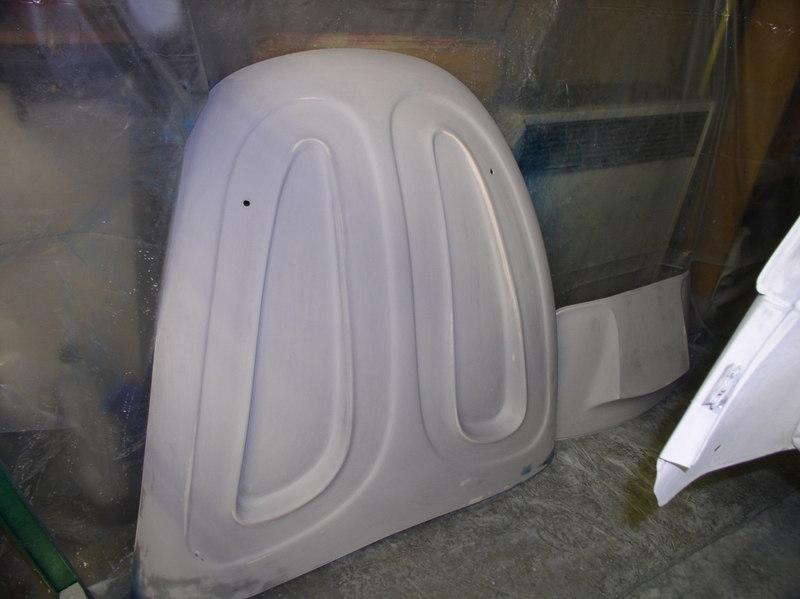
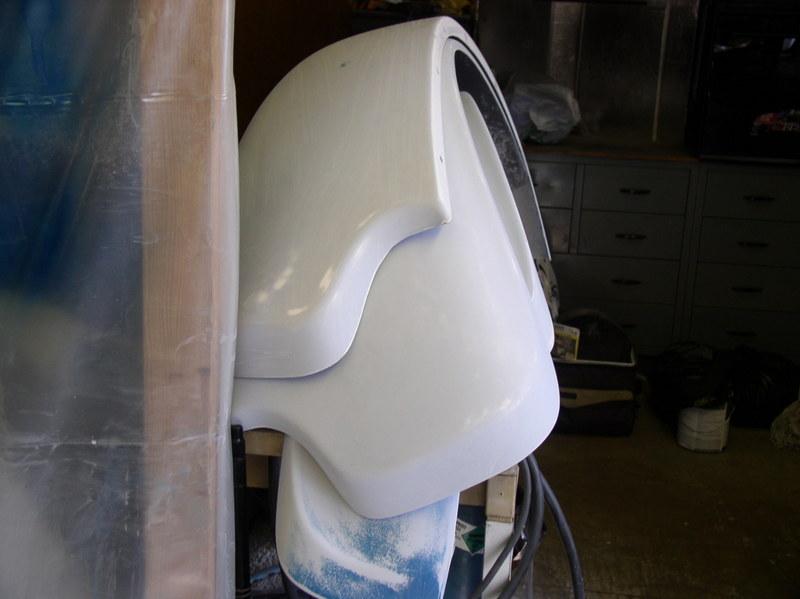
C'mon cooler weather, got stuff to paint. Here are some pics of course. 
|
|
| Back to top |
|
|
flemcadiddlehopper
Samba Member

Joined: December 05, 2011
Posts: 2345
Location: Kelowna, BC. Canada.
|
| Posted: Tue Aug 28, 2012 5:04 pm Post subject: |
|
|
| volksgroove wrote: |
I just wanted to pipe in regarding soft blocks vs. rigid blocks for making a VW straight...
I've been sculpting and painting high end hot rods for years now, and recently opened a body shop in Leesburg, FL. I was trained by a gentleman that is nationally known for black paint jobs... and black is either straight, or it's not. I walked in with my paint stick wrapped with sand paper and told him I knew how to make a car straight. He told me to put that thing down before I hurt myself... he then rolled out a cart full of dozens of different sanding blocks. some were purchased, and some were custom made.
The rule of thumb he told me that changed my whole approach to blocking is as follows...
Look at the shape you are trying to make... find a block that can make that same shape BEFORE you put the sand paper on it!
people like to bring stiff, straight blocks out to work on a car that really has no perfectly straight panels on it. when you put a rigid block onto a panel that has a subtle curve, you are really only sanding with a small section of that big ol' flat block. The term "straight" simply means that the reflection you see in the shiny surface will follow the body without distorting due to "waves" or inconsistencies... I have actually taken a skill saw and cut 1/4" grooves 1" apart on the tops of some of my blocks to allow me to curve them onto a surface they normally wouldn't have been flexible enough to mimic. They remain rather rigid, but pliable enough to make the curved shape I need.
Anyways... this is a link to the block set I use for nearly all my high end work... but I also get creative and make blocks to create a unique shape when I need it.
http://www.tcpglobal.com/AutoBodyDepot/ItemDetail....nAodgRztpA
the larger blocks in this set will make the side of your VW straighter than a rigid block. Use 3M gold sandpaper that comes on a continuous roll, and cut it to the length of your block. BEFORE you put paper on block, hold block up to the side of the car to see that the WHOLE block is slightly curved and touching the panel... then stick the paper to it. Next, hold the block up to the panel again to see that it is not over/under curved to match the body. Do not put paper on a flexible block and then try to force the block to the shape you want. If you make the shape first, and then stick the paper to it... the adhesive will hold the block to the desired shape.
and the next best advise is as follows.... LET THE SANDPAPER DO THE WORK!
so often I have watched bodymen struggle to make a panel straight, and the thing they are doing wrong is they are pushing against the panel too hard. This is counter productive, though it seems like the logical thing to do. When you push against the panel too hard, you change the shape of the panel and are sanding incorrectly... you are actually making a low spot. Proper blocking is more like "gliding" over the surface with different grits of paper, depending on how much or little you are trying to remove. You apply just enough pressure to assist, but not enough to push the panel and distort the metal.
my next advise is to purchase 3M powder guide coat. It is basically finger print powder that you apply with a foam applicator over the area you are sanding. When you have the correct block with the correct shape, and you use sharp sandpaper with proper "cross hatching" or "X" pattern sanding... the guide coat will sand off from the high spots, and remain in the low spots. Spray paint has been used for this purpose as well, but the drops of paint are too large to remain in the subtle low spots or waves.
one of these days I plan on making some short video tutorials to help the do it yourselfer master the basics of body work... in the mean time, message me any time you may have questions...
if you are curious at the quality I am accustomed to doing, I have some pics on my facebook page... the link is below in my signature... |
I am in the process of sanding my bus. The whole thing is at the high build primer stage. I have spent days sanding down to 400g wet. I have been very pleased with my progress and results, thus far.
Then after reading this I went and bought the 3M guide coat as mentioned above. All I can say is thank you, thank you , thank you.
That is amazing. I used it before sanding the 180G and again before the 320G paper. It is so easy to tell how much to sand and if you've got all the orange peal and 180 scratches out.
Seriously, all you first timers like me...get this stuff.
Also the block bending technique works wonders too.
Thanks a tonne, Gordo. |
|
| Back to top |
|
|
aircooled356
Samba Member
Joined: October 27, 2006
Posts: 500
Location: Yosemite, CA
|
| Posted: Tue Aug 28, 2012 10:22 pm Post subject: |
|
|
I did not use the guide coat technique. Lookin back, maybe should have. To put in all of the hours of metal work, the smoothing and prep work, the sanding and all of the taping involved....and not go the distance is a foolish mistake if you are spraying a show quality paint job. But you know what?
This was my first car paint. The right way. 20 yrs since my last paint job on a 32' bus sanded to 220 w/B&D 1/4 sheet palm sander. Painted with 4 gals of enamel. Lot of flat panels on an ol'59 Ford. Seems like yesterday. Anyone need a bus?
This time around was a learning experience I'd like to thank all of the folks that have contributed to this thread on TheSamba.
I took all of your advice, and the "search" button to learn all I could about painting a bug at home. What a journey it's been. Thanks.
Blocking was interesting. Lot's of water is the key here. Lube...
The block w/320 will glide over the sanded slurry and almost feel like it has a vacuum effect on the block when you are straight. Pretty cool.
But....that does not work on the other 50% of the car which consists of compound curves.
Should have tried the guide coat. But you know what? It's all good for this old baja. It's just a baja.
I built a paint booth in my garage which consisted of a single car bay wrapped in plastic.
At the front of the booth I had two windows that supplied the fresh air to a 2'x4' surplus HEPA filter w/hood which provided 800 cu/ft min of .3 micron clean air to the booth. I picked this up for $25 at a surplus place in Albuquerque in 1990 and have been dragging it around ever since. Finally paid for itself
I ended up getting a complete air exchage every 2.5 minutes. Not sure if this was good enough as all of the regulations are in linear ft/min.
At the garage door end of the booth I placed two 20"x30" furnace filters
along with a fan to seal the door up and provide additional exhausting.
Here is the booth setup.
Up next, the moment of truth. Or the ATF visits me for my garage art. |
|
| Back to top |
|
|
aircooled356
Samba Member
Joined: October 27, 2006
Posts: 500
Location: Yosemite, CA
|
| Posted: Sun Sep 23, 2012 12:06 am Post subject: |
|
|
As you can see I shot it. The first time.
I noticed that I got quite buzzed by the time I sprayed the clear coat.
A caution to all that have facial hair....your organic vapor mask will leak around your goatee/beard and you will succumb to the effects of the chemicals. I have proven this fact!
If you have a bad seal around your mask (try to suck thru the filters while your hands are covering the intake of each) you are exposing yourself to harmful chemicals. You can smear petroleum jelly or ChapStick on your facial hair to obtain an appropriate seal. More to come. |
|
| Back to top |
|
|
spook
Samba Member

Joined: December 30, 2003
Posts: 2038
Location: in the shop 35750
|
|
| Back to top |
|
|
Teeroy 
Samba Member

Joined: April 20, 2003
Posts: 3896
Location: Eastern WA
|
| Posted: Mon Sep 24, 2012 11:29 am Post subject: Tired of sanding! How much is enough? Help... |
|
|
You also absorb a bunch through your eyes!
_________________
Pres. Rivercity VW Club www.rcvwclub.org
Founder Derr Wheat Panzers (DWP)
ARR #3
www.autosportsnorthwest.org |
|
| Back to top |
|
|
|