| Author |
Message |
furgo
Samba Member

Joined: September 06, 2016
Posts: 944
Location: Southern Germany

|
 Posted: Tue Sep 26, 2017 11:39 am Post subject: Re: Need some help: FI hard start, dies on idle Posted: Tue Sep 26, 2017 11:39 am Post subject: Re: Need some help: FI hard start, dies on idle |
 |
|
That helps me already, thanks! I guess I'll go to the bus to get a feel for the clearance first, and then look at which lenght works best for me. The deep sockets I've found seem to be around two sizes: 50 mm or 80 mm. From what you're saying, the 50 mm would work best, but I'll see if I can fit a 80 mm, which would probably spare me cutting the groove (I don't own a die grinder). Alternatively, if my metal saw blade can cope with it, I might give a go at hand sawing the groove to a 50 mm deep socket.
BTW, whoever else is interested in removing a rusted TSII without decapitation, here's also a good thread discussing this tool and the angle grinder DIY way too.
_________________
'79 Westy, P22 interior, FI 2.0 l Federal, GE engine (hydraulic lifters)
Decode your M-Plate |
|
| Back to top |
|
 |
johnsilverlakes
Samba Member

Joined: July 22, 2015
Posts: 96
Location: Silver Lakes, California
|
| Posted: Thu Sep 28, 2017 8:00 am Post subject: Re: Need some help: FI hard start, dies on idle |
|
|
I had similar issues awhile back on my 76'. It wound up being a vacuum line issue. Something was hooked up wrong. Here's my thread:
https://www.thesamba.com/vw/forum/viewtopic.php?t=641723&highlight=
When you do find the issue, please post how it was resolved!
_________________
1976 Westfalia
Manual Transmission
Federal Emissions |
|
| Back to top |
|
|
furgo
Samba Member
Joined: September 06, 2016
Posts: 944
Location: Southern Germany
|
| Posted: Sat Sep 30, 2017 7:29 am Post subject: Re: Need some help: FI hard start, dies on idle |
|
|
Thanks for the link. I will indeed. So, to keep documenting...
Slow progress. Done some preparation to remove the TSII today. Due to social committments I won't be able to try it out until tomorrow. In the meantime:
I determined my spare TSII is most probably busted (3.3 kΩ @ 20°C instead of the expected 2.5 kΩ). Bummer.
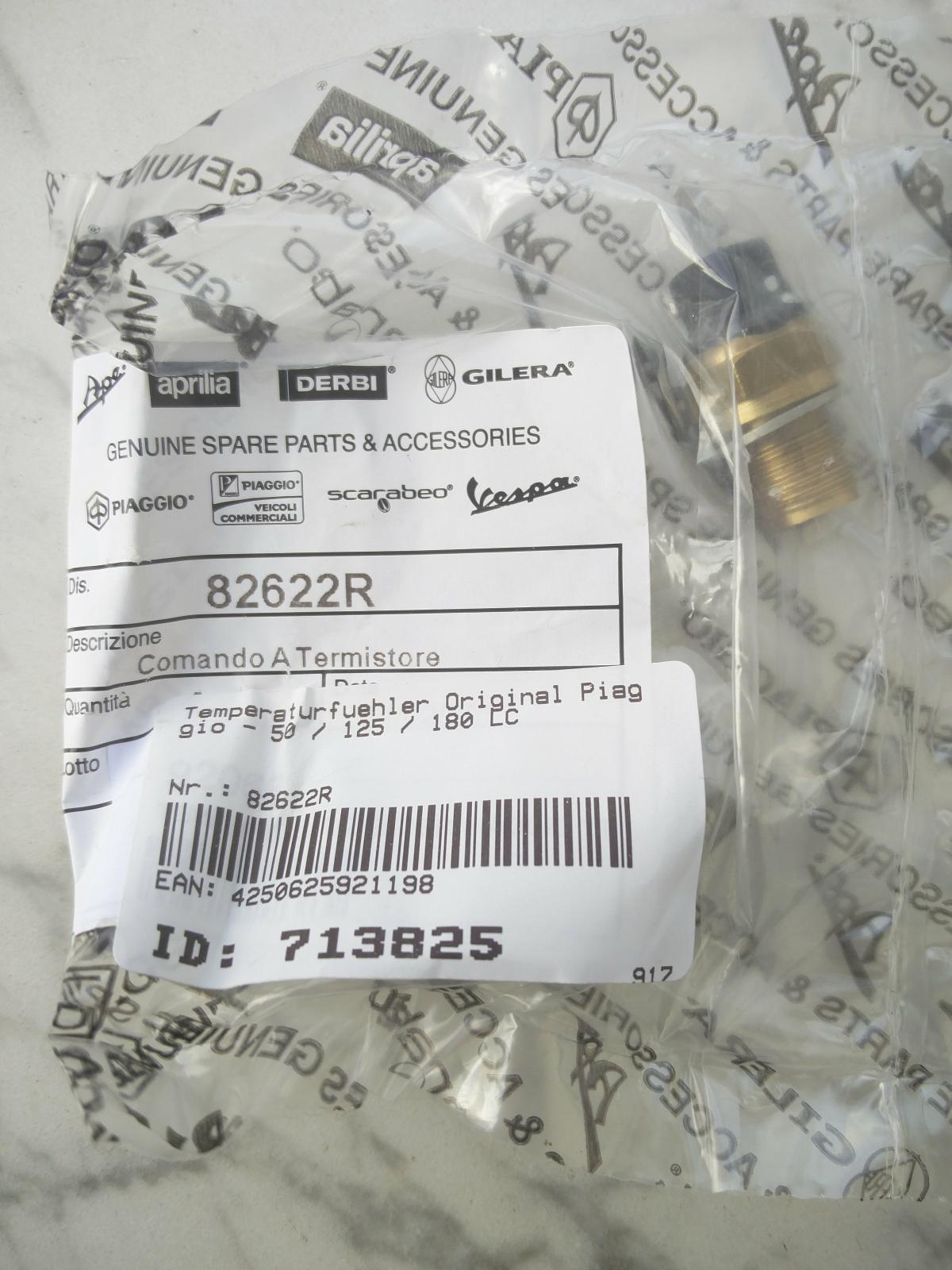
I got a cheap (7 €) Piaggio 82622R temp sensor. I will eventually get the repro OEM sensor from VW Heritage (thanks Tcash for the tip!), but since a few folks in the German forum are reporting success in running with the Piaggio as a replacement, I thought I'll give it a go for testing purposes.
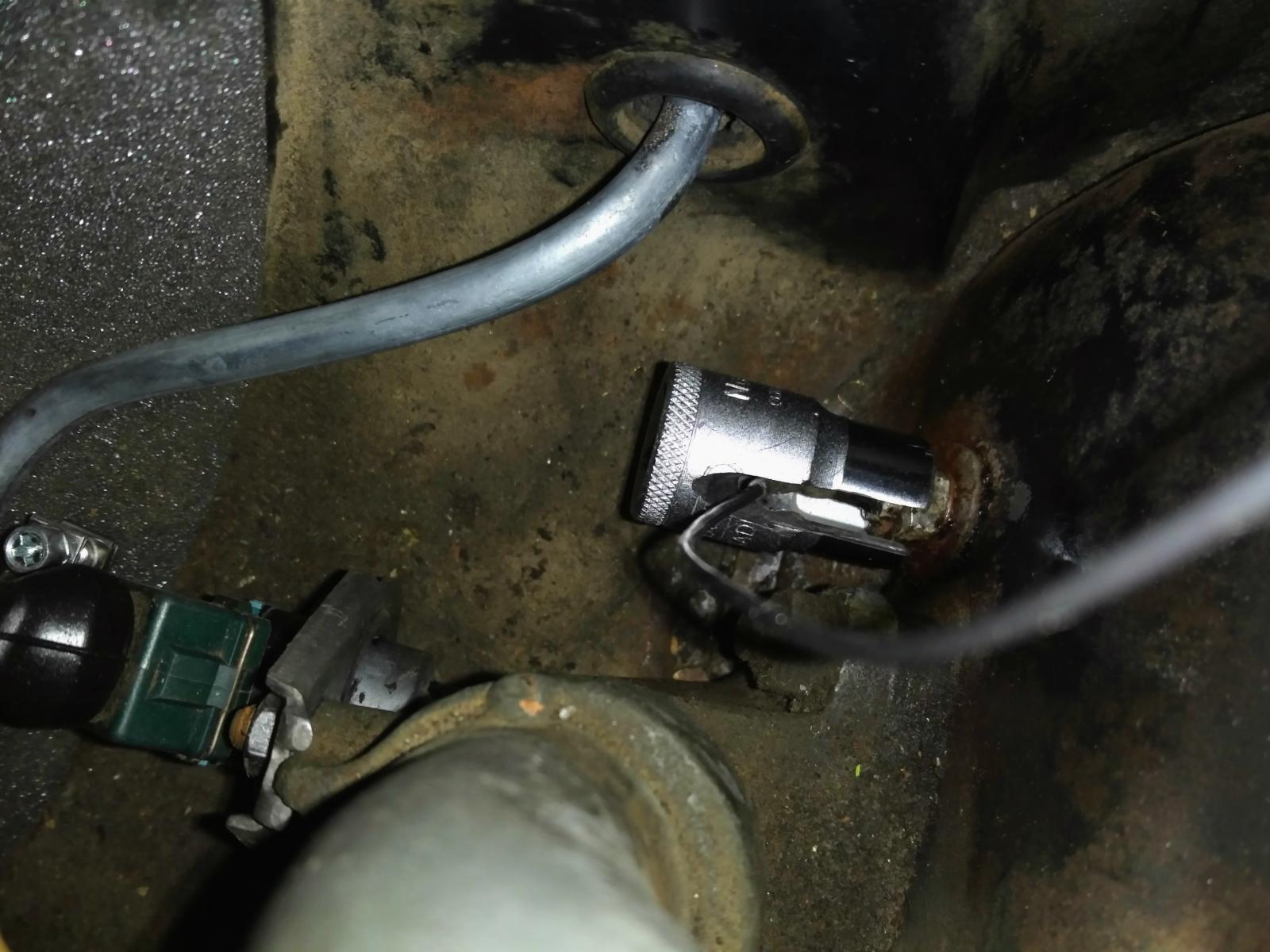
I fabricated my own TSII extractor tool from a 13 mm socket I got this morning at the flea market. I managed to cut through the metal with a combination of hacksaw, dremel and swearing. That thing was indeed hard.
I initially thought it was a bit of a #fail. The socket lenght is 38 mm, and in hindsight I should have done it with at least a 50 mm socket to have more clearance for the sensor wire. I did not find such a deep socket, though.
The way it is now is quite tight, but I think it will work for a one-off. Particularly, as IIRC my TSII does not have the plastic tube that protects the connector end from vibration/bending as my spare one has (see picture below). So I'm hoping the wire can bend at a smaller radius before it gets too squishy.
In any case, I'll use what I've got now and I'll probably fabricate a new one once I find a 50 mm deep socket.
The width of the groove is 6.5 mm, so that it has enough clearance for the wire and for my round file during fabrication.
One question, though: if I need to remove and reinstall the sensor a couple of times, I guess I should use a new crush washer. Can I just cut off the used one and then use any regular copper washer with a slightly bigger I.D. than the thread?
The reason I'm asking is because the current washer seems to have a smaller I.D. than the thread (i.e. I can't unscrew/remove it from the sensor). Also I'm curious as to how are these smaller I.D., non-removable crush washers are fitted at all (similar to the ones in spark plugs). I was wondering if someone could shed some light into this.
_________________
'79 Westy, P22 interior, FI 2.0 l Federal, GE engine (hydraulic lifters)
Decode your M-Plate |
|
| Back to top |
|
|
Hoppy Camper
Samba Member

Joined: April 13, 2013
Posts: 415
Location: New Hampshire, USA
|
| Posted: Sat Sep 30, 2017 10:11 am Post subject: Re: Need some help: FI hard start, dies on idle |
|
|
Hey there, not to hijack but I bought a new TSii while troubleshooting a very similar hard start. Anyway, installed it and it ran bad. Put the old TSii back in and it ran correctly. I ohm'd it just like your picture (67 degrees F is roughly 20 Celsius, bottom reading of the temp guage, top is outside) and got the attached reading. I don't know much about electronics! How's it look though? Is this a bad TSii?
_________________
1979 Mexico Beige Westy auto
The Wilds of New Hampshire!
www.hoppycampernh.com
https://youtube.com/@hoppycamper |
|
| Back to top |
|
|
Tcash
Samba Member
Joined: July 20, 2011
Posts: 12843
Location: San Jose, California, USA
|
|
| Back to top |
|
|
furgo
Samba Member
Joined: September 06, 2016
Posts: 944
Location: Southern Germany
|
| Posted: Sat Sep 30, 2017 5:40 pm Post subject: Re: Need some help: FI hard start, dies on idle |
|
|
| Gregg in the 603 wrote: |
Hey there, not to hijack but I bought a new TSii while troubleshooting a very similar hard start. Anyway, installed it and it ran bad. Put the old TSii back in and it ran correctly. I ohm'd it just like your picture (67 degrees F is roughly 20 Celsius, bottom reading of the temp guage, top is outside) and got the attached reading. I don't know much about electronics! How's it look though? Is this a bad TSii? |
I can't read the chosen multimeter scale from the picture, but I believe the dial is at the 200K range.
This means the resistance of your TS2 at room temperature is 9.5 kΩ. The expected value according to the A.F.C manual and other sources is between 2 kΩ and 3 kΩ (2.5 kΩ is generally taken as the value).
From this, and assuming that your multimeter is accurate, I'd conclude that the TS2 is way out of range and thus not usable. I'd double-check the multimeter with a resistor of known value to be certain, that the battery is not nearly depleted, and that you're not holding the female spade connector with your fingers while measuring. I can't see it in your pic either, but I'm assuming that the other multimeter probe is either attached with an alligator clip or directly connected to the TS2 terminal.
This is the sensor curve (resistance vs. engine temp), with the operating range roughly highlighted until the motor is considered to be warm.
Data source, by Telford Dorr
Higher resistance makes the ECU increase the pulse time of the injectors, thus spraying more fuel. In other words, while the frequency of the signal fed to the injectors remains the same, the ON time is increased.
Essentially, higher resistance => colder temp => richer mixture.
I'd say if your TS2 was showing way more resistance than the expected value, your engine was running much richer, which is where your problems probably came from.
Nice dinosaur, btw 
_________________
'79 Westy, P22 interior, FI 2.0 l Federal, GE engine (hydraulic lifters)
Decode your M-Plate
Last edited by furgo on Tue Oct 03, 2017 10:45 pm; edited 1 time in total |
|
| Back to top |
|
|
furgo
Samba Member
Joined: September 06, 2016
Posts: 944
Location: Southern Germany
|
| Posted: Mon Oct 02, 2017 1:45 pm Post subject: Re: Need some help: FI hard start, dies on idle |
|
|
Continuing where I left it last time, I turned my attention to the TS2. I had covered it with derusting gel previously and all the surface rust is gone, so in theory it should be good to put a wrench on it.
TS2: 1; Furgo: 0
That was the theory indeed.
The extractor socket I fabricated last weekend fitted well, and with my small wrench (the bigger would interfere with the fuel rail) and an extension I managed to get into the tight TS2 space.
But the thing would not budge. I applied quite a lot of torque, but rather than move, I think the bolt walls deformed a bit. There is noticeable play, but they're not round.
I soaked it with penetrating oil once more, and I'll wait until tomorrow to try again. I'll also take a hammer with me this time, and I'll see if light tapping helps.
TBH, I'm not sure if the penetrating oil helps in this case. The crush washer should make the TS2 airtight/oilproof, correct? If that's the case, I'm not sure if it will penetrate to the threads at all.
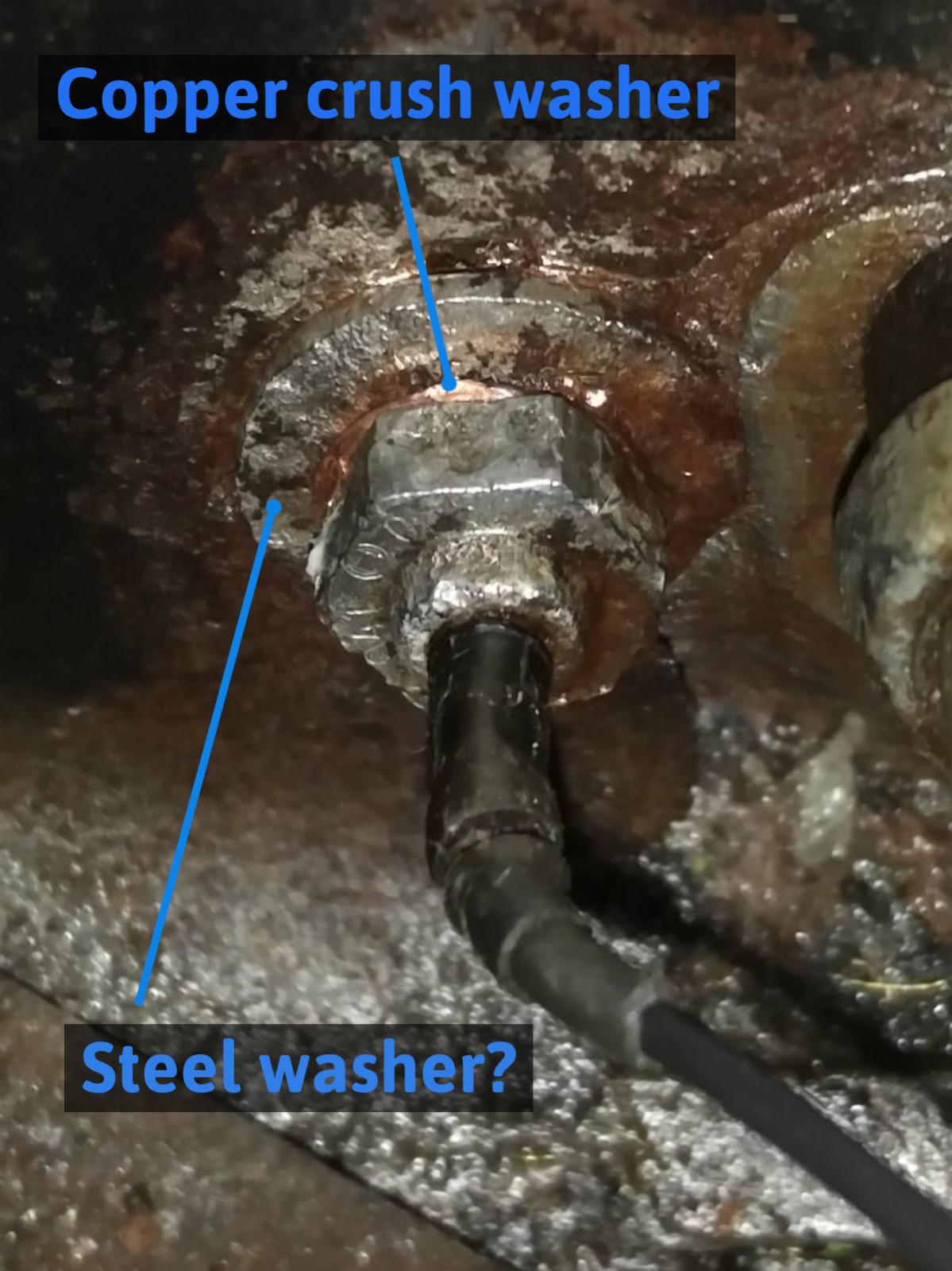
One thing that I was not quite sure about was something that looks like an additional steel washer in addition to the copper crush washer. I'm assuming it was steel, as it was covered in brown rust. But I might be wrong and it's a bit that protrudes from the case.
In any case, if it's an extra washer, I'm thinking if I could use it to my advantage by removing it (read destroy it) so that the TS2 sits less tightly against the case.
Suggestions?
Spark plugs
After one of hour of tinkering with the TS2 unsuccessfully, I looked at the spark plugs, as ignition was another system I wanted to check.
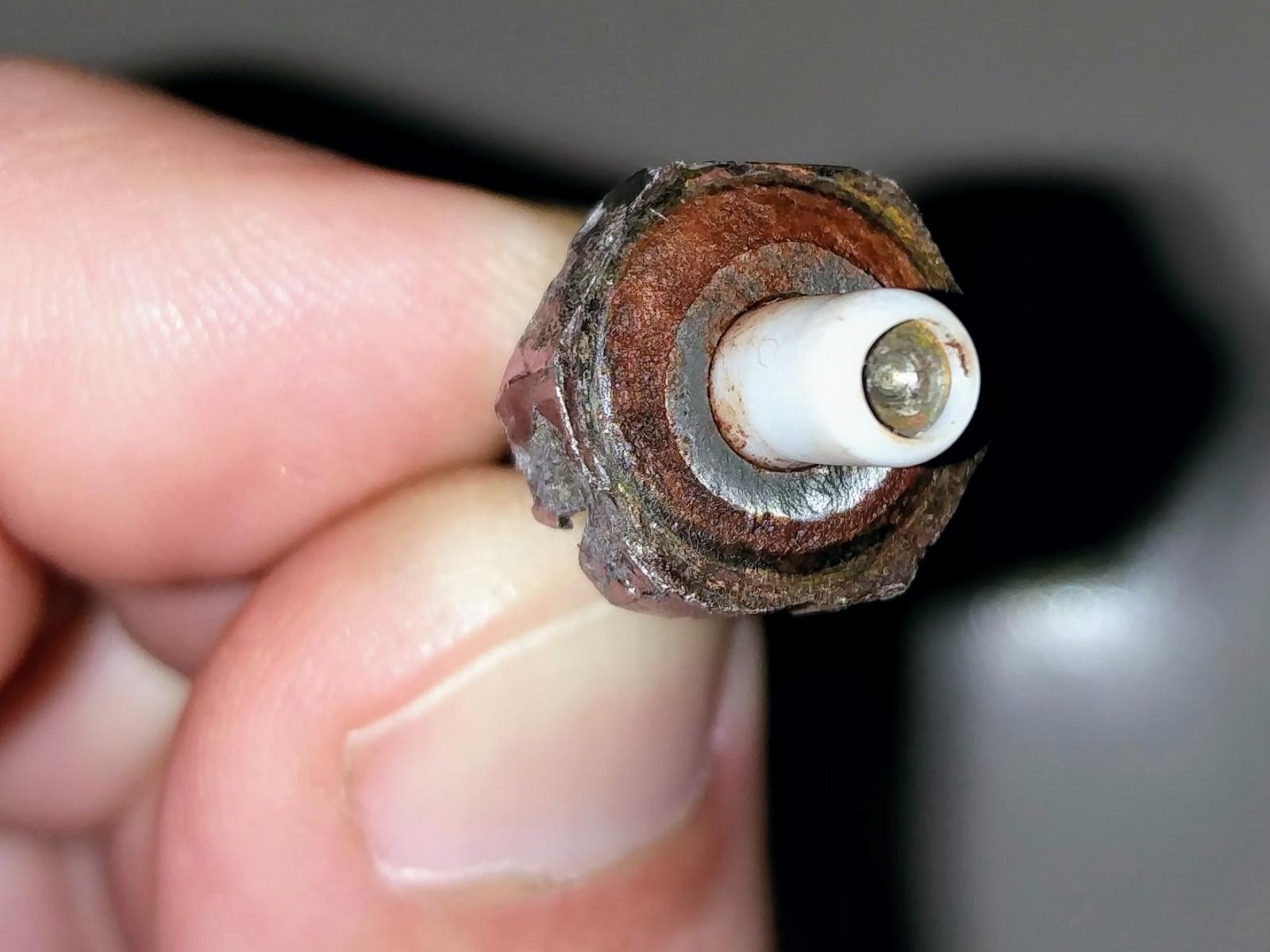
I removed spark plug #3, which surprisingly unscrewed with too much easy. That fellt certainly well undertorqued, but I'm not sure that's related to my issues anyway.
I looked at it once out and noticed that it's quite black, but the electrode looks quite ok otherwise. I'm not sure if there is too much to read from it: it might mean the engine runs rich, but as I started and stopped the engine a few times during my testing, that might be expected.
The thread looks shiny, not sure if it's oil or fuel.
I don't have my feeler gauge with me as I'm writing, but by eye the gap seems to be slightly wider than the expected 0.7 mm.
They're Bosch W5DC (made in India), which is none of the recommended types for FI. I don't know their mileage, but I'll be replacing them with some the four NGK B5ES I've got in any case.
Update: the recommended Bosch spark plugs from the owner's manual were W8CC. The differences with W5DC are essentially the lower heat code range (8 is hotter than 5) and the spark position (electrode + insulator tip protruding 1 mm vs 3 mm).
Thus essentially I was using a three ranges colder spark plug with a different spark position in the combustion chamber. I think the colder heat range was what was causing the carbon deposits. According to NGK documentation online:
| Quote: |
| Carbon deposits appear if the spark plug is frequently operated below its self-cleaning temperature (450 °C) - for example, when only short distances are driven or an incorrect heat rating (too cold) was selected. |
_________________
'79 Westy, P22 interior, FI 2.0 l Federal, GE engine (hydraulic lifters)
Decode your M-Plate
Last edited by furgo on Thu Oct 05, 2017 3:27 am; edited 1 time in total |
|
| Back to top |
|
|
Tcash
Samba Member
Joined: July 20, 2011
Posts: 12843
Location: San Jose, California, USA
|
| Posted: Mon Oct 02, 2017 2:24 pm Post subject: Re: Need some help: FI hard start, dies on idle |
|
|
The crush washer should make the TS2 airtight/oilproof, correct?
If it was air tight it would not be rusted.
Some taps on the TS2 with a punch or dull chisel to break the rust ring will help.
Heat it up with a torch and Melt some candle wax into the joint as well.
Good luck
Tcash |
|
| Back to top |
|
|
furgo
Samba Member
Joined: September 06, 2016
Posts: 944
Location: Southern Germany
|
| Posted: Mon Oct 02, 2017 3:29 pm Post subject: Re: Need some help: FI hard start, dies on idle |
|
|
| Tcash wrote: |
The crush washer should make the TS2 airtight/oilproof, correct?
If it was air tight it would not be rusted. |
Hm, the top was covered in rust, but I don't know what the inside of the thread looks like. It might be rust or it might be the different metals having expanded at different rates, perhaps? In any case, I do hope it's not air tight and the oil can get in there.
| Tcash wrote: |
Some taps on the TS2 with a punch or dull chisel to break the rust ring will help.
Heat it up with a torch and Melt some candle wax into the joint as well. |
Good tips, that's what I'll try next, thanks!
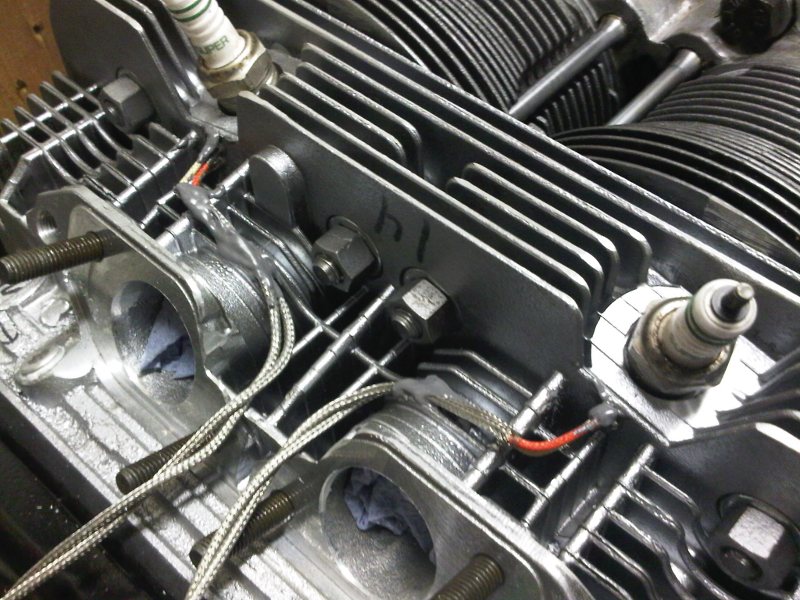
I can't seem to find many good pictures of an installed TS2 on the forum, but from these two pictures, I conclude that the thing I was pointing out is a second washer in addition to the copper crush washer (presumably to hold the tin against the head and prevent hot air from escaping through the tin hole):
TS2, no big washer
TS2 and big washer
I'll also try to see if I can break the washer with a cold chisel without damaging the sensor.
_________________
'79 Westy, P22 interior, FI 2.0 l Federal, GE engine (hydraulic lifters)
Decode your M-Plate |
|
| Back to top |
|
|
Wildthings
Samba Member

Joined: March 13, 2005
Posts: 52714
|
| Posted: Mon Oct 02, 2017 5:28 pm Post subject: Re: Need some help: FI hard start, dies on idle |
|
|
Kind of hard to picture, but it is possible to get a nice big dose of spray penetrant onto the threads of the TSII sensor. Measure directly up from the center of the TSII sensor 1 inch and drill a 1/4" hole in the tin. Now using a spray can with a straw on it, spray directly downward through the hole towards the TSII sensor. Repeat the spraying a couple of times over a few days until the sensor decides to yield and unscrew.
If you beat too hard on the TSII with a hammer and chisel you may break the fin the TSII screws into right off, use care.
As far as I know there is just supposed to be one washer under the TSII sensor, it gives something for the sensor to seat against and also holds the tin in place. Use never seize or dielectric grease on the threads of the sensor to prevent corrosion. |
|
| Back to top |
|
|
Hoppy Camper
Samba Member
Joined: April 13, 2013
Posts: 415
Location: New Hampshire, USA
|
| Posted: Mon Oct 02, 2017 5:34 pm Post subject: Re: Need some help: FI hard start, dies on idle |
|
|
Thanks furgo, your analysis of my post was spot-on. The ohm's were set at 200K, it was showing 9.5 and I was grounded on the terminal of the tsii. I figured my readings were too high. This is a brand new tsii! Dammit, I'll keep checking it but it did not work when I had it installed and the old one fixed the hiccup.
| Quote: |
| Nice dinosaur, btw |
Kids, you know the gig!
_________________
1979 Mexico Beige Westy auto
The Wilds of New Hampshire!
www.hoppycampernh.com
https://youtube.com/@hoppycamper |
|
| Back to top |
|
|
busdaddy
Samba Member

Joined: February 12, 2004
Posts: 53190
Location: Surrey B.C. Canada, but thinking of Ukraine
|
| Posted: Mon Oct 02, 2017 6:13 pm Post subject: Re: Need some help: FI hard start, dies on idle |
|
|
If I was up against a rusted in mess like yours I'd find a deep socket or shortish length of small pipe that just fit over the raised middle of the TS2 where the wire emerges. Then I'd tuck the wire up into the socket (or pipe) and seat it against the flat area between the hex and the raised nipple (where the part number is) and give it a few solid whacks to dislodge the grip that iron oxide has on those threads. If it still put up a fight I'd repeat or weld the pipe to a chisel bit that fit into an air hammer for a vigourous massage. The objective is to crush that copper washer a bit and move the threads into the hole slightly creating a microscopic gap.
If all else fails there's 3 more places to mount that sensor if you F it up beyond use. Some sideways bashes flat against the hexes with a flat drift might help too.
I don't think the big washer was put there by VW, but I have seen more than one installed to keep mangled tin down in place were it belongs, likely not the best way to fix the problem.
_________________
Rust NEVER sleeps and stock never goes out of style.
Please don't PM technical questions, ask your problem in public so everyone can play along. If you think it's too stupid post it here
Stop dead photo links! Post your photos to The Samba Gallery!
Слава Україні! |
|
| Back to top |
|
|
furgo
Samba Member
Joined: September 06, 2016
Posts: 944
Location: Southern Germany
|
| Posted: Mon Oct 02, 2017 11:39 pm Post subject: Re: Need some help: FI hard start, dies on idle |
|
|
| Wildthings wrote: |
| Kind of hard to picture, but it is possible to get a nice big dose of spray penetrant onto the threads of the TSII sensor. Measure directly up from the center of the TSII sensor 1 inch and drill a 1/4" hole in the tin. Now using a spray can with a straw on it, spray directly downward through the hole towards the TSII sensor. Repeat the spraying a couple of times over a few days until the sensor decides to yield and unscrew. |
Thanks, another technique I can use. So far:
• Some taps on the TS2 with a punch or dull chisel to break the rust ring.
• Small socket around the sensor nipple, resting on the flat part with the part number. Whack it with a hammer to crush copper washer a bit.
• Cold chisel against the big steel washer side to break and remove it
• Drill hole on tin 1/4" above sensor, use straw from oil spray can to spray on the thread between tin and sensor
I'm assuming on that last one the 1/4" is to have enough clearance not to drill the fin on the cylinder head. Probably the spray can straw needs to be bent to go backwards a bit and meet the space between sensor and tin. Also probably the sensor can be sprayed from behind its hole, as it goes through the fin, I believe.
That also bears the question: why does the sensor need a crush washer if it's not to keep it airtight/waterproof/oilproof? Probably not to crush the softer cylinder head metal, I guess?
| Wildthings wrote: |
| If you beat too hard on the TSII with a hammer and chisel you may break the fin the TSII screws into right off, use care. |
I can't really picture that fin, as I've never seen it, hidden underneath the tin. Does anyone have any photos of it to see what I should be careful with? I generally like to know what I'm up against. Update: I found some -
Am I right in thinking that the TS2 is located in the wider black hole (wider than the right one, that is), left of the cylinder #3 intake runner's top stud?
Here is another view from another Samba picture from user WhirledTraveller:
From there and other pictures in the linked thread (they're Photobucket ones, and I'm not linking them) I conclude that the TS2 is not in a blind hole (it's bored through the fin) and that it's on the thick part of the fin. That particular fin is triangular, with a thicker base where the hole is.
In that case, it's not as fragile as a regular "flat" tin. Still care should be taken when whacking it with a hammer. However strange it feels to say that.
| Wildthings wrote: |
| As far as I know there is just supposed to be one washer under the TSII sensor, it gives something for the sensor to seat against and also holds the tin in place. Use never seize or dielectric grease on the threads of the sensor to prevent corrosion. |
Thanks for confirming that. I think the extra steel washer is mostly responsible for the rusty mess. Then I assume that the hole in the tin is just slightly bigger than the sensor thread and smaller than its hex, if the small copper washer is supposed to hold it in place.
I'll definitely use conductive anti-seize (nickel) on the new sensor once the old one is out  Not dielectric grease though, as that would prevent a good ground contact between thread and case. Not dielectric grease though, as that would prevent a good ground contact between thread and case.
| Gregg in the 603 wrote: |
| Thanks furgo, your analysis of my post was spot-on. The ohm's were set at 200K, it was showing 9.5 and I was grounded on the terminal of the tsii. I figured my readings were too high. This is a brand new tsii! Dammit, I'll keep checking it but it did not work when I had it installed and the old one fixed the hiccup. |
Bummer. Well, at least you know where the issue came from. Where did you get the sensor from? Can you still return it?
| busdaddy wrote: |
| If I was up against a rusted in mess like yours I'd find a deep socket or shortish length of small pipe that just fit over the raised middle of the TS2 where the wire emerges. Then I'd tuck the wire up into the socket (or pipe) and seat it against the flat area between the hex and the raised nipple (where the part number is) and give it a few solid whacks to dislodge the grip that iron oxide has on those threads. If it still put up a fight I'd repeat or weld the pipe to a chisel bit that fit into an air hammer for a vigourous massage. The objective is to crush that copper washer a bit and move the threads into the hole slightly creating a microscopic gap. |
Perfect, thanks. I think I'll keep trying the manual part of your suggestion. The pictures don't really show it, but the fuel rail severely limits the height and width of tools you can squeeze into that area, as do the intake runners. With the engine in, you can't get an air hammer in there (other than the fact that I don't own one and there is no air supply in the garage ).
| busdaddy wrote: |
| Some sideways bashes flat against the hexes with a flat drift might help too. |
I'm not sure what a flat drift is, I'm assuming the one in the first picture? I've got both the "drift punch" and the "pin punch" from there. I was planning to use the fat pin punch (carefully) on the hex walls.
| busdaddy wrote: |
| I don't think the big washer was put there by VW, but I have seen more than one installed to keep mangled tin down in place were it belongs, likely not the best way to fix the problem. |
Thanks for clarifying that, I shall have no mercy on that big washer  . .
_________________
'79 Westy, P22 interior, FI 2.0 l Federal, GE engine (hydraulic lifters)
Decode your M-Plate
Last edited by furgo on Tue Oct 03, 2017 3:28 am; edited 7 times in total |
|
| Back to top |
|
|
Abscate
Samba Member
Joined: October 05, 2014
Posts: 24414
Location: NYC/Upstate/ROW
|
| Posted: Tue Oct 03, 2017 12:56 am Post subject: Re: Need some help: FI hard start, dies on idle |
|
|
I doubt anyone has ECU source code, but has anyone figured out how the injection times varies with TSI reading?
Probably one needs to look at the pulse signal on an oscope to do this.
Does it add a Multiplier to the pulse length, how many steps are there, etc.
_________________
🇺🇸 🇺🇸 🇺🇸 🇺🇸 🇺🇸 🇺🇸 🇺🇸 🍊 🍊 🍊 |
|
| Back to top |
|
|
furgo
Samba Member
Joined: September 06, 2016
Posts: 944
Location: Southern Germany
|
| Posted: Tue Oct 03, 2017 1:02 am Post subject: Re: Need some help: FI hard start, dies on idle |
|
|
It seems the thread is quite prone to being hijacked, but hey, nevermind. We're all on the same boat
| Abscate wrote: |
| I doubt anyone has ECU source code, but has anyone figured out how the injection times varies with TSI reading? |
No.
At least I have never seen the measurements published. If you were after the concise answer, you can now skip all the rest
There is no digital, programmable computing on the L-Jetronic ECU, at least for the version that was installed on buses. It's all hardwired analog electronic components plus a couple of hybrid, custom ICs. It's all analog computation. It's quite fascinating how robust the ECU is even after 40 years of abuse.
Part of it can be reverse-engineered (someone on the Porsche community did it for the D-Jetronic ECU), but the hybrid ICs were Bosch-specific, there is no datasheet available for them, and thus make a complete reverse-engineering effort not possible.
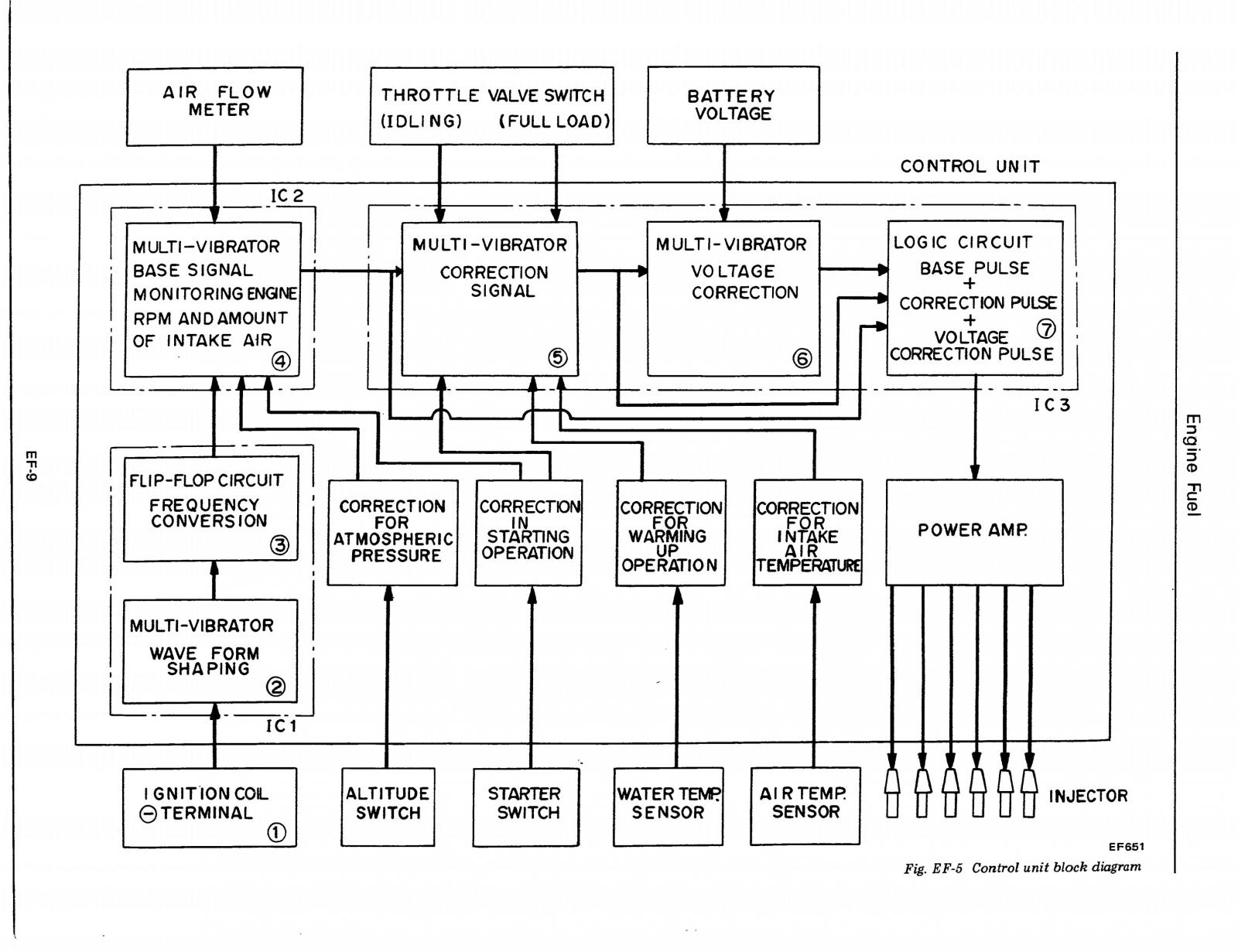
The best block diagram of an L-Jetronic ECU I've found does not come from Bosch, but from a 1977 Datsun 280Z manual. It's for 6 cylinders, but the logic is exactly the same (just think 4 cylinders and engine temp instead):
It shows IC1, IC2 and IC3. I believe these circuit blocks actually correspond to each hybrid. At least on my spare ECU, there are three of them.
| Abscate wrote: |
| Probably one needs to look at the pulse signal on an oscope to do this. |
Exactly. I've thought of doing this at some point in the (not near) future. It should not be difficult to do. Roughly:
• Have a spare ECU + FI harness ready. Connect it to 12V power.
• Have a 10V pulse generator simulate engine speed and hook it up to pin #1 of the ECU
• Hook up a 10K potentiometer to the TS2 input to simulate engine temperature
• Connect a spare AFM to the ECU. Alternatively, the air temp and the vane deflection could be simulated with potentiomenters too.
• Add a switch connected to 12V power to simulate the "cranking" signal (tells the ECU the starter is on => enrichment mode).
• Either connect injectors or add a 3.4 Ohm load to simulate them.
• Connect an oscilloscope in parallel to an injector.
Then you can modify a few variables (engine temp -10k poti-, engine load -AFM vane-, etc) and capture the oscilloscope output. You'll then have a good representation of how the length of the pulses is varied according to the set of conditions you chose. Their frequency remains the same.
One could also then plot the spray time as a function of engine speed and engine load. This in turn could be used to create a map for the megasquirt or other similar modern digital FI systems to emulate the bus ECU.
Another variable you can tweak is the actual voltage given to the ECU. It's monitored and the pulse duration is also compensated accordingly.
| Abscate wrote: |
| Does it add a Multiplier to the pulse length, how many steps are there, etc. |
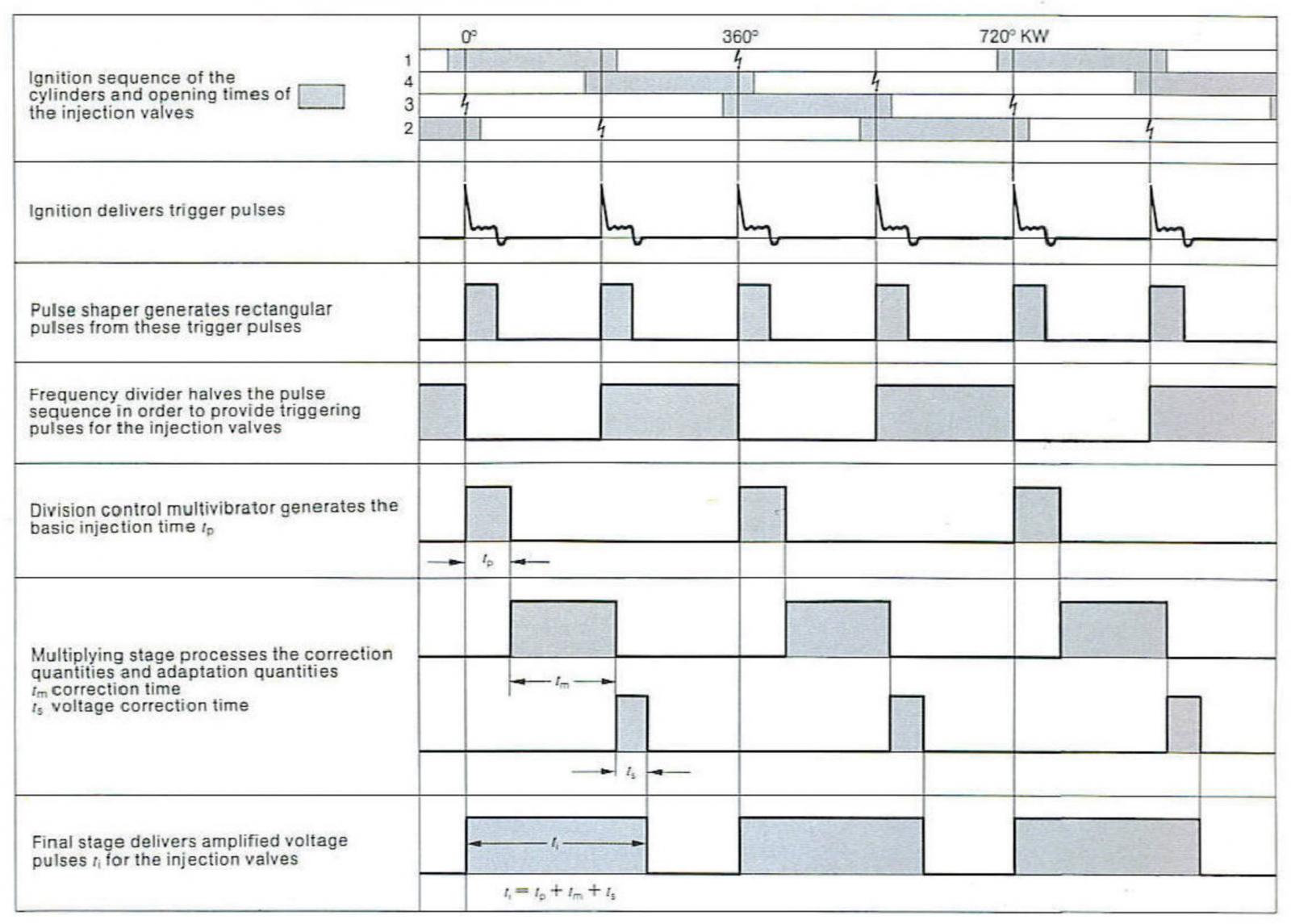
The Bosch L-Jetronic Technical Instruction manual has a really good overview on that. You can find it as a PDF online and read pages 16 and 17 for more info, but it all boils down to this diagram and the fact that a basic injector time is calculated and then corrected by a given factor that is a combination of the engine condition read from the sensors.
Now I'll put my mask and cape back on to go on fighting temperature sensors and FI in general...
_________________
'79 Westy, P22 interior, FI 2.0 l Federal, GE engine (hydraulic lifters)
Decode your M-Plate
Last edited by furgo on Tue Oct 03, 2017 10:42 pm; edited 2 times in total |
|
| Back to top |
|
|
ROCKOROD71
Samba Member

Joined: January 18, 2012
Posts: 2770
Location: Boston, MA
|
| Posted: Tue Oct 03, 2017 5:50 am Post subject: Re: Need some help: FI hard start, dies on idle |
|
|
The last two posts here I haven't read, its early here, but I DID read your post regarding removing the sensor. Good job making that tool btw, that should work, although the real tool is a deeper socket.
Before I got that tool I literally was spraying that sensor every night and tapping on it with a closed end box wrench and a small hammer. It is close quarters for sure. I removed the spark plug wire and any hoses that were in the way. You can only get small swings of the hammer accomplished there but the goal is not to turn or remove the nut with the hammer but to "shock" the fused rust loose. I would spray the sensor down, wait 15 minutes, and start tapping, intermittently trying to turn the wrench with hand strength, then back to tapping. Maybe 5 minutes of this, then soak the sensor again, and walk away to try another day. Letting it soak overnight helps. Also, with hand pressure, turn it to TIGHTEN it intermittently. Eventually you start to feel a little movement. Even with this movement I was still spraying and tapping, but not getting anywhere. Once I used that tool the sensor came right out with just hand strength (this is a good spot to mention that I am a weak little bitch).
ALSO of note: I too had a steel washer between the copper crush washer and the engine tin, and it was rusted, neigh, ROTTED to hell. I wondered then as now, if this changes the resistance to the sensor? Especially if run of the mill anti-seize and not the nickel stuff was applied to the threads, I assume that thick rust doesn't pass electrons so well. I re-installed a new (used) sensor without the steel washer. If that steel washer is needed please let me know, I can add it back. I haven't had a chance to get back to my FI issue or test drive the bus, with some other car repair issues on my other vehicles taking preference.
ALSO ALSO of note: I didn't try yet but the copper washer on the sensor looks VERY close to a crush washer found in a type 1 oil change kit, the ones that go on the acorn nuts. Someone correct me if I am wrong, but I think that would work, and I have a ton of those....
_________________
1971 STD BEETLE- DD-1st car, 1st love. keepin' it stock! 1600DP, Solex 34-3 Mexi Bosch SVDA Dist NOW w/POINTS
1977 WESTY "KrustyKamper" 2L FI
| 79SuperVert wrote: |
30 years from now, the next guy may not want your girlfriend, but he may want your classic car, depending on how nice you were to it. |
| asiab3 wrote: |
Careful guys, a petulant child can grow up to be president these days. |
**winter drivers: no survivors!**rust warrior**#keepbodyshopsbusy** |
|
| Back to top |
|
|
Wildthings
Samba Member
Joined: March 13, 2005
Posts: 52714
|
| Posted: Tue Oct 03, 2017 6:48 am Post subject: Re: Need some help: FI hard start, dies on idle |
|
|
| If you are living in a place that uses road salts go to your local hardware store and buy a stainless steel washer to use under the sensor. The sensor receives its heat from the metal of the head via the threads, the washer isn't important to the operation beyond holding the tin in place and giving the sensor something to tighten against. |
|
| Back to top |
|
|
airschooled
Air-Schooled

Joined: April 04, 2012
Posts: 13626
Location: West Coast, USA
|
| Posted: Tue Oct 03, 2017 1:32 pm Post subject: Re: Need some help: FI hard start, dies on idle |
|
|
I took a small bath in penetrating PB blaster spray this morning. That stuff is amazing for tearing apart a rusted engine in half an hour flat. It gets in the same way moisture and oxygen get in.. Vibration helps speed the process.
As far as what the TS2 does to the fuel map, it richens the mixture by varying pulse width, not timing or frequency, doesn't it?
Robbie
_________________
One-on-one tech help for your vintage Volkswagen:
www.airschooled.com
Road trip reports and tech blog:
https://www.patreon.com/airschooled |
|
| Back to top |
|
|
furgo
Samba Member
Joined: September 06, 2016
Posts: 944
Location: Southern Germany
|
| Posted: Tue Oct 03, 2017 11:21 pm Post subject: Re: Need some help: FI hard start, dies on idle |
|
|
| asiab3 wrote: |
| As far as what the TS2 does to the fuel map, it richens the mixture by varying pulse width, not timing or frequency, doesn't it? |
Good point, and it's exactly what the diagrams show. I don't know why I said frequency at some point, but I've corrected it where I mentioned it, thanks!
In other words, the injectors are driven by a pulse width modulated signal (PWM). The ON time of each cycle is what the ECU calculates as the pulse time: the wider the richer.
The frequency of the pulses tracks engine speed = one pulse cycle per crankshaft revolution.
_________________
'79 Westy, P22 interior, FI 2.0 l Federal, GE engine (hydraulic lifters)
Decode your M-Plate |
|
| Back to top |
|
|
furgo
Samba Member
Joined: September 06, 2016
Posts: 944
Location: Southern Germany
|
| Posted: Thu Oct 05, 2017 12:13 pm Post subject: Re: Need some help: FI hard start, dies on idle |
|
|
Another update, and unfortunately, I cannot report success.
After having removed the surface rust, then nearly a week of soaking it in penetrating oil, trying ice shock rust remover, carefully hitting it with a punch and tightening/untightening with the wrench and the special 13 mm socket... it went like Marie Antoniette.
At some point it started moving on tightening, and also on untightening. I thought it was about ready to go and I could remove it, but essentially it was the cylindrical thread starting to detach from the head... until it broke.
Although it was extremely rusty on the surface (really heavy pitting), I'm not sure if the thread is being held by rust. It might have been overtorqued from the start.
Needless to say, it's been extremely frustrating. Tinkering with the TS2 (which I'm pretty sure wasn't the cause of the FI issue -the engine would die with it shorted to ground-) has set me back one week and I'm now worse than I was before.
On the other hand, at some point in the future the sensor was going to fail of age, so better now near home than in the middle of a trip. Don't despair, focus.
Constraints
As mentioned earlier on the thread, I can't do much where the bus is parked right now. Even towing it might be a challenge. I realize that dropping the engine and redrilling the hole is probably and clearly the best option, but not a possible one at the moment. I'm mentioning this so that it's clear from the start.
With that said, I'm evaluating the other options I have...
Temporary fix
I think, but I'm not certain, that the other 3 possible locations for the sensor are not drilled to accommodate it (on the outer side of each air intake runner, next to their top studs). From the pictures I've seen, the diameter of the holes other than cylinder #3 were smaller. Also, that would require cutting a hole in the tin.
Thus I think I could:
• Simply ground the TS2 input to the ECU. Start will probably be more difficult, but I know the engine started at least once with it grounded. Or,
• Route 2 wires to from the engine compartment to the dash and use a 3k Ohm potentiometer. Regulate it during the start phase and dial it to 0 Ohm once the engine seems to be warm. Or,
• I have a good sensor and I'd like to explore the possibility to use it temporarily, even if not properly attached. There must be a way of attaching and getting it to sense the head temperature by surface contact. I'm open to "creative" workarounds here. Suggestions?
Proper fix, but DIY?
If I can manage to start the engine and it does not die, I can then take it to a shop and ask them to remove the rest of the thread for me.
But I'm also wondering which options I have to do it myself. I've been lucky not to have to use them before, but I could probably use a screw extractor/left hand drill
Pros:
• As the thread is essentially a cylinder that originally contained the thermistor, it's already center-drilled. A left hand drill might work
Cons:
• Space is tight. A power drill can't get in there. Maybe a Dremel?
_________________
'79 Westy, P22 interior, FI 2.0 l Federal, GE engine (hydraulic lifters)
Decode your M-Plate
Last edited by furgo on Thu Oct 05, 2017 12:33 pm; edited 2 times in total |
|
| Back to top |
|
|
|