| Author |
Message |
todmeg
Samba Member
Joined: November 26, 2005
Posts: 285
Location: new jersey

|
 Posted: Fri Apr 19, 2024 4:49 pm Post subject: Re: Hard Start Relay Diagram Posted: Fri Apr 19, 2024 4:49 pm Post subject: Re: Hard Start Relay Diagram |
 |
|
So th Ghia is in for a body off resto. paint and body work Are done. Body is back on so let the reassembly begin. going well. Since the work is being done at a local really good body/collision shop, I was not involved with r&r on the body. Anyhow, just about all the electrical is up and running, which is more than I can say about cranking. Meanwhile, we have all been wondering WTF this thing hating out that has a relay and a fuse? You Samba guys are the best! Only thing that sucks is that the shop is closed on weekends. Can't wait for Monday! I am blessed with a shop owner who lets me work on my car as much as I want, so I have been involved with everything except paint and bodywork.
_________________
1770 DP Bad ass heads dual weber 40mm 010 headers and glass pack. Rivieras. 1971!!! |
|
| Back to top |
|
 |
ashman40
Samba Member

Joined: February 16, 2007
Posts: 16771
Location: North Florida, USA
|
| Posted: Wed May 06, 2020 7:08 pm Post subject: Re: Hard Start Relay Diagram |
|
|
| herbie1200 wrote: |
The schematic is more complicated that it seems.
If you look at the solenoid you can see TWO "/" lines, to make and evidence that the solenoid has TWO different windings. |
Good catch.
Here is a good write up on the "pull-in winding" vs. the "hold-in winding" in the solenoid. Agreed it is a bit more complicated... but very cool. 
http://prod.lv2014.gener8cms.net/index.php/70-disc-brakes/section-7/battscs/733-solenoid-operation
_________________
AshMan40
---------------------------
'67 Beetle #1 {project car that never made it to the road  } }
'75 Beetle 1200LS (RHD Japan model) {junked due to frame rot}
'67 Beetle #2 {2019 project car - Wish me luck!} |
|
| Back to top |
|
|
herbie1200
Samba Member
Joined: April 27, 2006
Posts: 836
Location: Rome - Italy
|
| Posted: Wed May 06, 2020 2:58 am Post subject: Re: Hard Start Relay Diagram |
|
|
The schematic is more complicated that it seems.
If you look at the solenoid you can see TWO "/" lines, to make and evidence that the solenoid has TWO different windings.
When the key is turned on, the left winding is fully energized because the "up" is at 12V and the "low" contact is on the "live" contact of the starter.
The right winding has the "up" at 12V and the low at ground.
So, at the beginning, the soleonoid has TWO windings on and its strength is double, that is useful for the first "engaging" travel.
When the shorting switch becomes ON, the left winding has both the contacts at the same potential (the motor is ON), so the solenoid has half strenght, and this is to avoid an excessive load when the motor is spinning and the contact is already on. |
|
| Back to top |
|
|
Eric&Barb
Samba Member

Joined: September 19, 2004
Posts: 26285
Location: Olympia Wash Rinse & Repeat
|
| Posted: Mon May 04, 2020 4:53 pm Post subject: Re: Hard Start Relay Diagram |
|
|
Any updates??
_________________
In Stereo, Where Available! |
|
| Back to top |
|
|
ashman40
Samba Member
Joined: February 16, 2007
Posts: 16771
Location: North Florida, USA
|
| Posted: Thu Feb 20, 2020 3:26 pm Post subject: Re: Hard Start Relay Diagram |
|
|
| UK Luke 72 wrote: |
| Thanks for the input guys, I'm going to dig the Bentley out so that I can get my head around how the starter circuit works. |
I found this pic showing the function of the starter circuits and the Bendix drive of the starter.
The part of the diagram with the "start switch" actually runs about 20-30ft with the switch being inside the ignition switch.
When you install an HSR below the rear seat that distance drops to around 3ft. This greatly reduces the voltage loss in the circuit due to wire resistance.
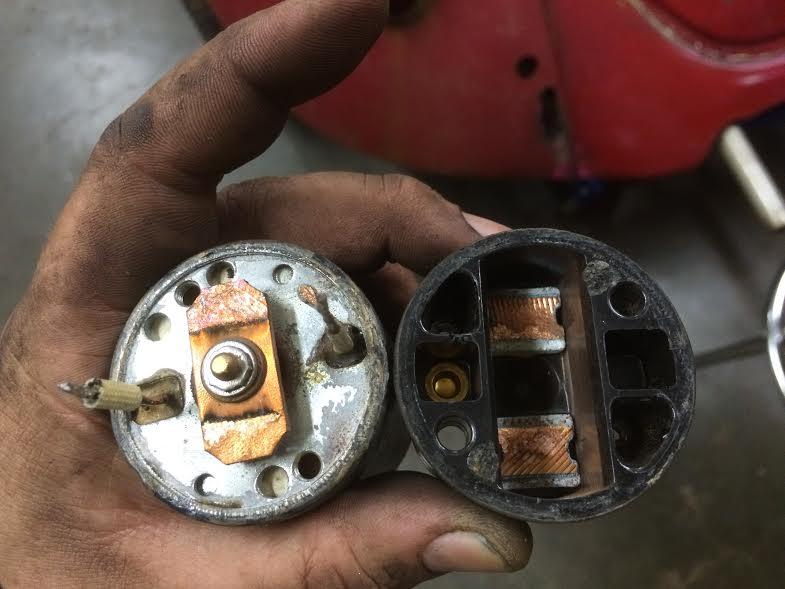
The switch marked "shorting switch" are the large contacts in the pic above of the inside of a solenoid. When the solenoid is energized the brass bar on the left closes the circuit between the two contacts inside the black end cap (on the right). These black cap contacts are the inside end of the two large studs visible on the outside of the solenoid. One is for the battery cable, the other is to the cable that runs to the starter motor itself.
| UK Luke 72 wrote: |
Whilst cranking, Im seeing around 10v on the ECU.
12.2v on the ECU is 12.7v on the batter terminals, so whilst cranking I guess around 10.5v. |
Measure the voltage at the battery terminals when there is no load and when the starter is cranking the engine. This difference reflects the strength of your battery. Expect to see a small voltage drop with a new battery (no less than a 12.0v reading at the terminals). On an older battery the voltage reading at the terminals may drop down to 11.0v. These voltage drops reflect the load of the starter motor on the battery and the ability for the battery to carry that load. As the battery goes bad the ability to carry the load is reduced.
Measure the voltage at the battery terminals when the ignition is in the ON/RUN position and compare this to the voltage at different points around the car (eg. ignition coil and ECU). Voltage drops between these measurements represent wire resistance between the battery and the point you are measuring.
Anything more than 0.5v difference can probably be improved by cleaning up wire connections/contacts.
Realize that in the early Beetles the transistor radio was probably the only voltage sensitive device. Everything else was analogue and less sensitive. The ignition coil will work down to around 9.0v, but an aftermarket electronic ignition module will stop working once the voltage drops below 10.0v.
An ECU is probably even more sensitive to a low voltage condition than that. Modern solid state devices are designed for a narrow operational voltage range. With 50yr-old wires resistance in the conductors and connections will reduce the voltage that makes it to the end of the circuit.
_________________
AshMan40
---------------------------
'67 Beetle #1 {project car that never made it to the road }
'75 Beetle 1200LS (RHD Japan model) {junked due to frame rot}
'67 Beetle #2 {2019 project car - Wish me luck!} |
|
| Back to top |
|
|
Eric&Barb
Samba Member
Joined: September 19, 2004
Posts: 26285
Location: Olympia Wash Rinse & Repeat
|
| Posted: Thu Feb 20, 2020 2:08 pm Post subject: Re: Hard Start Relay Diagram |
|
|
Here (found in the Gallery by VolkDubz) is what the contacts of the solenoid insides looks like:
_________________
In Stereo, Where Available! |
|
| Back to top |
|
|
UK Luke 72
Samba Member

Joined: September 07, 2011
Posts: 2875
Location: Little Britain
|
|
| Back to top |
|
|
Eric&Barb
Samba Member
Joined: September 19, 2004
Posts: 26285
Location: Olympia Wash Rinse & Repeat
|
| Posted: Thu Feb 20, 2020 1:23 pm Post subject: Re: Hard Start Relay Diagram |
|
|
Should also mention that the starter solenoid not only levers the starter gear to the rearward to engage the flywheel gear, but it also has a plate switch inside the solenoid. When that switch is closed in the solenoid, the electrical power from the terminal the positive cable is attached to solenoid is suddenly connected to the starter motor. So if there is any voltage drops from the positive connections from the battery to the solenoid or voltage drops in the several ground connections from the solenoid to the battery ground terminal. Then the solenoid will pull weakly, and the switch inside will only lightly touch the contacts. This light contact switch touch will limit the voltage/amps passing thru to the starter motor copper windings. Resulting in a starter motor that turns the engine over slower or not at all.
A starter solenoid that gets full voltage and amperage to it should clamp the inside switch contacts TIGHTLY inside. Starter motor will then get as much power available thru that switch.
Starter solenoids can and by this time with so many decades on them should be taken apart and the brass plate inside flipped over to the unworn side. Then clean off all corrosion and dielectric grease lightly. This does require a good high wattage electric soldering iron, or an old fashioned soldering iron over a torch to unsolder the electrical connections in the forward end cover of the solenoid.
So the ignition switch does not directly have any voltage/amps going from it to the starter motor itself.
Like any chain, it is only as strong as the weakest link. So it only takes one bad electrical connection.
_________________
In Stereo, Where Available!
Last edited by Eric&Barb on Thu Feb 20, 2020 1:41 pm; edited 1 time in total |
|
| Back to top |
|
|
Eric&Barb
Samba Member
Joined: September 19, 2004
Posts: 26285
Location: Olympia Wash Rinse & Repeat
|
| Posted: Thu Feb 20, 2020 12:55 pm Post subject: Re: Hard Start Relay Diagram |
|
|
| UK Luke 72 wrote: |
| Do these actually help the starter turn any faster or do they just take current away from the ignition switch and also make it easier for the starter gear to mesh? |
Hmm, if someone starved you of food for a few weeks, would you be able to run, jump, climb as fast as you would if you had been fed properly?? A great military leader of a country once said that "An army travels on it's stomach". Starters and the starter solenoids travel on the voltage and amperage that get to them and back to the battery! Limit either or both and they will slow down or even STOP working.
These starter AKA hot start relays bypass the wiring going from the battery connection on the starter solenoid up to the fuse box, on to the ignition switch and back to the starter. So if there is any voltage drops in the wiring or especially the connections this no longer affects the starter solenoid from not getting full voltage and amperage from the battery.
Problem is if the voltage drop/s are anywhere from the battery cable connection on the starter solenoid on to the fuse box, to ignition switch, those will still affect electrical systems like coil, turn signals, wipers, horn, lights from operating very well or at all. Plus if the starter is struggling due to low voltage getting to it and bad grounds, it will pull more voltage away from the coil. If coil is not getting as much voltage due to loose/corroded connections going to it already, you will get weak or no spark for the engine!
So the relay will not fix those problems or fix bad connections due to bad (as in loose and/or corroded) battery cables or bad/missing ground cable from transaxle to body, or even bad ground connections between the starter and transaxle and/or between the starter solenoid and the starter itself.
These last two caused us a lot of grief for quite a while with our 1963 single cab still running 6 volts that does not get daily driven. Would only start in the morning with being jumped from another vehicle. Without a jump it would not even get a click from the starter solenoid. Then it would start and run just fine for the rest of the day, till next morn it needed a jump again. Went thru with voltage meter checking and cleaning all the wiring connections till there was little to no voltage drops. That improved it during warm weather (battery needed to be on charger over night to be able to start), but when cooler weather came it needed again the morning jump. Cleaned the starter and transaxle surfaces and applied dielectric grease to keep corrosion away for as long as possible into the future by keeping oxygen and moisture away. That made a big difference often not needing the battery charged up for a day or two, but that slipped back to needing it on the charger over night again. Finally removed the starter to clean and dielectric grease the ground connection between starter solenoid and starter body. Now can leave the SC off the charger for over a week and starter will engage right off with key turn and engine turns over nice and fast.
Personally have only seen one VW that needed a starter relay. A nice Kombi Bus that the larger wire between the ignition switch to the starter solenoid had been somehow shorted out by DPO and fried the wire strands in the wire into a much thinner less capable to move amperage/voltage to get the solenoid to work.
_________________
In Stereo, Where Available! |
|
| Back to top |
|
|
runamoc 
Samba Member

Joined: June 19, 2006
Posts: 6411
Location: 37.5N 77.1W
|
| Posted: Thu Feb 20, 2020 12:32 pm Post subject: Re: Hard Start Relay Diagram |
|
|
| UK Luke 72 wrote: |
| Do these actually help the starter turn any faster or do they just take current away from the ignition switch and also make it easier for the starter gear to mesh? |
They do both. Wire has resistance. Long wire has more resistance than a shorter wire of the same gauge. Less resistance means more voltage and current to the load thus a faster spinning starter motor. It helps the ignition switch by removing the high current load needed to 'magnetize' the stock solenoid and substitutes the lower current needed to operate the added relay.
_________________
Daily driver: '69 Baja owned 45 yrs - Plan B: '72 Ghia
Yard Art: 2 Sandrails
Outback: '69 Ghia - '68,'69,'70,'72 Beetle - '84 Scirocco, GTI - Pair of '02 Golfs- '80 Rabbit Diesel
VW Wiring = It's just wires |
|
| Back to top |
|
|
UK Luke 72
Samba Member
Joined: September 07, 2011
Posts: 2875
Location: Little Britain
|
|
| Back to top |
|
|
runamoc
Samba Member
Joined: June 19, 2006
Posts: 6411
Location: 37.5N 77.1W
|
| Posted: Tue Feb 07, 2017 5:45 pm Post subject: Re: Hard Start Relay Diagram |
|
|
| Quote: |
| look for a weatherproof version of the SPDT/SPST relay |
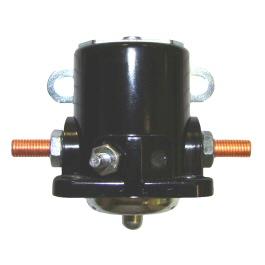
My first bug had a 6 volt Ford solenoid for a hot start relay. It was mounted with one of the long starter bolts thru one of the tabs. The solenoid was encased in hard plastic with external studs. A short wire from the battery connection on the bug starter to one of the 'big' studs on the Ford solenoid. From the other side 'big' stud to the bug starter coil. Then wire 50 connects to the coil stud of the Ford solenoid. Waterproof (Ford solenoids also come in 12 volt) 
_________________
Daily driver: '69 Baja owned 45 yrs - Plan B: '72 Ghia
Yard Art: 2 Sandrails
Outback: '69 Ghia - '68,'69,'70,'72 Beetle - '84 Scirocco, GTI - Pair of '02 Golfs- '80 Rabbit Diesel
VW Wiring = It's just wires |
|
| Back to top |
|
|
ashman40
Samba Member
Joined: February 16, 2007
Posts: 16771
Location: North Florida, USA
|
| Posted: Mon Feb 06, 2017 3:12 pm Post subject: Re: Hard Start Relay Diagram |
|
|
For this reason they should really be installed under the rear seat where they can remain dry. \
If you really must install it outside, look for a weatherproof version of the SPDT/SPST relay. Some come with an adapter that adds a rubber sealed skirt around the relay and plug.
https://www.waytekwire.com/item/75601/Skirted-Mini...DQodxJIK_w
_________________
AshMan40
---------------------------
'67 Beetle #1 {project car that never made it to the road }
'75 Beetle 1200LS (RHD Japan model) {junked due to frame rot}
'67 Beetle #2 {2019 project car - Wish me luck!} |
|
| Back to top |
|
|
mark tucker
Samba Member
Joined: April 08, 2009
Posts: 23945
Location: SHALIMAR ,FLORIDA
|
| Posted: Mon Feb 06, 2017 1:20 pm Post subject: Re: Hard Start Relay Diagram |
|
|
| if you use the small icecube relay be sure it cant get wet and is hung so if it does it wont get h2o inside of it. mount inside, would be good but some are mounted out side. I use the ford style sliynoid on mine, it had the icecube when I got it,one day after a good wash and onto the wife car for a good wash... my bug drove it's self across the road and into the woods. an hour later it had the better ford silly noid on it. That ended the self drive mode. |
|
| Back to top |
|
|
scottyrocks
Samba Member

Joined: August 19, 2016
Posts: 2994
Location: Thornton, CO
|
| Posted: Sat Jan 14, 2017 3:08 pm Post subject: Re: Hard Start Relay Diagram |
|
|
| Thanks, Tim. I've found a few of them by now, one made by a samba member. |
|
| Back to top |
|
|
Tim Donahoe
Samba Member

Joined: December 08, 2012
Posts: 11812
Location: Redding, CA
|
| Posted: Sat Jan 14, 2017 12:31 pm Post subject: Re: Hard Start Relay Diagram |
|
|
Scotty, just get one from Wolfsburg West. I don't know if it's made by Bosch or not, but I got a WW one and installed it a couple years ago, using a 20 amp fuse.
No problems whatsoever.
I've found that MidAmerica is pretty much out of stock on anything I'm interested in buying.
Tim
_________________
Let's do the Time Warp again!
Richard O'Brien |
|
| Back to top |
|
|
scottyrocks
Samba Member
Joined: August 19, 2016
Posts: 2994
Location: Thornton, CO
|
| Posted: Sat Jan 14, 2017 11:59 am Post subject: Re: Hard Start Relay Diagram |
|
|
| I typed midamerica into google and got nothing that showed a HSR. Where do I find this pre-wired Bosch HSR for our cars? |
|
| Back to top |
|
|
pepsiguy78
Samba Member

Joined: February 28, 2015
Posts: 110
Location: Vancouver,WA
|
| Posted: Sun Jul 24, 2016 7:41 pm Post subject: |
|
|
| ashman40 wrote: |
| pepsiguy78 wrote: |
| I am a little confused and want some advice before I install a HSR on my '74 SB - wire 87 and wire 85 tap into the red wire under the rear seat - cut the wire and connect the two wires in? Also, is the 15 amp fuse adequate or should I use a 30 amp or? |
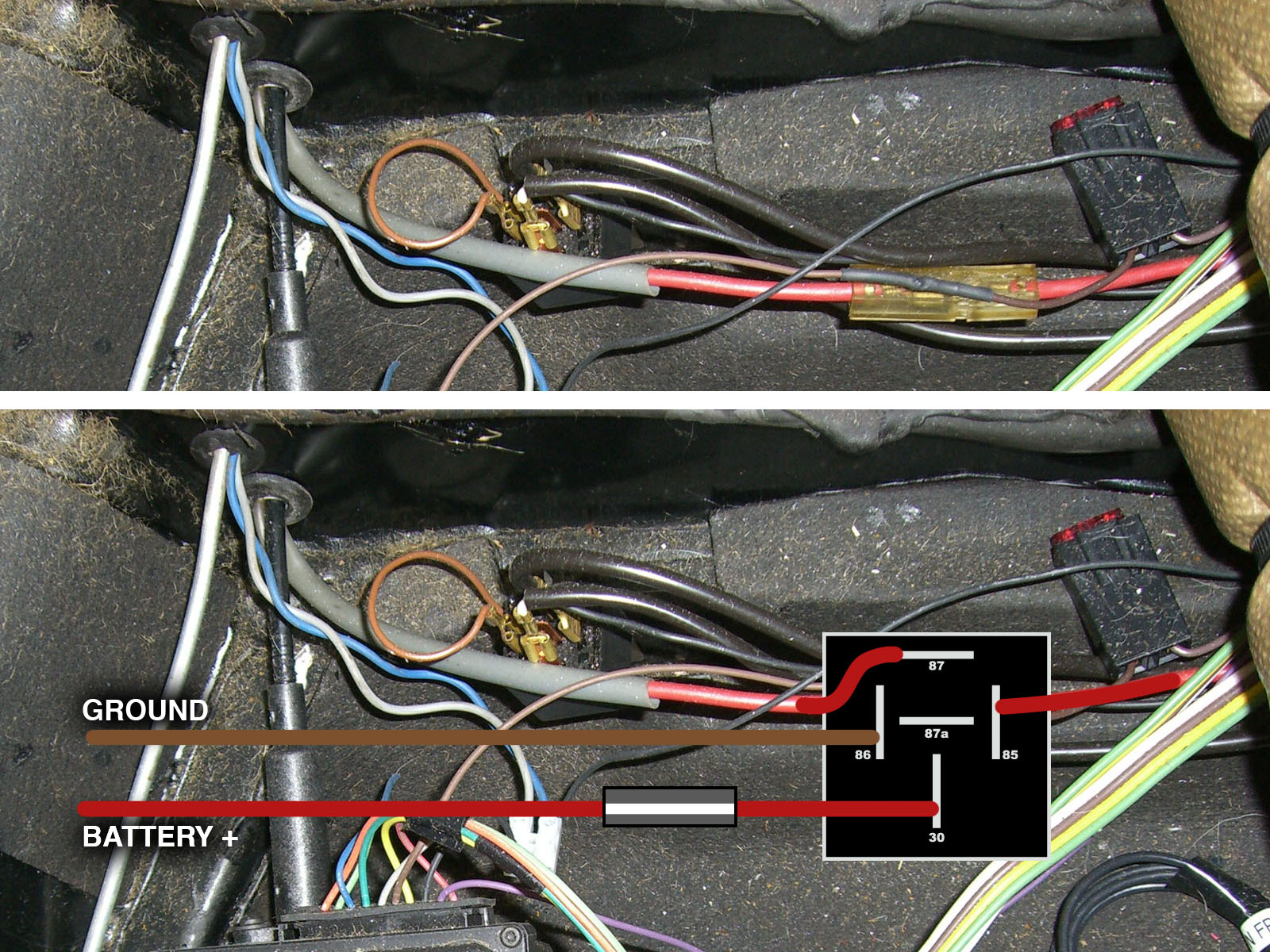
No cutting of the red (#50) wire is needed. In the top half of the pic you can see there is a yellowish junction in the red wire. If you pull the red wires out of reach end you will find a female terminal on the end of each wire. These are the common 1/4" press on terminals that perfectly fit the male terminals on the (Bosch style) HSR.
15A should be okay. |
Thank you!!! I thought that I could do just that but wanted reassurance from the expert. Thank you!!!! |
|
| Back to top |
|
|
ashman40
Samba Member
Joined: February 16, 2007
Posts: 16771
Location: North Florida, USA
|
| Posted: Sun Jul 24, 2016 3:34 pm Post subject: |
|
|
| pepsiguy78 wrote: |
| I am a little confused and want some advice before I install a HSR on my '74 SB - wire 87 and wire 85 tap into the red wire under the rear seat - cut the wire and connect the two wires in? Also, is the 15 amp fuse adequate or should I use a 30 amp or? |
No cutting of the red (#50) wire is needed. In the top half of the pic you can see there is a yellowish junction in the red wire. If you pull the red wires out of reach end you will find a female terminal on the end of each wire. These are the common 1/4" press on terminals that perfectly fit the male terminals on the (Bosch style) HSR.
15A should be okay.
_________________
AshMan40
---------------------------
'67 Beetle #1 {project car that never made it to the road }
'75 Beetle 1200LS (RHD Japan model) {junked due to frame rot}
'67 Beetle #2 {2019 project car - Wish me luck!} |
|
| Back to top |
|
|
pepsiguy78
Samba Member
Joined: February 28, 2015
Posts: 110
Location: Vancouver,WA
|
| Posted: Sat Jul 23, 2016 10:31 pm Post subject: |
|
|
| mondshine wrote: |
Maybe this view of the area under the rear seat bench will help you.
In the top photo, aside from some extra items, is the connector for terminal 50 of the starter. The heavy red wire originates at terminal 50 of the ignition switch, and runs through the gray jacket and the grommet to the starter.
In the bottom photo, the hard start relay is "arted in".
When the key is in the "start" position, the relay is energized, and connects terminal 50 of the starter to battery +.
A fuse in that line (or any wire connected directly to battery +) is a good idea.
Terminal 86 of the relay is connected to ground.
It's best to have this relay "inside the car" where it is out of the elements, clean and dry.
 Before you do any of this, make absolutely sure that the connection at the starter terminal 50 is clean and tight. This type of connection can easily weaken from fatigue. You might just solve the problem by fixing that connection at the starter. Before you do any of this, make absolutely sure that the connection at the starter terminal 50 is clean and tight. This type of connection can easily weaken from fatigue. You might just solve the problem by fixing that connection at the starter.
Good luck, Mondshine |
I am a little confused and want some advice before I install a HSR on my '74 SB - wire 87 and wire 85 tap into the red wire under the rear seat - cut the wire and connect the two wires in? Also, is the 15 amp fuse adequate or should I use a 30 amp or? |
|
| Back to top |
|
|
|